A row of red cows fills this shop shelf in Ouchi-juku, Fukushima. Large ones stand beside smaller versions, with white lines across their backs and dark circles on their sides. Look towards the front of each figure: the head sits inside a wide, dark opening in the body. That space is a clue to something a still photograph cannot show.
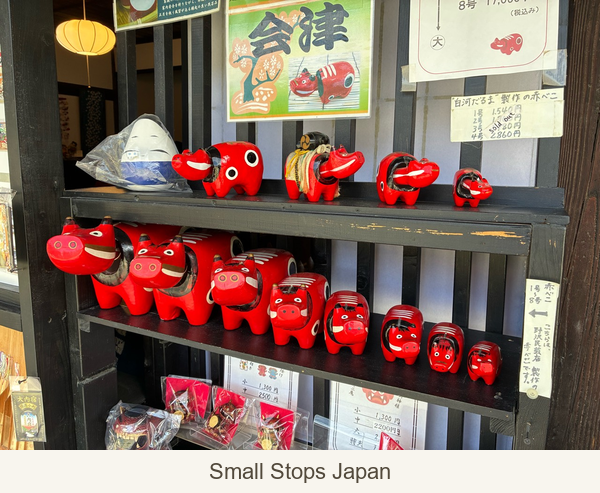
These are akabeko (赤べこ), folk toys associated with Aizu. The local word beko means cow, as the maker Nozawa Mingei explains. Their familiar nodding movement comes from the head moving separately from the body.
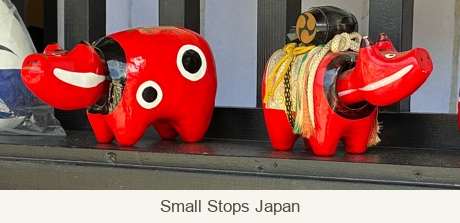
Look where the head meets the body
In the closer view, follow the face back towards the dark rim around it. The red head and the red body are distinct shapes, rather than one continuous surface. On the shelf, their different angles give some cows an upward-looking expression and others a more level gaze. The photograph records those positions; it does not record a movement test.
The explanatory images show the distinction from the side. The body stays in the same position on the tabletop while the head changes angle. Watch the nose in relation to the front of the body, rather than the whole cow tipping over.
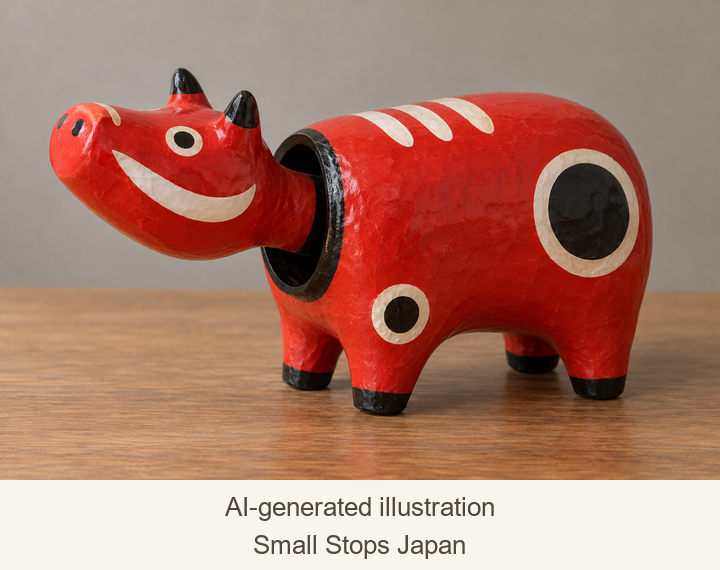
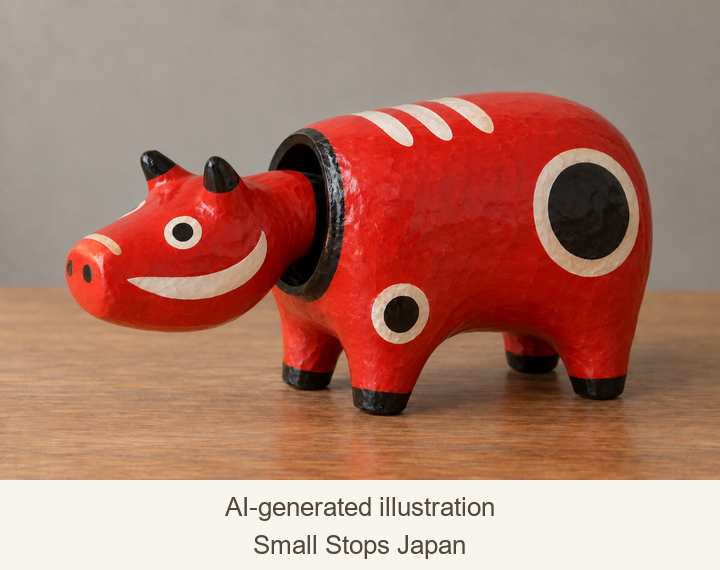
A Japanese government introduction to akabeko describes a hollow body, with the head and neck suspended by a cord inside it. This is the general construction described by the source, not an inspection of the figures on this shop shelf. It explains why a cow that looks like a compact ornament can have a moving part.
A rounded form made with paper
Akabeko are associated with hariko, or papier-mâché. The same government account describes paper formed around a wooden mould, dried, removed from the mould and joined to make the body. The mould helps create the shape; it is not a solid wooden core left inside the finished figure. That distinction changes how you might picture the object beneath its red surface.
One red shelf, several expressions
Return to the photograph and compare the faces. Notice the eyes, the outlines of the noses and the sweep of the pale markings along the cheeks. The figures share a recognisable shape, but they are not all drawn in exactly the same way.
Aizu-Wakamatsu’s official tourism feature explains that faces and patterns are painted onto the paper-and-paste forms, and shows differences between makers. It also introduces versions beyond the familiar red colouring. The display here offers one glimpse of that wider craft.
More than a nodding toy
Nozawa Mingei also relates a local legend about a red cow helping with work at Enzoji Temple in Yanaizu. Its account connects akabeko with gifts expressing wishes for children’s health. The story gives the small toy a place in the region’s traditions of giving.
The small space around the head is an easy detail to miss among so much red. Once you notice it, the shelf offers more to look at: a separate moving head, a paper-built body, and faces whose painted lines give each cow a different expression.