At To-no-Hetsuri in Shimogo, Fukushima Prefecture, a suspension bridge reaches towards a wall of pale rock. Seen from the side, the bridge looks small beside the cliffs. Seen from the bridge, those same rocks fill the space ahead. The difference is part of what makes this riverside stop interesting: a distant shape becomes something overhead and beside your feet.
Ryo visited with his family and photographed the bridge, the rock-side passage and a wooden entrance beneath the rock. These are different views of the place, rather than a complete walking route.
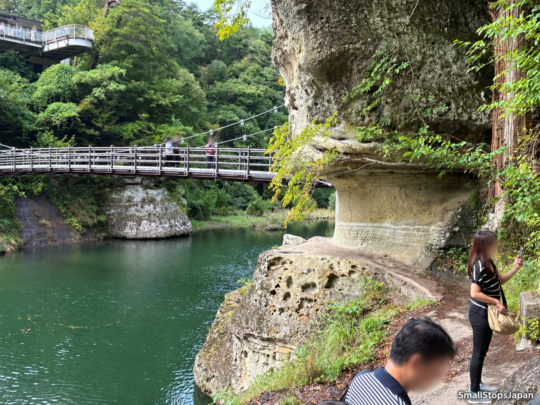
A bridge towards the rock
Looking along the bridge, you can see the boards underfoot and the rails running towards the far end. Beyond them, the rock has a dark recess beneath its broader upper section. People on the far side help show the scale, but the photograph cannot tell you how the bridge felt to walk across.
Ryo’s younger daughter was afraid of the suspension bridge. That is one family’s experience, not a verdict on how another visitor will feel. There is no need to make crossing the bridge a test of courage.
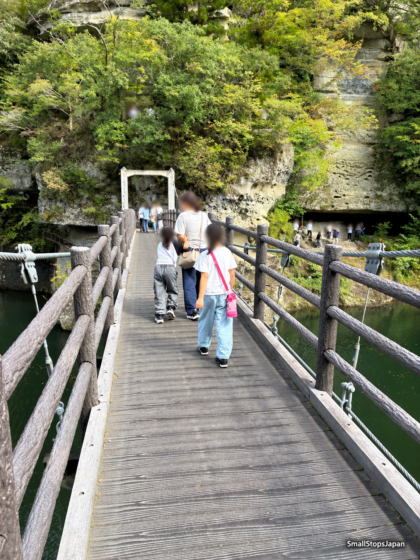
The name refers to the tower-like cliffs beside the river. Fukushima Prefecture’s explanation describes “hetsuri” as a local word for a cliff. Look at the broad rock above and the narrowed section below: the outline is easier to notice than any imagined resemblance to a particular animal or object.
When the cliff becomes the ceiling
Another photograph brings you beneath an overhang. Rock fills much of the upper frame, while water remains visible beside the uneven stone surface underfoot. The place no longer reads simply as a row of tall formations across the river. You can see how the recessed face creates space beneath the rock above it.
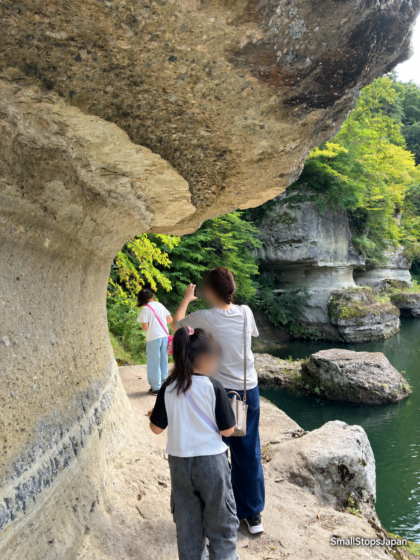
Shimogo Town describes the landscape as the result of erosion and weathering. That background helps connect the tall outer shape with the hollows seen close up. It is not a reason to treat the rock-side area as an ordinary level promenade. The town’s English visitor information specifically notes narrow, steep steps along the cliffside.
A wooden entrance beneath the rock
The fourth view shows wooden doors and a sign reading 虚空蔵菩薩, Kokuzo Bosatsu, beneath the low rock overhead. The entrance introduces a different scale: instead of a whole cliff, there are a doorway, steps and things left around a place of worship.
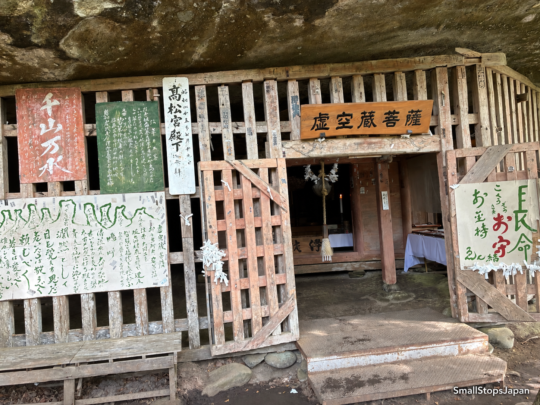
The town’s English page describes a shrine in a small cave reached by the bridge. Ryo’s photograph records the entrance as he saw it; it does not show a ceremony or tell us the history of every object inside.
Before visiting, check the local tourism association’s information and follow signs and closures on site. These photographs show a past visit, not today’s conditions. Even without following every part of the rock-side passage, the relationship between bridge, river and cliff is worth noticing: the view changes when the rock is no longer only in front of you, but above you as well.