A small triangle of white rice, a dark strip around its base, perhaps a filling hidden in the middle. This is an onigiri (おにぎり): cooked rice shaped so that you can pick it up and eat it.
If it is unfamiliar, start with the one in front of you. What is the dark wrapping? What is inside? Do you eat it with your hands? Those details are more useful for a first bite than a long list of varieties.
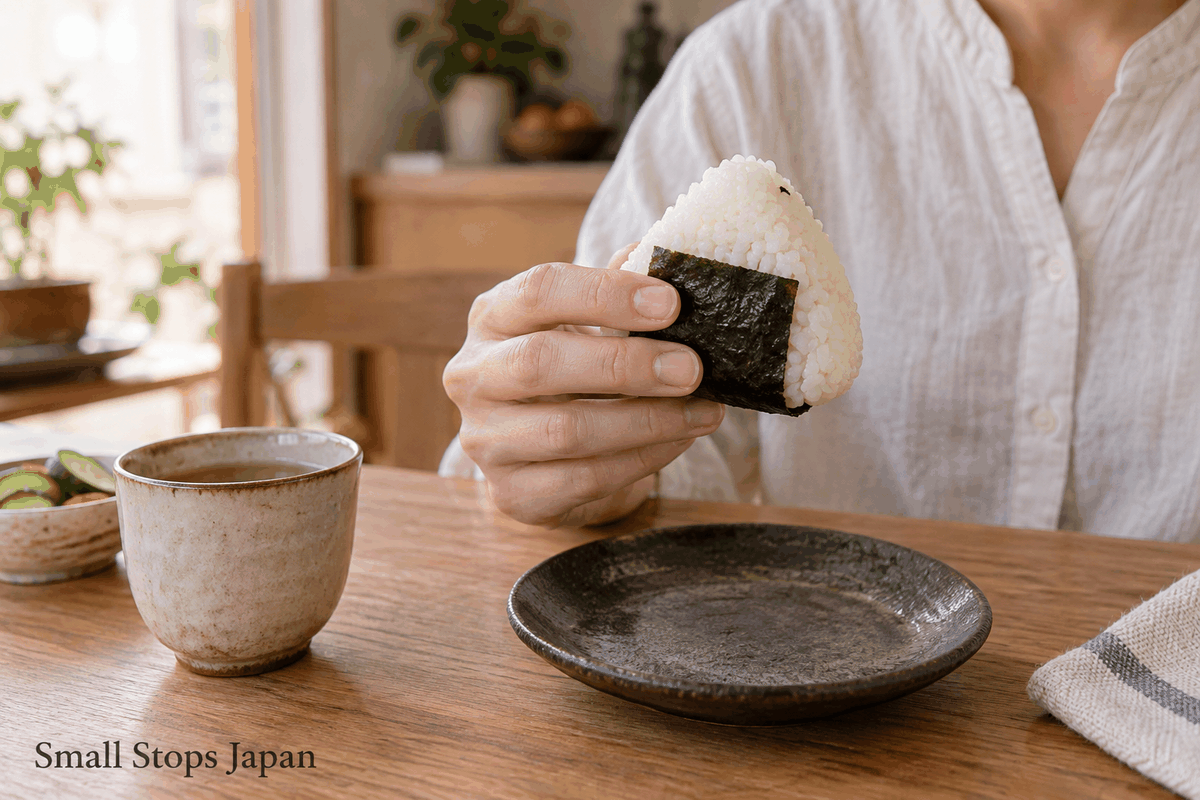
Rice outside, a small surprise inside
The white part is rice that has already been cooked, then pressed together. It is not raw rice, and the shape does not have to be round. A triangle is one familiar form; round and short oval versions exist too.
A filling can sit in the centre. Flaked cooked salmon, pickled plum and seasoned bonito flakes are examples in Japan’s agriculture ministry’s onigiri recipe. Other versions have ingredients mixed through the rice, or keep things simple without a centre filling.
For a sense of scale, that recipe lists 100 g of cooked rice—about 3.5 oz—for its one-person portion. Shop sizes vary, but the recipe gives you an idea of how much rice forms the body around a small filling.
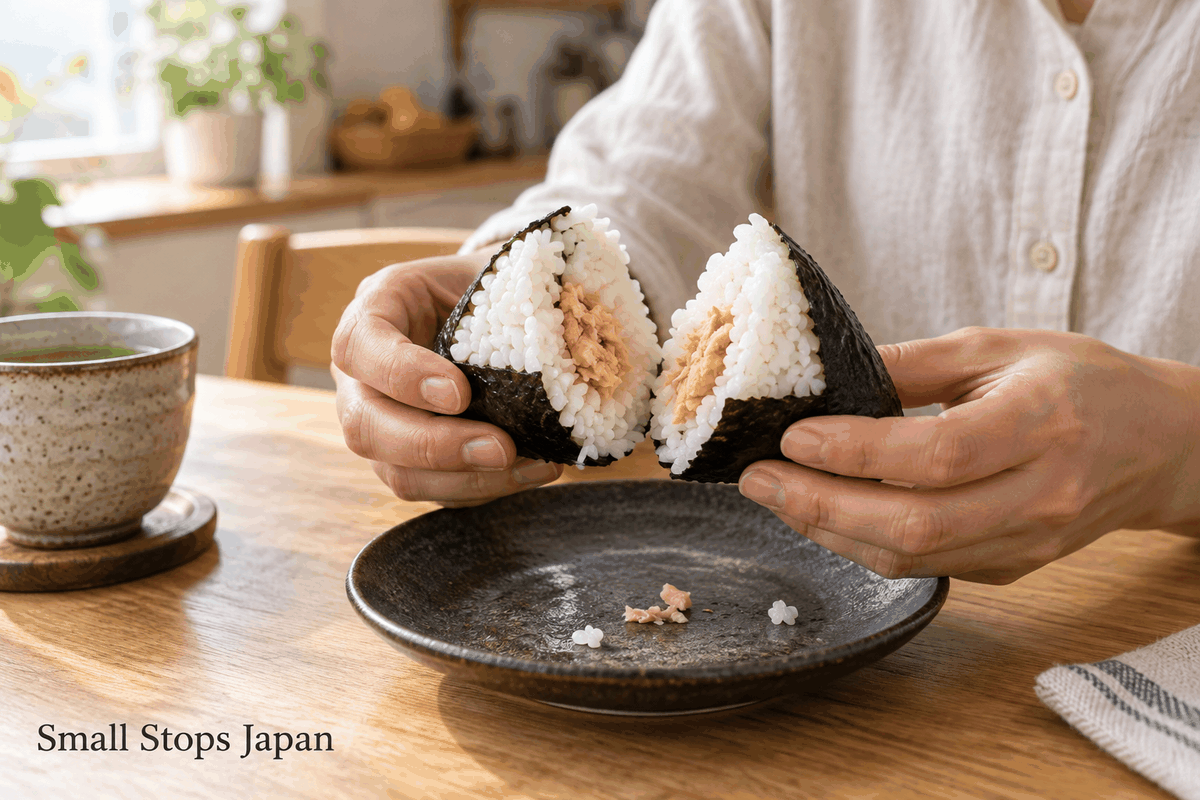
The dark strip is food too
Nori (海苔) is edible seaweed made into thin sheets. In the example here, it wraps around the base, leaving the rice visible at the top. You eat the nori together with the rice; it is not something to peel away like plastic.
The ministry’s recipe finishes by wrapping nori around the shaped rice. If you are assembling one to eat at the table, this makes the relationship easy to see: rice first, nori around it. Not every onigiri has nori, and the amount of coverage varies.
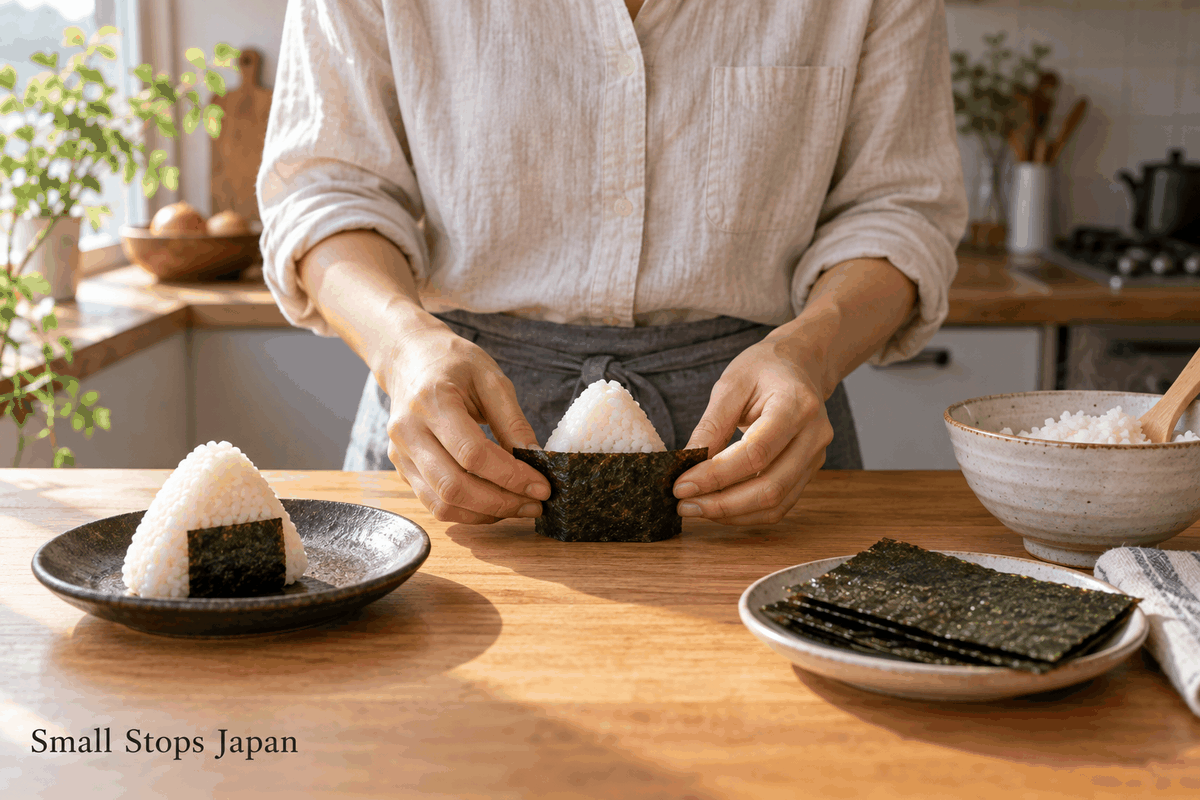
Pick it up, then take a manageable bite
With clean hands, support the lower part rather than pinching the rice tip. A gentle grip helps keep it together. Keep a plate or the opened wrapping underneath to catch loose grains.
If yours comes in plastic packaging, remove the plastic before eating and follow the instructions printed on that particular pack. Packages differ; do not assume that every wrapper opens in the same way. The seaweed stays with the food.
There is no need to make the first bite an etiquette test. I would start by understanding the wrapping and choosing a filling that sounds good to you.
Choosing a filling—and understanding “omusubi”
Seven-Eleven Japan’s product list, for example, includes salmon and tuna-mayonnaise rice balls. Read the actual product description and ingredient information: the white rice outside does not tell you everything inside. Selection varies by shop and region.
You may also see omusubi (おむすび). The Onigiri Society explains the two names as referring to the same basic food. There is no reliable nationwide rule that one word means a triangle and the other a round shape.
A small connection to Fukushima
The rice itself can have a local story. In Fukushima Prefecture, Inawashiro Town’s official Tennotsubu rice guide includes onigiri among the suggested uses of its local rice brand. To find out which rice a particular onigiri uses, look for the rice name on the label or ask the seller.
Once you understand the rice, filling and nori, one small object opens up several things to notice—without needing to memorise them all before lunch.
Sources checked on 14 September 2026. Illustrations: Small Stops Japan. Image-use notes.