A low table with a thick quilt spilling out beneath its top can be puzzling at first. Where does someone sit, and why is the wooden surface still uncovered? A kotatsu brings those two parts together: a usable tabletop above a space intended to warm your legs.
The four AI-generated illustrations below explain one low-table form. They show a general design, not a particular product or a home we visited.
The top is still a table
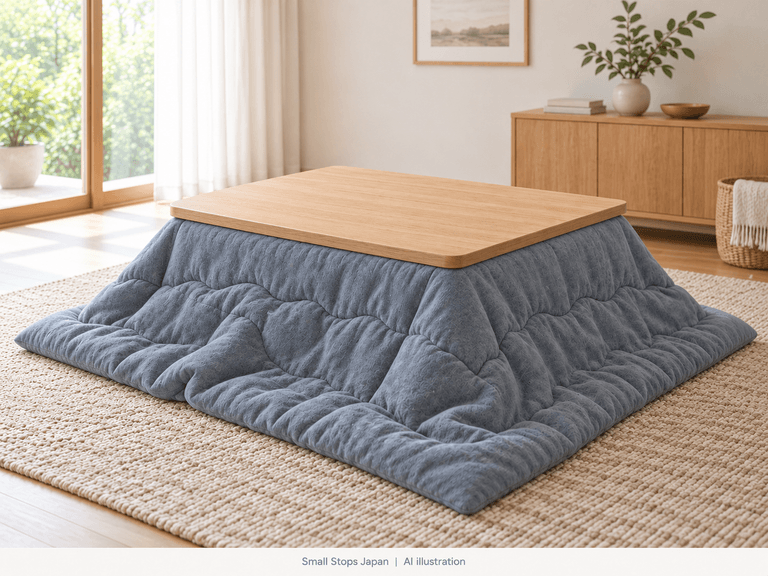
Start with the first picture’s outline. The broad wooden rectangle remains visible, while the quilt drops towards the floor on each side. The fabric does not cover the surface where a book would rest.
In this form, the quilt sits between the removable tabletop and the table body. That position explains the familiar silhouette: a firm surface above, with fabric hanging beneath its edges. Nichibi’s guide to kotatsu construction describes this arrangement.
The person sits beside it
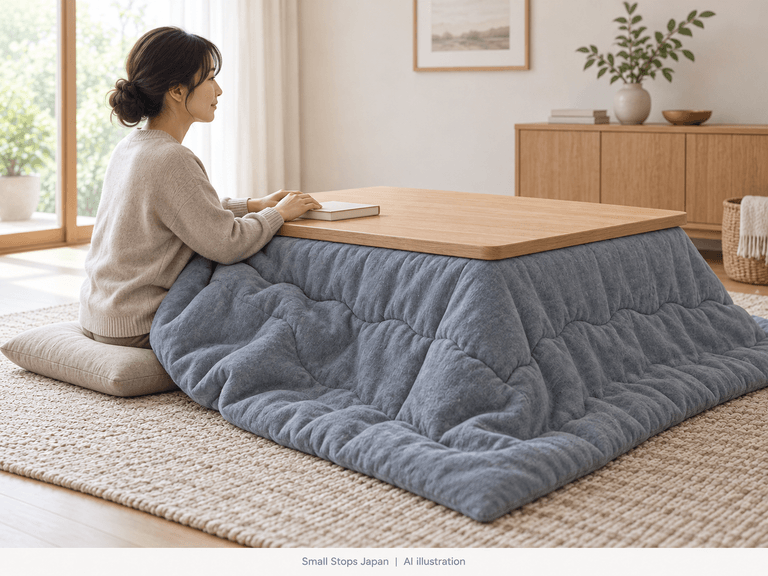
The seated illustration gives the table a human scale. The cushion is beside the table, and the quilt meets the person’s lap. Her upper body and arms remain outside; the space for her legs is below the tabletop, hidden by the fabric.
Notice the book. It is on the exposed wooden surface, within reach of her hands. This is how the picture connects the two uses of the same piece of furniture: sitting at a table while having a covered space for the lower body.
Where the quilt goes
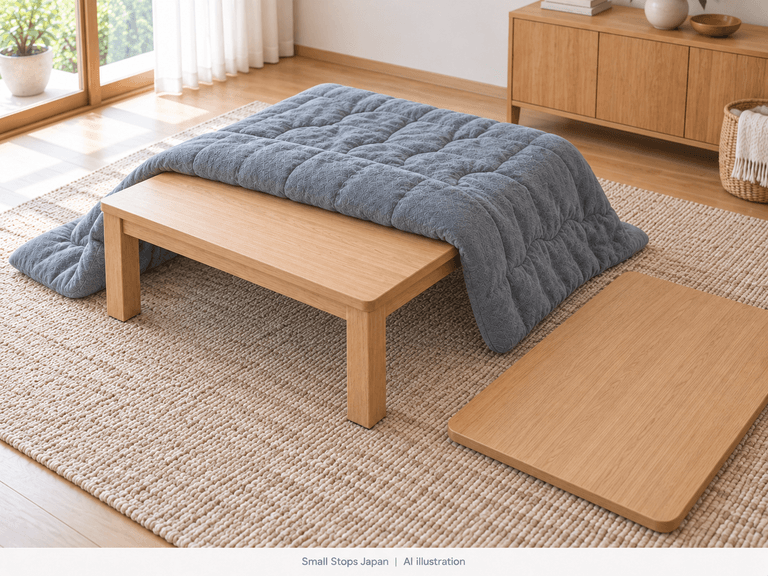
Compare this view with the first one. The separate board on the floor is the tabletop that was visible above the quilt. The exposed surface still attached to the legs belongs to the table body. The folded fabric helps distinguish those two parts, which are difficult to see when the kotatsu is covered.
The heater is underneath
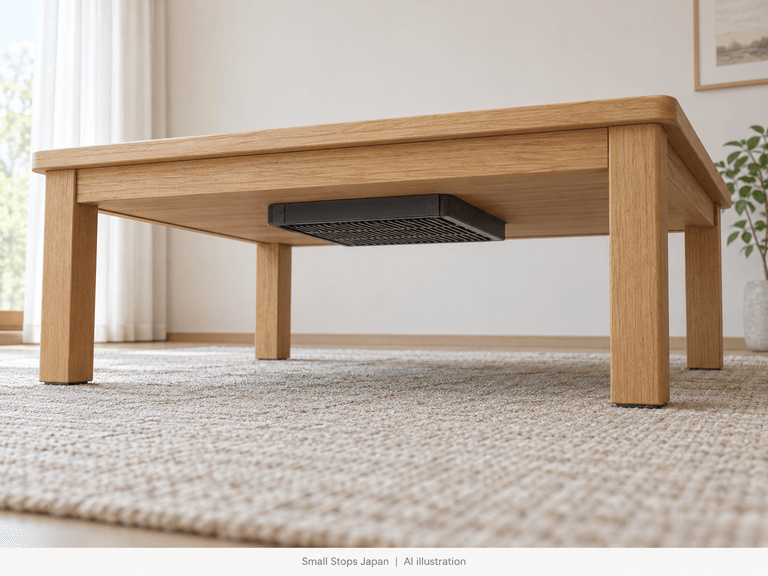
The final view reveals the part hidden in the first two pictures: an electric heater beneath the table body, above the floor. Koizumi’s kotatsu product page (Japanese) shows an underside heater on a real product.
These views explain the layout, rather than assembly or electrical operation. Shapes and construction vary by model. When you next see a covered kotatsu, look for the exposed tabletop, the quilt below its edge and the person sitting beside it: together, they make the arrangement easier to read.