You have taken off your shoes at a Japanese home. Now there are slippers—and another pair beside the toilet. Do they all go to the same places? The useful detail is the boundary: look at the floor and the room you are about to enter.
A genkan (玄関) is an entrance area. In the example below, the tiled section is lower than the wooden floor inside. That small step makes the change of space easy to see.
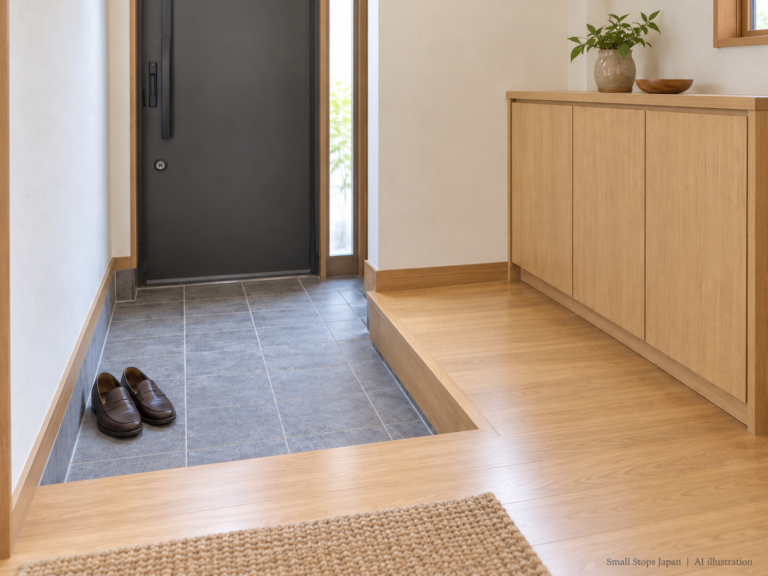
The step between shoes and socks
At a shoes-off entrance, outdoor shoes stay in the entrance area, or in the shoe storage provided. Keep the way through clear. The raised indoor floor is the side for your socks or indoor footwear—not the place to stand while still wearing outdoor shoes.
Look closely at the next illustration. One socked foot is already on the wood. The other foot is still partly inside a brown shoe on the tile, with the heel lifting out. An empty shoe remains below. The person has a hand on the cabinet for support.
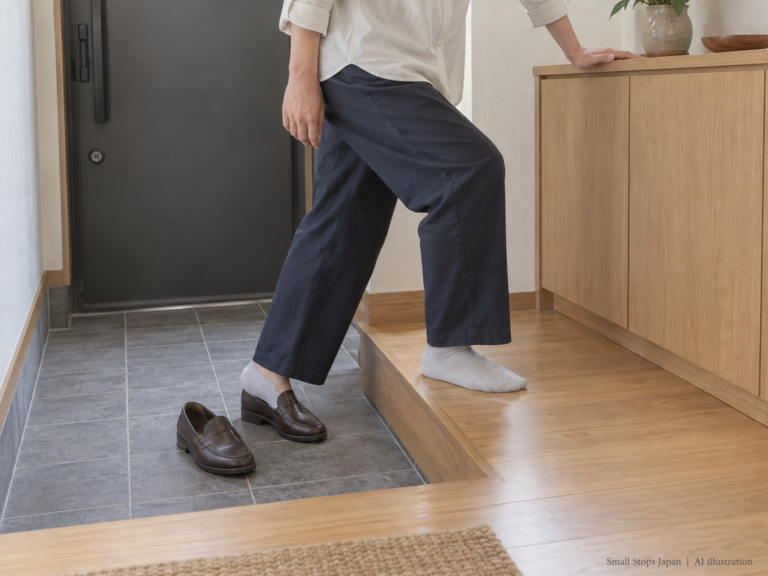
The important distinction is visible even without a numbered sequence: shoes below, socked foot above. This is an example of the changeover, not a movement everyone needs to copy. Use the seating or assistance available if the step is awkward.
Slippers stop before the tatami
Indoor slippers may be offered after you remove your shoes. They do not mean “wear these everywhere.” Take them off before stepping onto tatami, the woven mats used as flooring in some rooms.
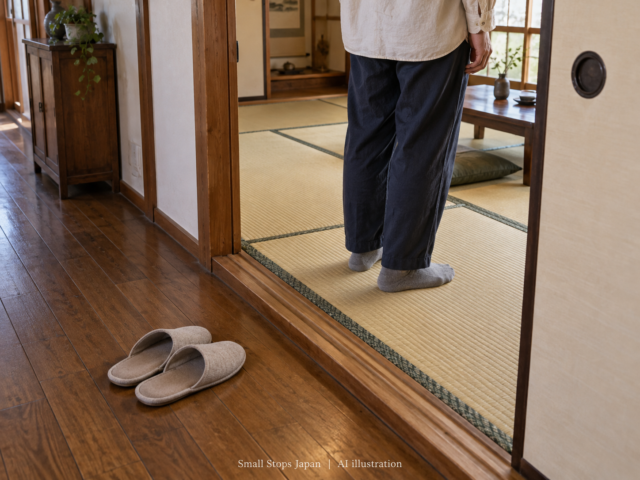
Here the threshold and the change from wood to woven mats mark the room entrance. The slippers are close enough to use on the way out, but sit to the side of the opening. Seeing their position tells you more than simply seeing a pair of slippers by itself.
A pair that belongs in the toilet room
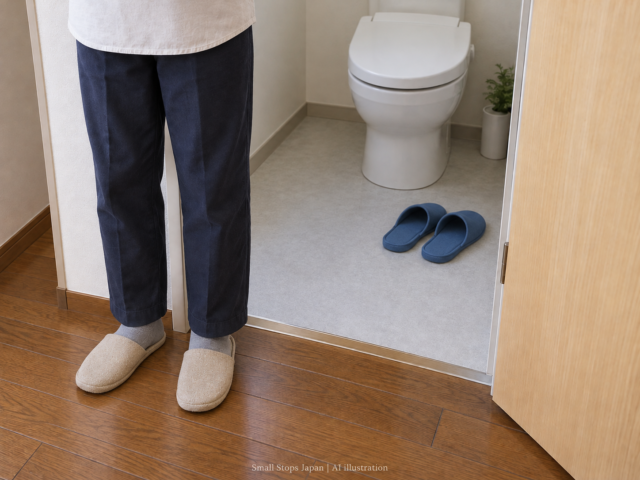
Some homes and facilities provide dedicated toilet slippers. Where they are supplied, change into them for that room and change back when leaving. Do not carry the toilet pair into the rest of the indoor space.
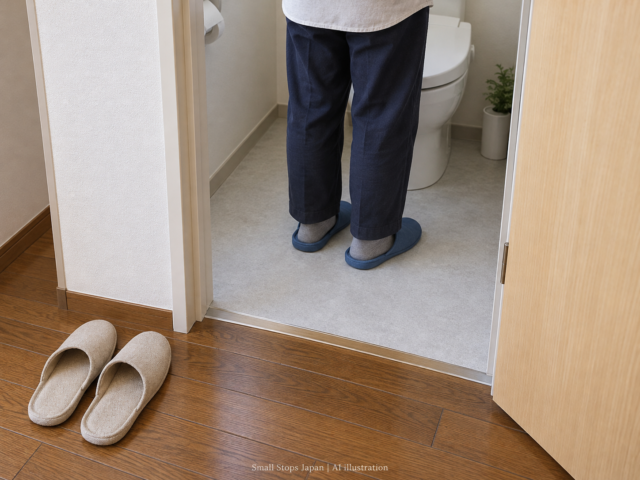
The next image shows the same fictional doorway after the person has returned to the hallway. Follow the blue pair: it has stayed inside. The beige pair is back on the person’s feet.
Read the place, not just the footwear
Not every building has these spaces, and not every indoor area is shoes-off. Follow the host’s directions or the facility’s signs. When a doorway is unclear, a simple “Shoes off here?” is more useful than guessing from the floor material alone.
For general visitor guidance, see the Japan National Tourism Organization’s manners and etiquette guide. The images here are AI-generated explanatory illustrations, not photographs of a particular home or venue.