A pair of white indoor shoes can look straightforward. The more useful question is where that pair belongs—and what happens to the shoes you arrive in. Senri Daini Elementary School in Suita offers a specific example in its 2026 guide. Its footwear instructions distinguish uses, and its entrance-ceremony arrangements distinguish pupils from parents.
These AI-generated illustrations show invented people, footwear, and spaces. They do not reproduce the school’s entrance or identify its designated products.
Start with the purpose of each pair
The guide separates indoor shoes, gym shoes, and outdoor shoes. These are three uses to check in that school’s instructions, rather than categories to identify from a shoe’s appearance alone. See the footwear section on printed page 3 of the school’s 2026 guide.
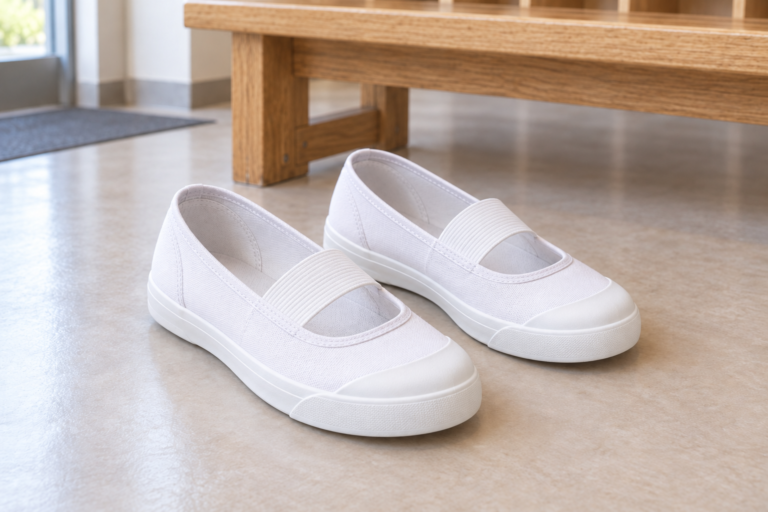
In the illustrated pair, an elastic band crosses the instep. The opening behind it receives the foot, while the sole forms the base. Those visible parts help you recognize the object; they do not tell you whether a particular school accepts it for a particular activity.
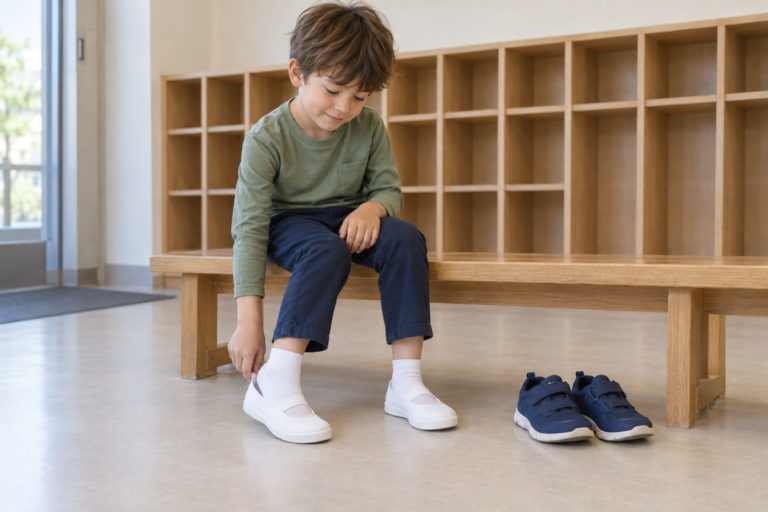
The seated scene makes two pairs easy to distinguish: the white shoes on the child’s feet and the navy outdoor shoes set aside. It illustrates adjusting a heel, not a required order for changing shoes.
Pupils and parents have different destinations for outdoor shoes
For this school’s 2026 entrance ceremony, incoming pupils are directed to put outdoor shoes in their class shoe storage. Parents are told to put theirs in a bag and take them into the venue. Both are asked to change into indoor footwear. These are ceremony instructions, not a description of every school morning. The distinction appears on printed page 6 of the same guide.
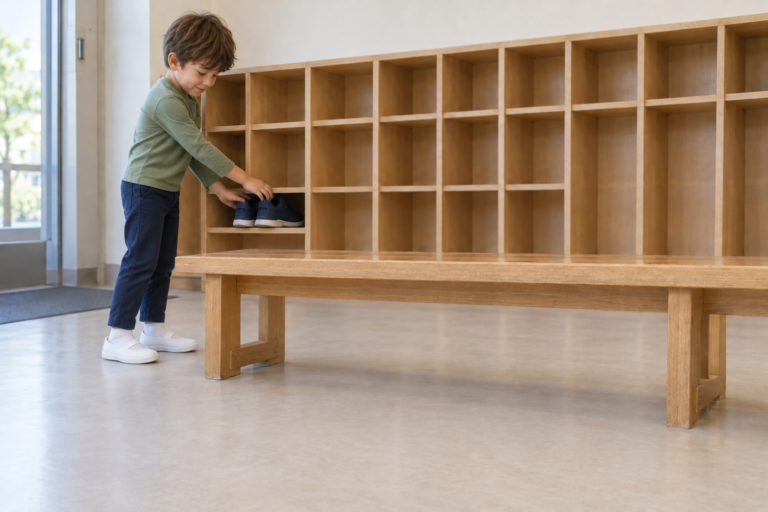
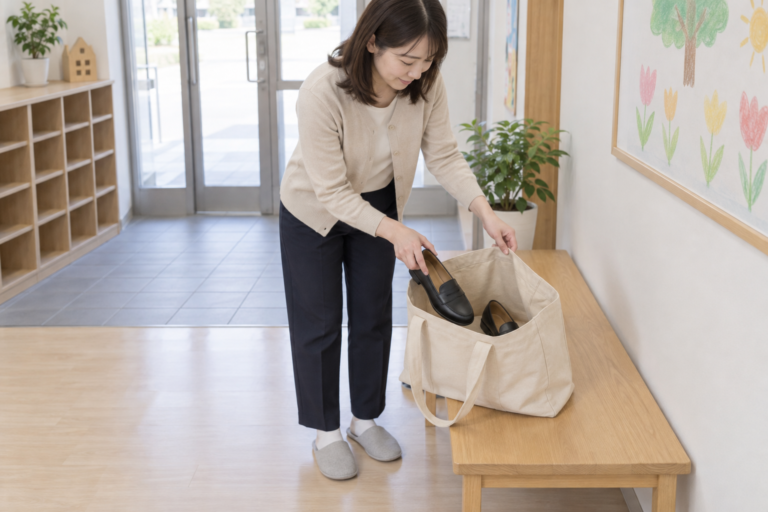
The shelf and bag show the practical difference. One pair stays in storage; the other travels with its owner. The pictured tote is an illustrative container, not a specified model.
Read for your role, as well as your shoes
Before a school visit, identify which instructions apply to you: pupil or accompanying adult, ordinary attendance or a particular event. Then check the footwear and the destination for the removed pair. This single-school example gives you questions to look for in your own school’s current notice; its details should not be assumed to apply elsewhere.