A pupil in a white coat is standing beside a tray of bread, ready to put a roll onto a plate. The classroom is still a classroom, but this pupil has a different job for a few minutes: helping serve lunch. The clothing is a useful clue to that change of role.
Kyushoku means school lunch; kyushokugi refers to clothing used for it. Here we look at a coat, a cap and a carrying bag through three illustrated scenes. Their shapes are fictional examples. Actual clothing and routines depend on the school.
First, see the clothes as separate things
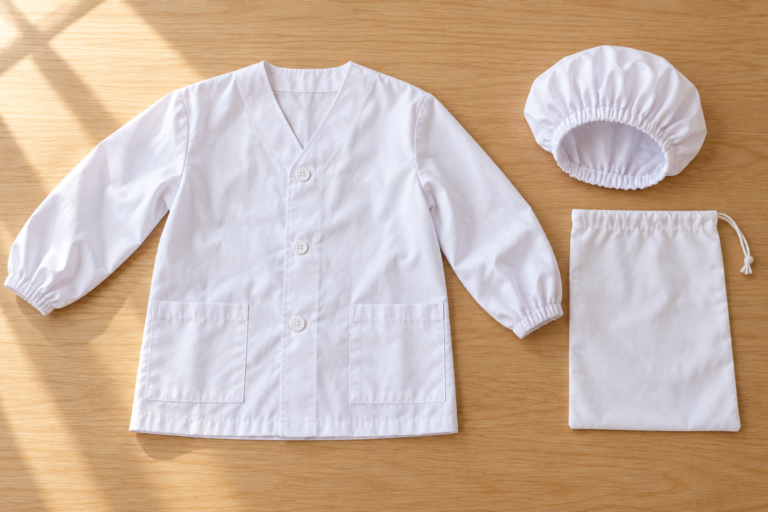
Spread out, the example coat has a V-shaped neck, three front buttons, two pockets and gathered sleeve ends. The cap sits beside it, with its elastic opening visible. A separate cloth bag completes the group. These details are easier to distinguish here than when the coat is partly hidden behind a serving table.
The white-on-white folds can be subtle: follow the outline from the shoulder to the cuff, then back to the body of the coat. The cap is a separate item, not a hood attached to the neckline. This is one possible appearance, rather than a checklist of features every school requires.
The clothing makes sense beside the food
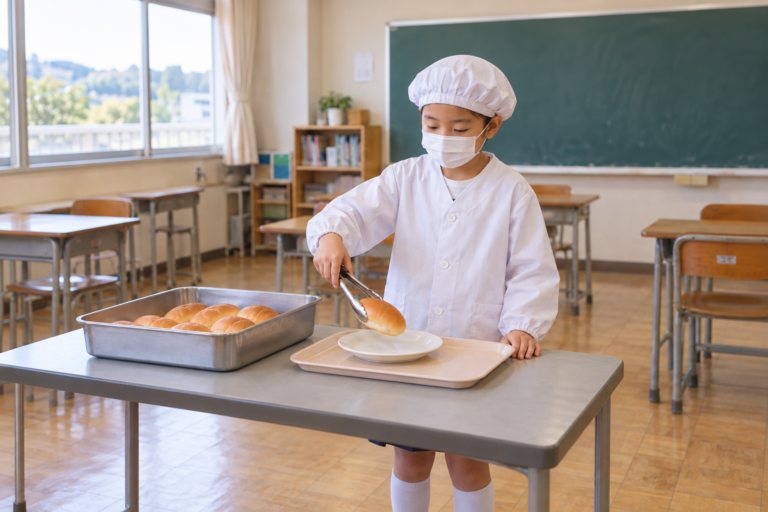
In the next scene, the same style of coat is being worn. One hand holds tongs around a bread roll, while the plate rests on a tray supported by the table. The pupil is serving food already prepared for the meal. The image shows a general example of the task, not an instruction to copy a particular serving technique.
Web Japan’s 2021 account of classroom duties describes pupils taking turns with shared tasks. For school lunch, some serve rice and others serve accompanying dishes; tidying up is also part of the work. That helps explain why a child may be standing at the serving table while classmates wait for their meals. The report gives school examples, and notes that duties vary. Read the classroom-duties account.
A small bag can connect school and home
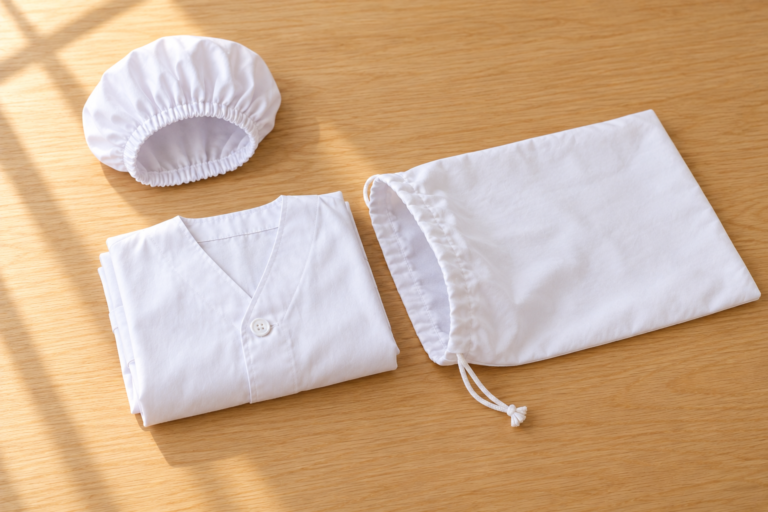
The third illustration changes the scale of the outfit: the long sleeves and body are folded into a small bundle beside an open bag. The cap remains separate. You can see what is ready to be packed without having to guess what is hidden inside a closed bag.
A specific example comes from Iwasaki Elementary School in Yokohama. Its 2026 handbook says pupils take turns using shared lunch coats, then take the coat and its bag home on Friday for care and bring them back at the start of the next school week. This is one school’s arrangement, not a national timetable. See the school handbook, printed page 9 (PDF page 11).
The same handbook asks for lunch caps and masks every day, including for pupils who are not serving. A cap alone therefore does not tell you who is on duty. It also means the shared coat’s journey home should not be assumed to describe the cap’s routine.
Look at the task as well as the outfit
Next time you notice white clothing in a school-lunch scene, look at the surrounding action: the food container, the receiving plate and the person doing the serving. Together they tell you more than the clothes alone. The bag adds another part of the story, showing how one school’s shared equipment connects the classroom with home.
Images in this article are AI-generated explanatory illustrations. About our images.