A small bottle of red seasoning beside a bowl of noodles can be easy to overlook. Look closer at the name, though, and you may find 一味 or 七味. Both contain chilli. The useful difference is what comes with it: chilli on its own, or chilli as part of an aromatic blend.
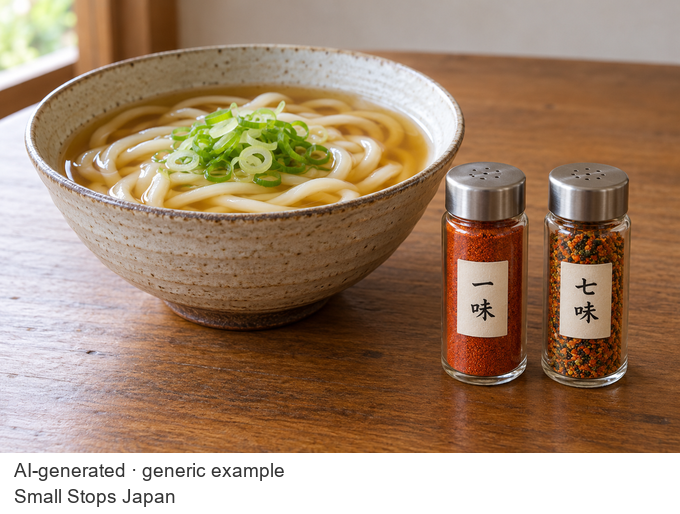
This is a closer look at those two names, using a simple noodle meal to give the bottles some context. The images are AI-generated examples with generic containers, not photographs of a particular restaurant or brand.
First, read the name on the bottle
一味 — ichimi means “one flavour”; 七味 — shichimi means “seven flavours”. The longer names are ichimi togarashi and shichimi togarashi. Togarashi means chilli pepper. You may see it written 唐辛子 or 唐からし after the short name.
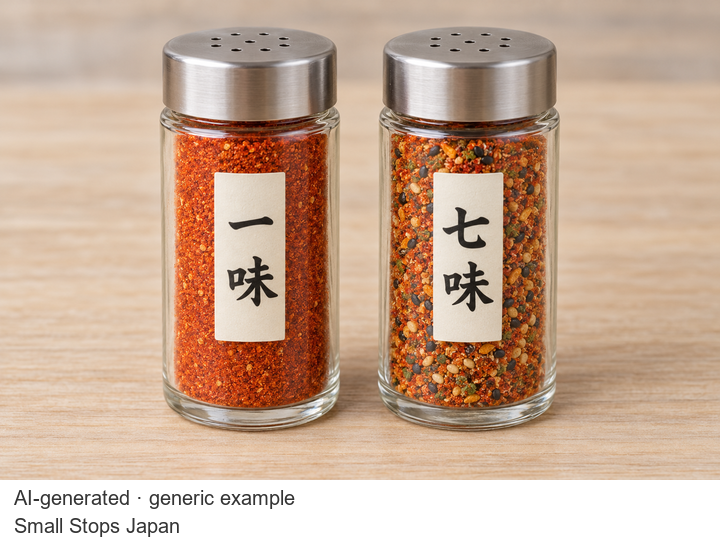
In the labels above, the second character, 味, is the same. The first character is your quick clue: 一 for one, 七 for seven. These are seasoning names, not a one-to-seven heat scale. Bottle shapes and labels vary, so the name is a more useful guide than a lid colour.
Look at what is mixed with the chilli
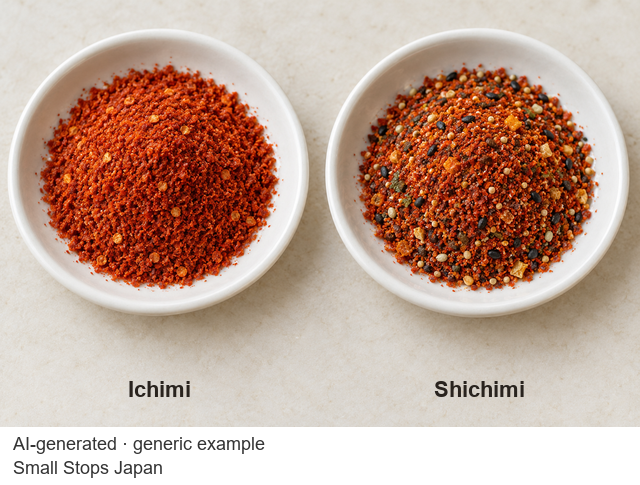
Ichimi is ground chilli. Shichimi combines chilli with other ingredients, which can bring citrus, seed and spice aromas as well as heat. In the close-up below, notice the contrast between the predominantly red chilli and the more varied particles in the blend. This illustrates the idea; appearance alone cannot identify every ingredient or tell you how hot a seasoning will taste.
A specific example makes the difference clearer. S&B’s Japanese-market 15 g ichimi lists red chilli as its ingredient. Its 15 g shichimi lists seven: red chilli, roasted black sesame, dried citrus peel, sansho pepper, hemp seeds, poppy seeds and aonori seaweed.
That is one recipe, rather than a formula every maker follows. Yawataya Isogoro’s ingredient guide, for example, includes ginger and shiso in its seven-part blend. Two bottles both labelled 七味 can therefore offer different combinations. If a particular aroma interests you, the ingredient list is worth a look.
Nor does “one flavour” mean that ichimi has no aroma. S&B describes using both roasted and unroasted chilli in its product. The distinction is a single kind of ingredient versus a blend, not flavourless heat versus flavour.
Choose for aroma as well as heat
If you want the chilli itself to be the main addition, ichimi is a useful starting point. If you are curious about a mixture of aromas, try shichimi. Neither is compulsory: a bowl you already enjoy does not need seasoning just because a bottle is there.
For its comparison, S&B describes ichimi as the hotter of the two. That does not make every shichimi mild, or establish a heat ranking for every brand. The product and how much you add both matter.
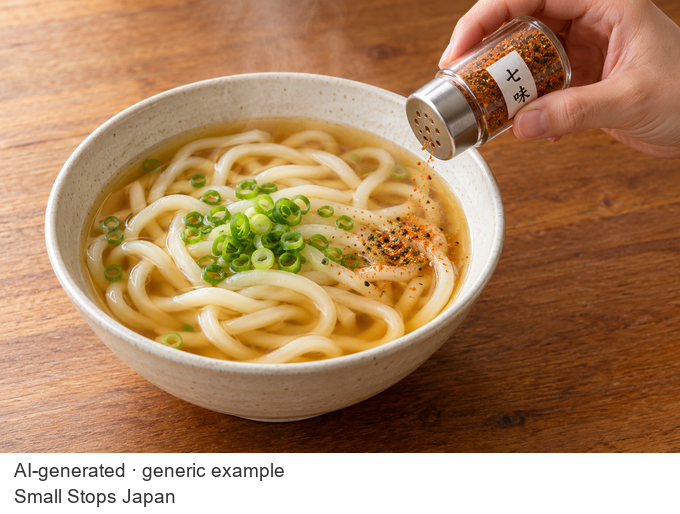
One way to explore the difference is to taste the noodles and broth first, then add a little seasoning to one side and try that part. You can add more if you want. The picture shows this idea, not a measured dose or a rule of Japanese dining. A light start leaves room to notice the added aroma without immediately changing the whole bowl.
A small detail to notice next time
You do not need to memorise seven ingredients to recognise the choice. Start with the two characters: 一味 centres on chilli; 七味 is a blend. Then look at the ingredients if you want to discover what makes that particular bottle different.
For another close look at a Japanese noodle meal, see our photographs of negi soba at Komeya in Ouchi-juku. That story explores the long onion served with the noodles; the generic seasoning scenes here are separate from that visit.