Look at the same small desk three times: first with a notebook, then with a lunch tray, then standing to one side of an open floor. The furniture has hardly changed. What the classroom needs from it has.
This is one way to understand an ordinary Japanese school day. At elementary schools where children eat lunch and help clean in their classrooms, an individual desk is more than a place to write. The scenes below are illustrations, not photographs of a particular school; layouts and routines vary.
Scene one: making room to write
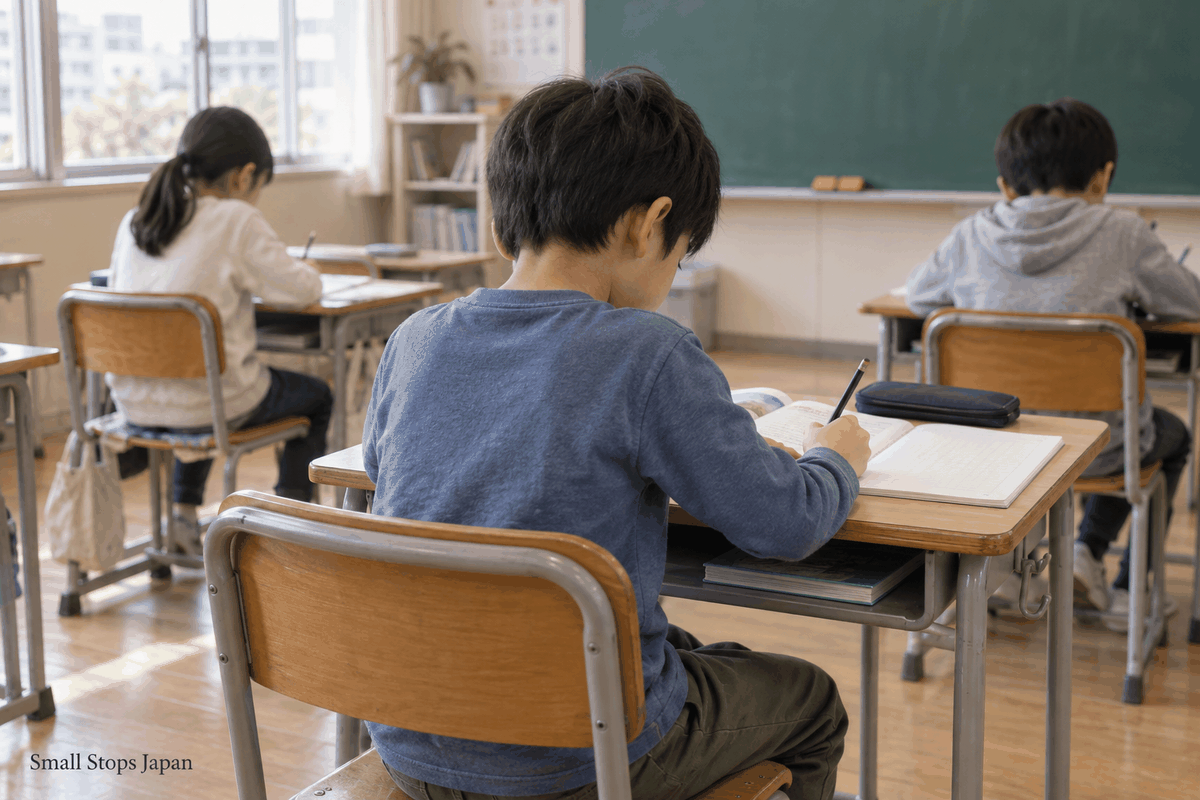
Notice where the book ends and the notebook begins. A pupil needs room for the reference page, a moving hand and somewhere to put a pencil case. A small shift in the objects changes how much clear writing space is left.
For scale, one desk in Uchida’s 2026–2027 educational-furniture catalogue, printed page 41—model UY-3701M—has a 65 × 45 cm tabletop, roughly 25.6 × 17.7 inches. That is one product example; the catalogue offers other sizes too. The illustration is not drawn to scale.
Under the tabletop, a storage space can keep a book close while freeing the surface above. Once the books are tucked away, the tabletop is ready for its next job.
Scene two: the books make way for lunch
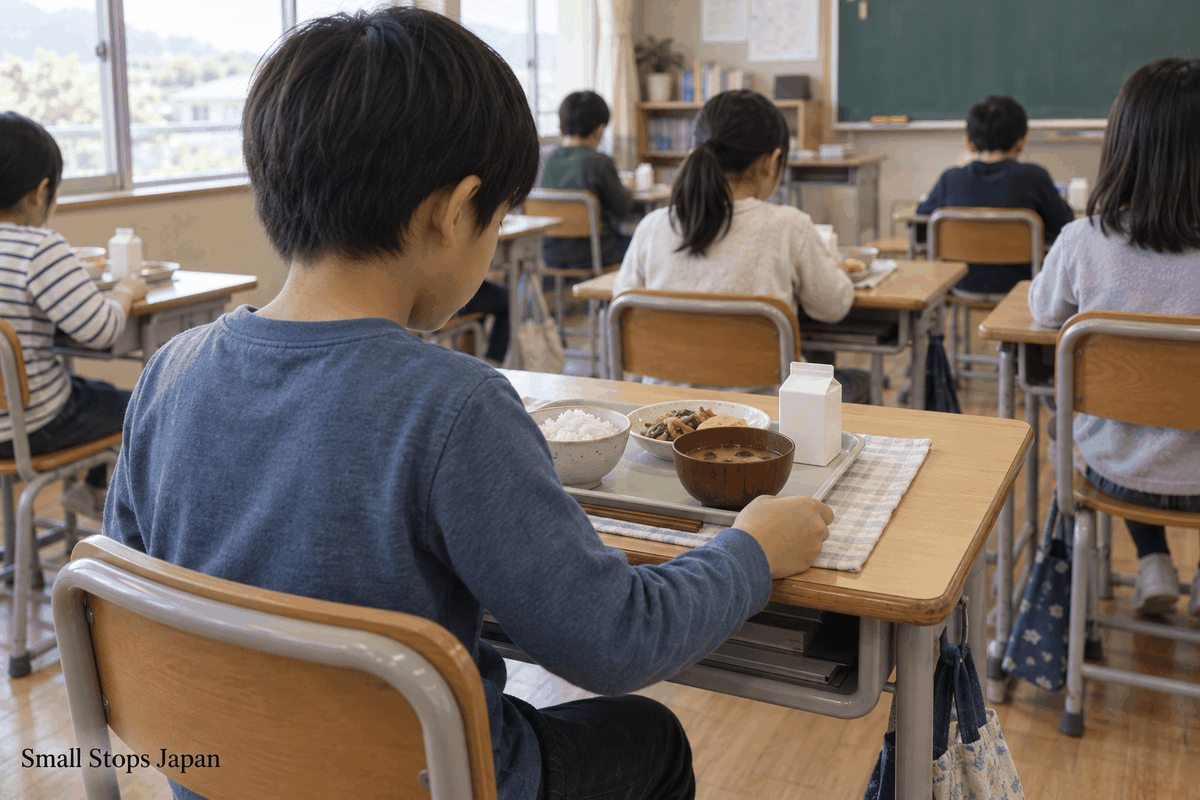
The notebook has gone away and a tray now occupies the work surface. In many Japanese elementary schools, lunch is eaten in the classroom. Web Japan’s feature on classroom duties shows pupils taking turns serving prepared food and helping tidy up afterwards, with examples from a Tokyo school.
Look at the space between the tray and the table edge. Moving learning materials out of the way lets the same desk accommodate bowls, a drink and utensils. A few minutes of tidying turn a place for writing into a place to eat.
Here in Fukushima City, school lunch can also connect the classroom to local food. A city report from June 2026 describes elementary pupils helping thin apples in a local high school’s orchard. At the time of the report, the fruit was intended for school lunches after the autumn harvest. The June report follows the work before harvest, so the serving date is still a plan in that account.
Scene three: moving the desk changes the room
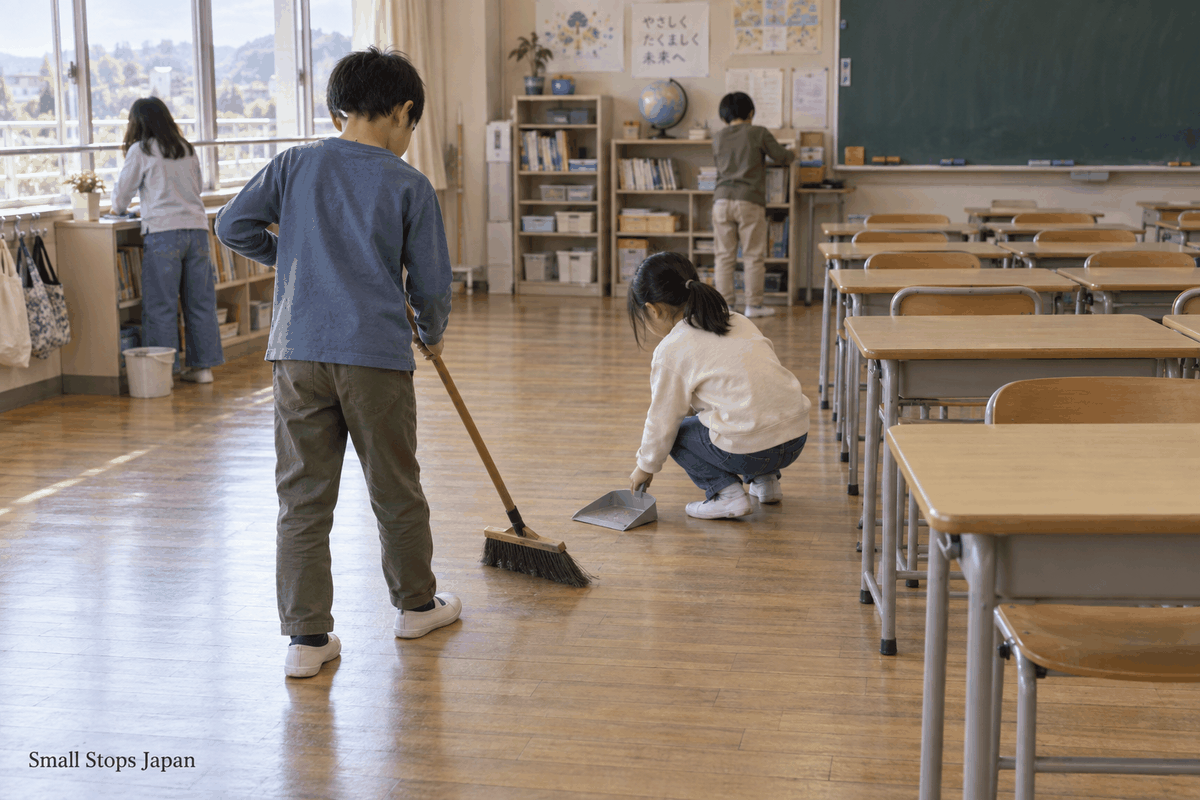
Now look below the desk. A chair and four legs divide the floor into small spaces. When furniture is moved aside, there is room for a broom to travel across a larger area.
An earlier school-life feature by The Japan Forum shows desks moved towards the back before pupils sweep and wipe the floor. Web Japan likewise describes pupils moving desks to make space and working together with brooms and dustpans. The desks move, and the floor becomes easier to reach.
The open space is part of the story. A desk that seemed to define one pupil’s seat during a lesson now affects how the whole group can look after the room.
Watch what changes around an ordinary object
Writing, eating and cleaning are familiar activities. Seeing them gathered around one desk can make a different school routine easier to picture, without turning it into a claim that all Japanese schools work alike.
I like this kind of small detail: you can understand something about daily life by noticing where a book goes, where a tray sits and why a patch of floor has been cleared.
Sources checked on 14 September 2026. Illustrations: Small Stops Japan. Image-use notes.