A rice cooker finishes cooking, someone opens the lid, and a small white paddle goes to work. Before the rice reaches a bowl, there is usually a little loosening and turning to do.
That paddle is a shamoji, the Japanese name for a rice-serving tool. Its broad face carries rice; its edge helps break up clumps. Following those two movements explains the shape better than looking at the tool on its own. The scenes below are illustrations of a general home setting, not a demonstration of a particular product.
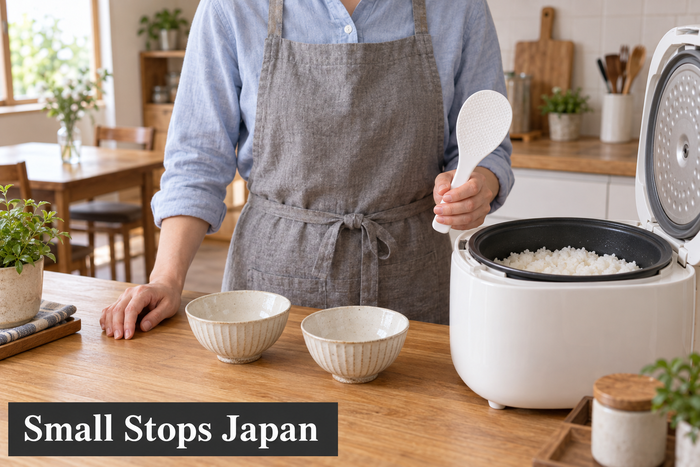
Start beside the rice cooker
The first thing to notice is the shallow, broad head. It can slide beneath cooked rice and support a small scoop as you lift it. The handle keeps your fingers away from the food and the hot inner pot.
You may see a textured plastic version like the one illustrated here. Designs and care instructions differ. For example, Marna describes an embossed surface on its Kiwami Premium paddle to help reduce sticking, but that does not mean every paddle has the same finish or treatment. See Marna’s product and care information.
Loosen the rice before serving
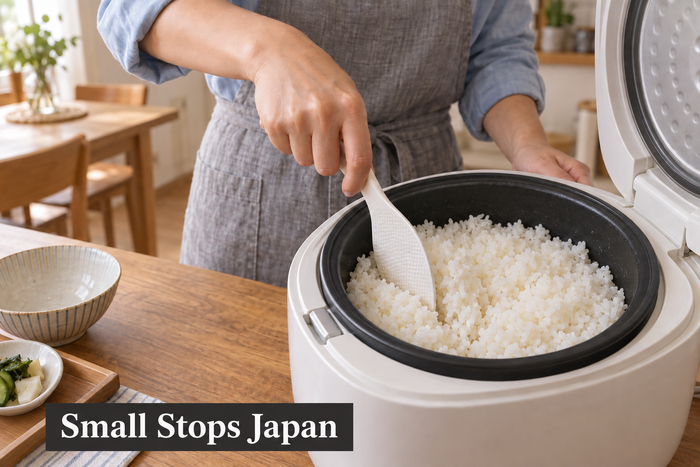
Here, fluffing means gently lifting and separating the cooked rice. Zojirushi explains that this releases excess moisture and helps the rice become evenly fluffy. The aim is to loosen the clumps while keeping the grains intact.
In its Japanese cooking guide, Zojirushi recommends working through the pot one-quarter at a time: lift rice from below along the side of the inner pot, then turn the paddle upright to separate clumps with a cutting motion. You are moving small sections instead of stirring the whole pot forcefully. Read the manufacturer’s guide to loosening cooked rice.
Start when your cooker’s cooking and resting cycle is complete, following its instructions for opening the lid. Models handle resting differently, so a universal extra waiting time would be misleading.
Turn the broad face toward the bowl
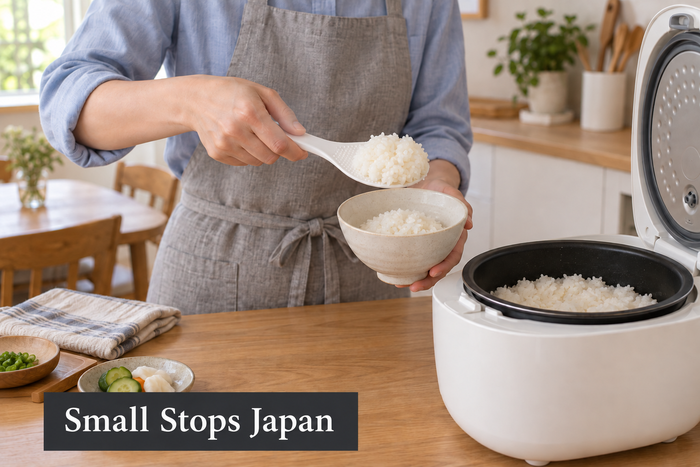
Now the same tool takes on its serving role. Turn the broad face underneath a small scoop of rice, lift it, and transfer it to a bowl. The change is in the angle: the edge helps separate the rice, while the broad face supports it.
Set the rice down gently rather than pressing it into a firm block. The illustration shows a bowl held outside the cooker’s rim, close enough for a short transfer. It is an example of the movement, not a rule about a particular grip or portion size.
Give the paddle a place to rest
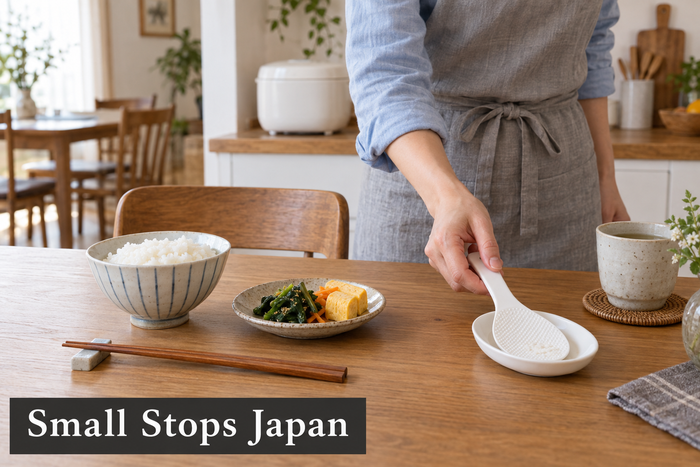
Once the bowls are filled, place the paddle on a clean rest or small dish. Some products have a stand or a raised section of their own; those features vary by design. The dish shown here is simply one way to keep the rice-touching end off the counter.
If grains stick to the paddle, do not knock it against the inner pot. Zojirushi warns that banging utensils against the pot can damage its coating. Its care guide also suggests briefly softening dried rice on the paddle in warm water before washing. Follow your own paddle’s cleaning instructions, especially for materials that should not be soaked. Read the inner-pot precautions and rice-paddle cleaning advice.
A shamoji belongs to a small transition in the meal: cooked rice is loosened, lifted, and served in bowls. Once you have watched the edge and broad face do their different jobs, the unfamiliar shape becomes easy to understand.
Image credits: Small Stops Japan. Image-use notes.