The cup is amber, the dry leaves are brown, and the smell is closer to toast than fresh grass. This is hojicha: Japanese green tea that has been roasted. If your picture of Japanese tea begins and ends with a green cup, this is another everyday tea worth getting to know.
Start with the leaves, then follow them into a pot. You do not need a special ceremony to make sense of what is in front of you.
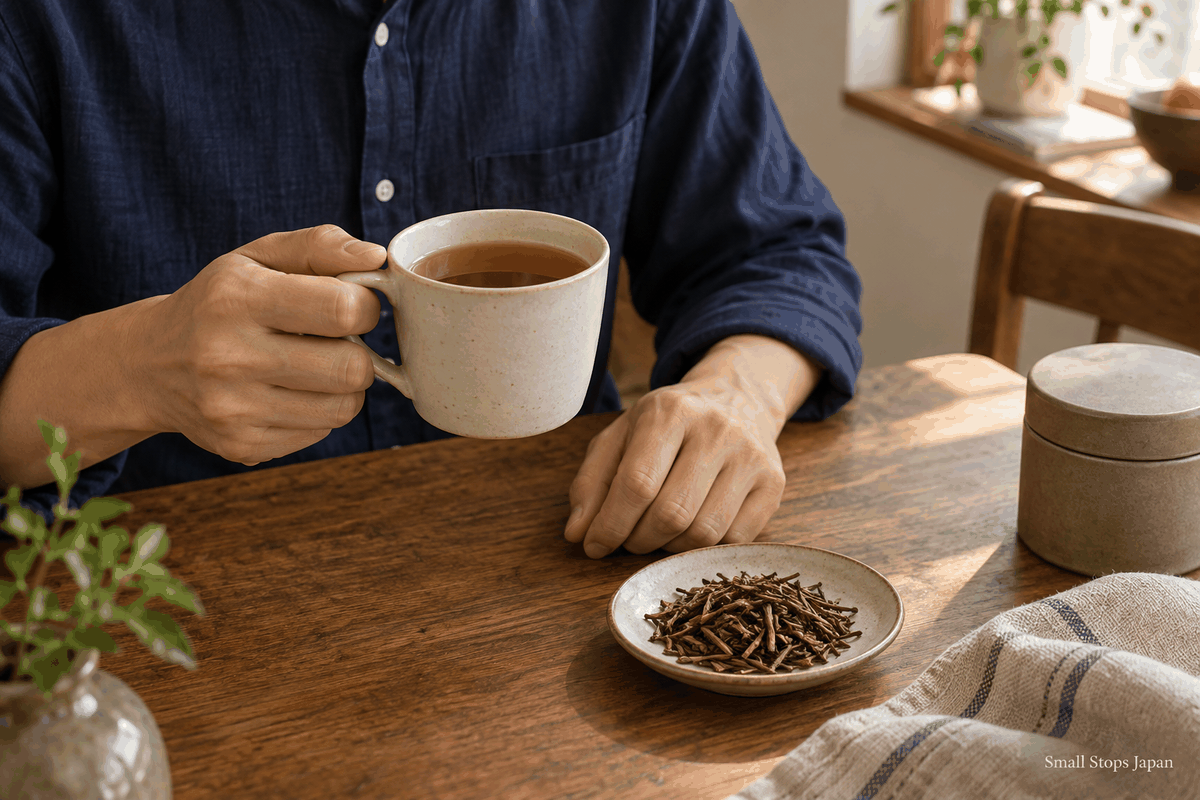
Brown leaves, roasted tea
Hojicha is written ほうじ茶 in Japanese. The important difference is roasting: green tea is heated again, changing its colour and aroma. Tea producer Hibiki-an describes roasting sencha, while Ippodo’s hojicha uses roasted bancha leaves and stems. The starting tea and the balance of leaves and stems can vary.
That helps explain why one packet may look leafy and another more twig-like. Brown stems are not necessarily something to pick out before brewing. Look at the name and instructions on the packet rather than expecting every hojicha to look identical.
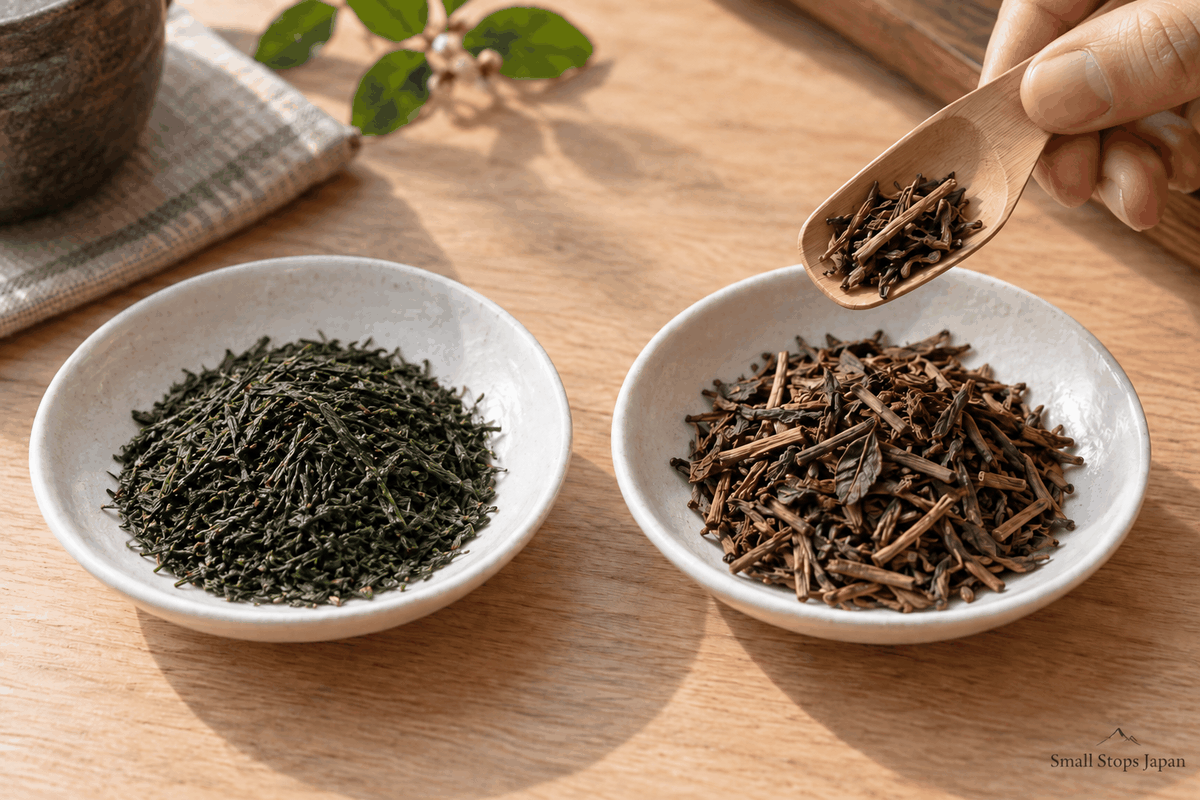
The comparison above is a useful starting point, not a colour chart for identifying every tea. Read the label too. A familiar brown drink can have a different ingredient, and a photograph cannot tell you what is in the cup.
A pot, hot water, and a short wait
For loose-leaf hojicha, have the tea, hot water, a cup, and a heat-safe teapot with a strainer ready. The strainer keeps the leaves out of the drink. A side-handle kyusu is one option; the handle’s shape does not turn it into a requirement for this particular tea.
Here is one concrete starting example: Ippodo’s hot-brewing recipe for its hojicha, checked in September 2026.
- Put 10 g of tea into the pot. Ippodo gives approximately 4 tablespoons as a household measure; a scale avoids differences in how loosely the leaves fill a spoon.
- Add 240 ml of boiling water, listed as 100°C / 212°F in the recipe.
- Steep for 30 seconds.
- Pour the tea out fully, keeping the leaves behind the strainer.
Those numbers belong to this maker’s recipe. They are not a rule for every packet, pot, or serving size. Hibiki-an’s brewing guidance, for example, uses a different leaf-to-water ratio. If your packet gives its own instructions, start there.
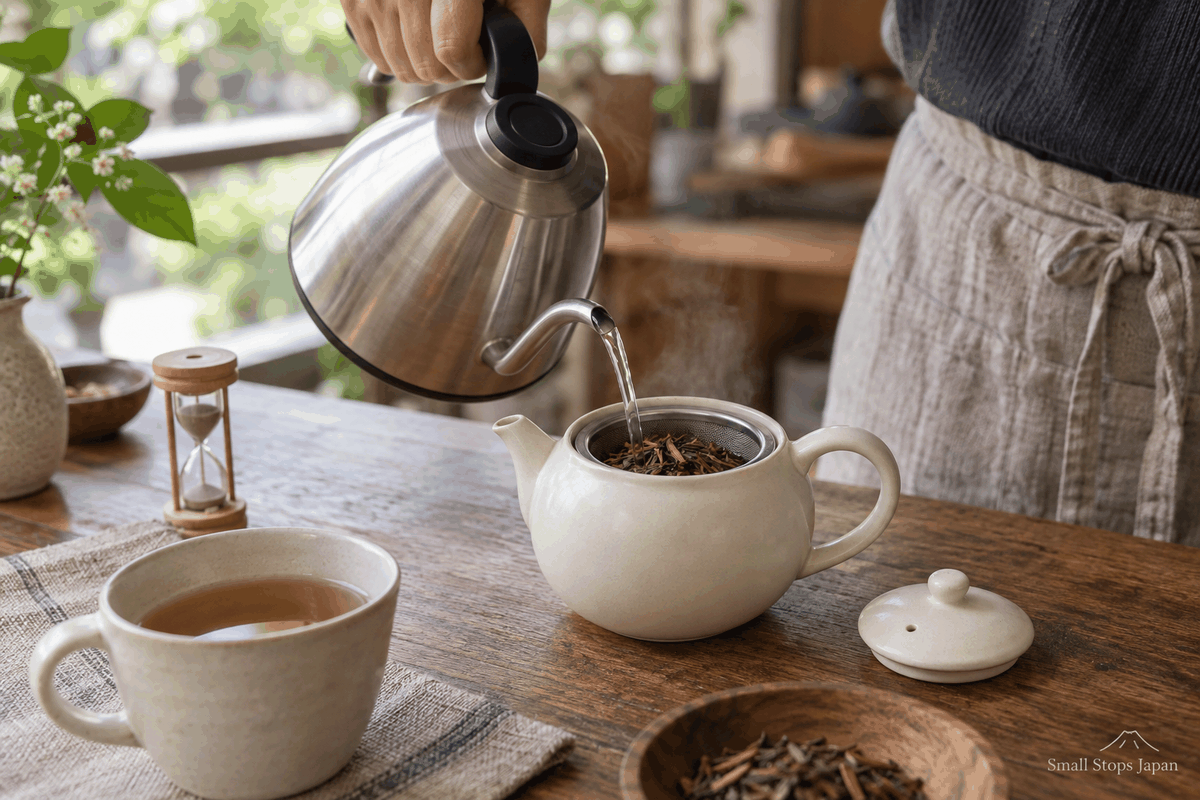
Keep the pot stable while adding water, and use its handle when pouring. Freshly brewed tea is hot even when its colour looks gentle. Give the cup time to cool before drinking.
I would start with one small pot before worrying about getting everything exactly right. You can notice the aroma and decide whether you want the next brew lighter or stronger. If a loose-leaf pot feels like one extra job on a busy day, a hojicha tea bag is another option—use the instructions for that product.
A small connection to Fukushima
Hojicha also appears in local hospitality here. In a November 2022 post about its teas, Satonoyu, a ryokan in Fukushima City’s Tsuchiyu Onsen area, described serving hojicha at dinner and sourcing it from local tea shop Shouhokuen. The post says the shop roasted it in-house.
That is a documented local example, not a report of my own stay or a promise about today’s menu. It puts the tea in a recognisable setting: a meal, a cup, and time to sit for a moment.
Recognising hojicha on the label
Look for ほうじ茶 (hojicha) on the packet. You now have three useful clues: roasted leaves, a brown or amber cup, and the name on the packet. The name is the one you can check; the colour is only a hint. For a first brew, the packet’s measurements are more useful than trying to remember a single universal tea rule.
If the teapot itself is the unfamiliar part, see how a side-handle kyusu works. That guide follows the handle, lid, and strainer through the pouring motion.
Image credits: Small Stops Japan. Image-use notes.