The rice arrives in a small bowl, with soup and other dishes beside it. Then someone lifts the bowl to eat. If you are used to leaving your dishes on the table, this little movement can be the unfamiliar part of the meal.
For a small Japanese rice bowl, a commonly taught hold is to support the bottom with your fingers and rest your thumb lightly at the rim. Here is what that looks like, from the table to a bite of rice and back again.
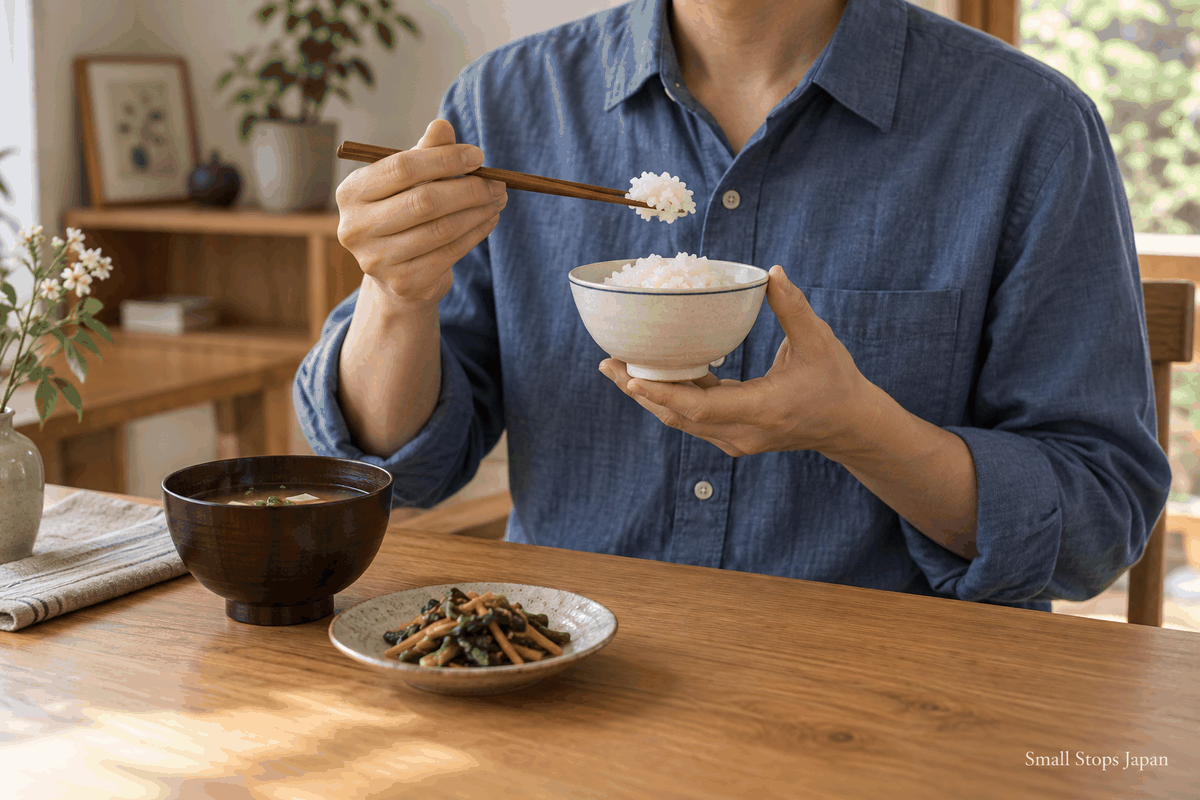
The little bowl beside the other dishes
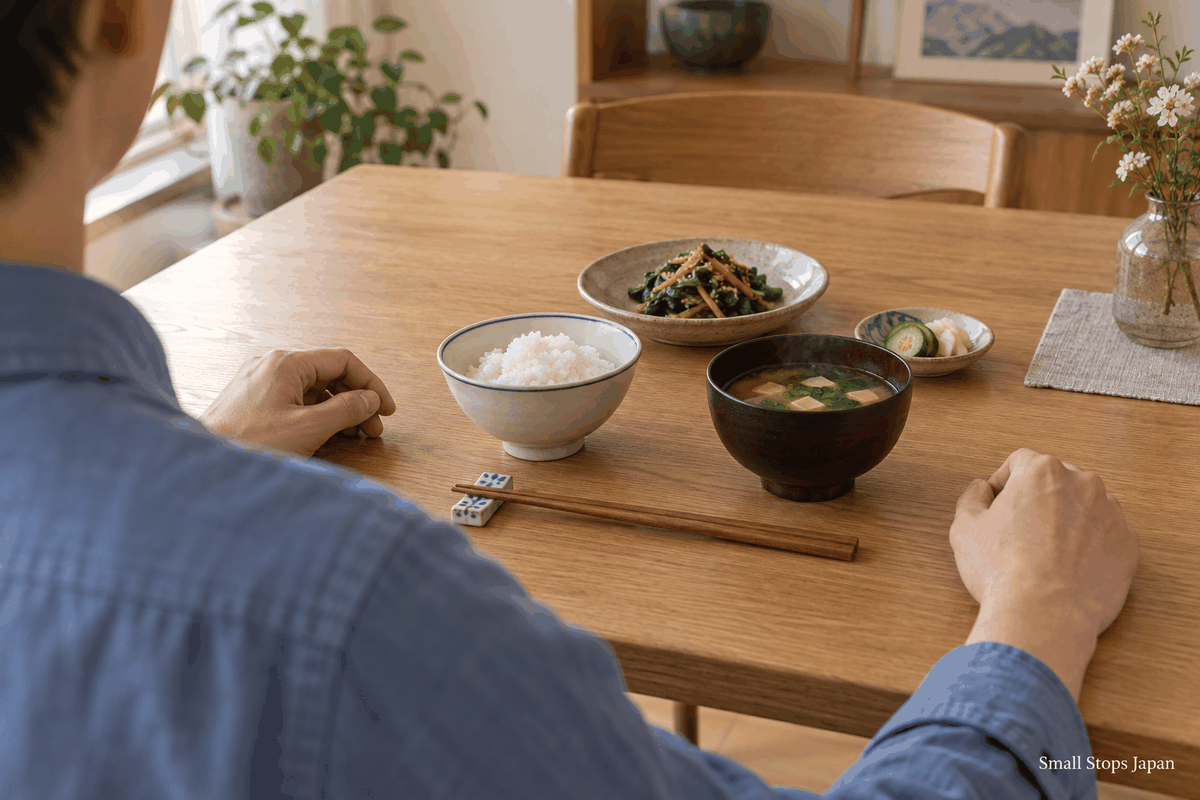
This is a chawan, here meaning the bowl for your rice. The rice has its own place, separate from the soup and side dishes. Japan’s agriculture ministry describes this arrangement in its introduction to Japanese tableware: rice in a bowl, soup in another bowl, and different dishes for other foods.
We are looking at that small bowl of rice, not every dish on a Japanese table. A large serving platter, a heavy noodle bowl and a small personal rice bowl present different handling problems. You do not need to lift the whole meal.
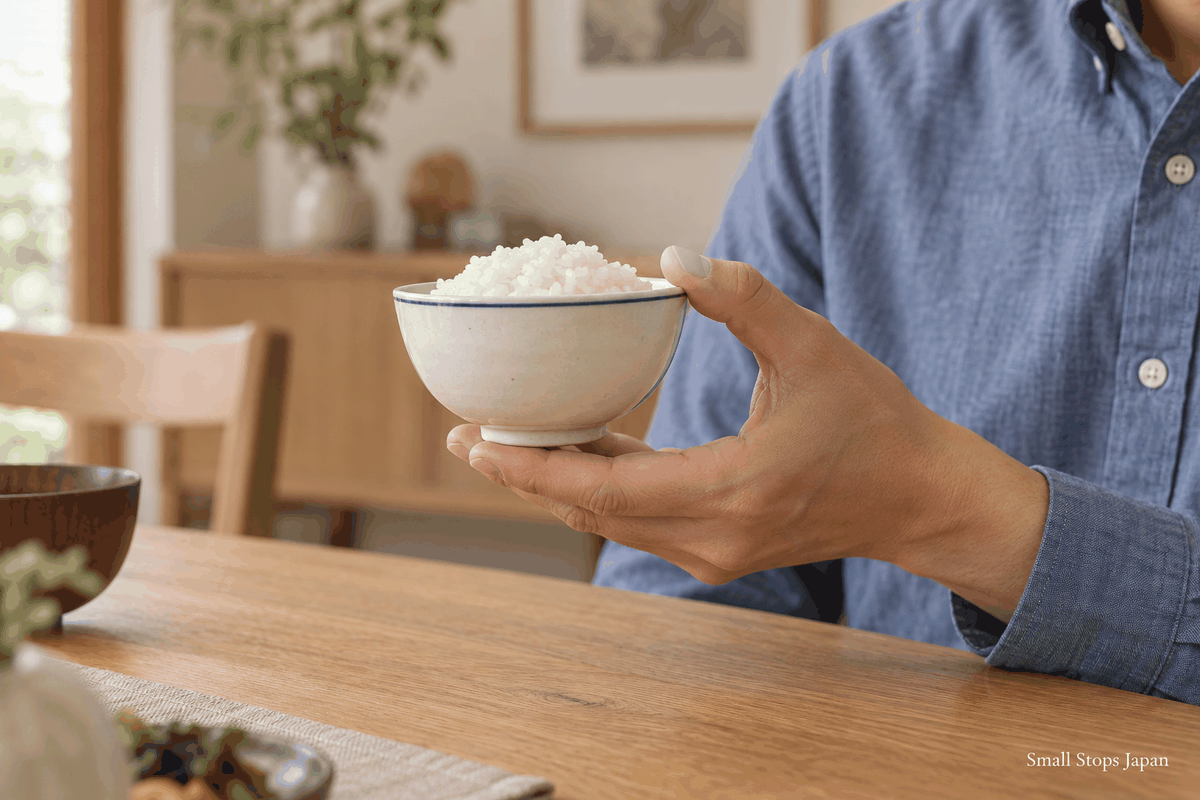
Support underneath, a thumb at the rim
Look at the short circular foot under the bowl. It gives your fingers a place to support it. You may see this part called the kodai, or foot ring.
For the right-handed example shown here, try the following with an empty, cool bowl first:
- Lift the bowl gently, using both hands while you settle its position.
- Bring the four fingers of your left hand together beneath the foot ring.
- Rest your left thumb lightly against the rim. Keep it out of the rice.
- Once the bowl feels steady, use your right hand for the chopsticks.
The hand position follows the illustrated bowl-holding guide from Kobayashi Foods. Support comes from below; you are not hanging the bowl from one finger hooked over its edge. The illustration shows the contact points more clearly than a long list of table-manner terms would.
A bite, then back to the table
Bring the bowl to a comfortable position in front of you and take a manageable bite. You do not need to press it against your face or raise your shoulders to copy a picture exactly. Think of bringing the rice within easy reach of the chopsticks.
When you want to change dishes or take a break, lower the bowl gently onto the table. It does not have to stay in your hand throughout the meal. If you put the chopsticks down too, use a chopstick rest when one is provided. The agriculture ministry’s chopstick guidance lists resting them across a dish during the meal among the habits to avoid.
If the bowl does not feel comfortable
Fresh rice can make a bowl hot. A foot ring is not a guarantee that it is safe to touch. If the bowl is too hot, leave it down and give it time to cool; do not force yourself to hold it for the sake of appearances.
The example also assumes that you can comfortably support the bowl and use chopsticks with your right hand. If that does not suit your hands, use a stable position that does, or ask for another utensil. The point is to eat comfortably, not to turn a meal into a test of your grip.
An ordinary skill, learned a little at a time
These movements can look automatic when someone has done them for years. They are still things people learn. In Fukushima City, where I live, a city report describes a school-lunch event on July 22, 2023 where children and parents practised using chopsticks together.
There is already plenty to take in at an unfamiliar table. I would start with a steady, comfortable hold and let the rest become familiar over time.
If you are curious about the step before the bowl reaches the table, follow the shamoji from the rice cooker to the bowl. This time, the useful discovery is simply where your hand goes once the rice is served.
Image credits: Small Stops Japan. Image-use notes.