A long, thin cloth can be a slightly puzzling souvenir. Is it a towel, something to wrap around your head, or a picture meant for the wall? And if a few threads appear at the ends, has something gone wrong?
This is a tenugui (手ぬぐい), a Japanese cotton cloth. It can have several jobs, but you do not need to learn them all before using one. Start with the simplest: dry your hands, fold it when it is dry, and open it out after washing.
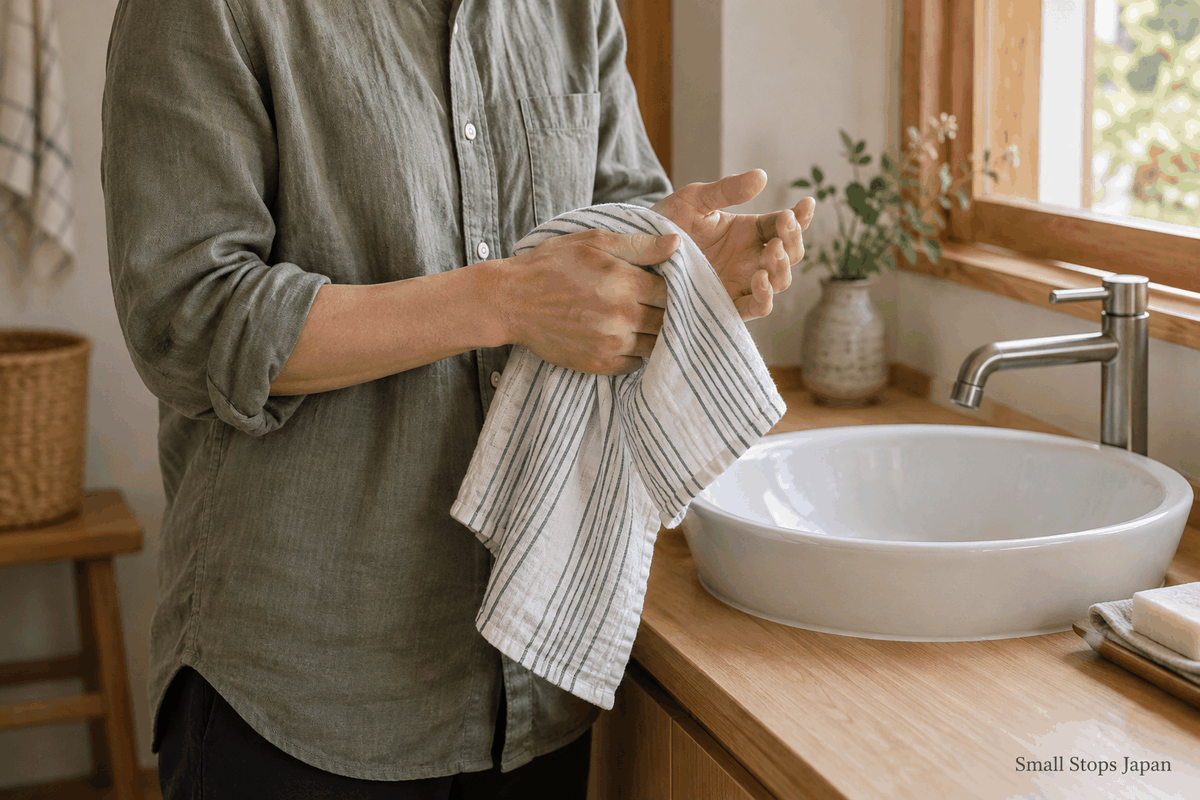
A towel, without the fluffy loops
If you are expecting a thick, fluffy towel, the fabric is the first surprise. A tenugui is flat-woven rather than covered in terrycloth loops. JNTO’s introduction to tenugui describes a typical size of about 90 × 35 cm (35 × 14 inches). That is a useful picture of its long shape, not a size rule for every product.
You can gather or fold part of that length into your hands. You do not have to hold the entire cloth stretched out each time you use it.
The maker Eirakuya shows hand-drying among its everyday uses, alongside wiping dishes, wrapping and displaying the cloth. For a first try, I would keep the job simple. One useful cloth is enough; it does not need to become a whole new routine.
Wipe first; fold for the bag when dry
After washing your hands, use a clean tenugui as you would a hand towel. Open a section over your palm and use that part to take up the water. The thin fabric follows the shape of your hands instead of feeling like a thick pad.
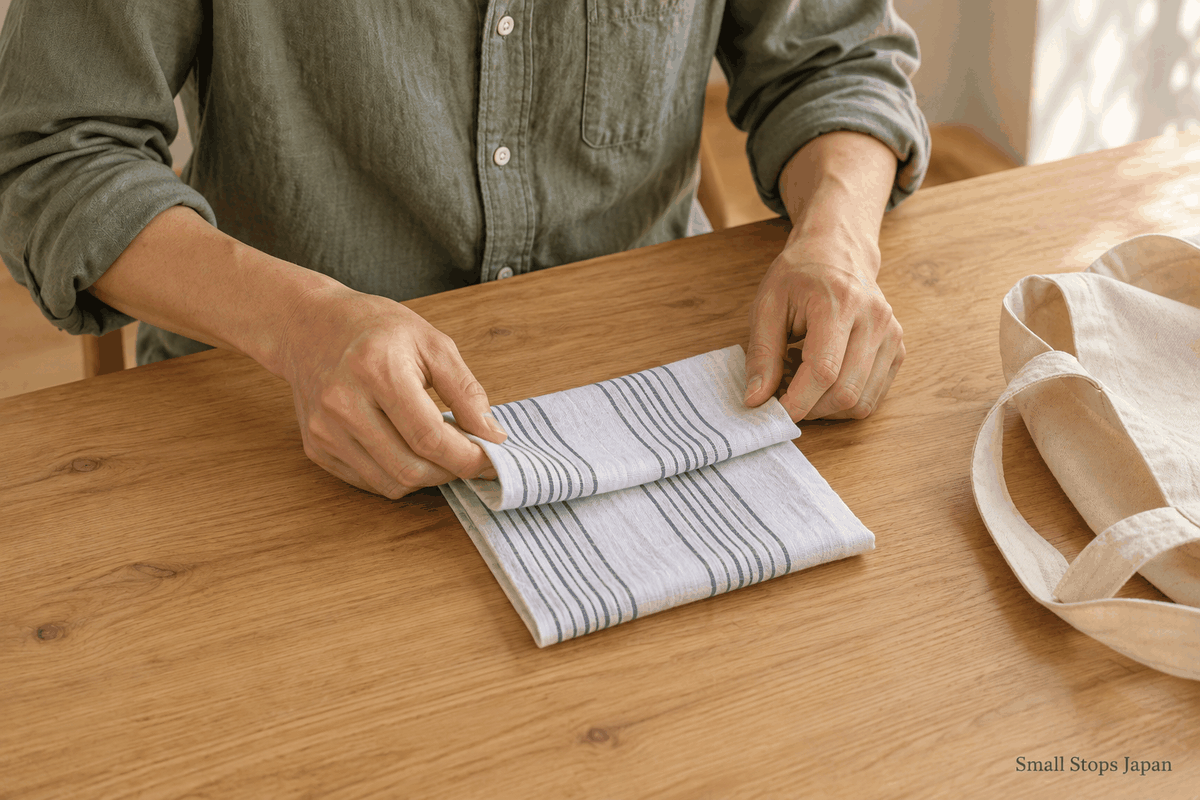
For carrying a dry cloth, try this uncomplicated fold:
- Lay it out and bring the two long edges together, making a narrower strip.
- Bring the short ends together to halve the length.
- Fold across the length again until the small rectangle fits your bag or pocket.
This is a practical folding suggestion, not a prescribed Japanese custom. There is no need to make every corner exact. If the cloth is damp, the next job is to give it room to dry, rather than put it away in a tight bundle.
Give a new cloth a little care
A hand-dyed cloth may release some color at first. Kamawanu’s first-care guide recommends rinsing a new tenugui separately in water before use; residual dye or starch can remain in the fabric. This is advice for the maker’s cloths—check the instructions supplied with yours too.
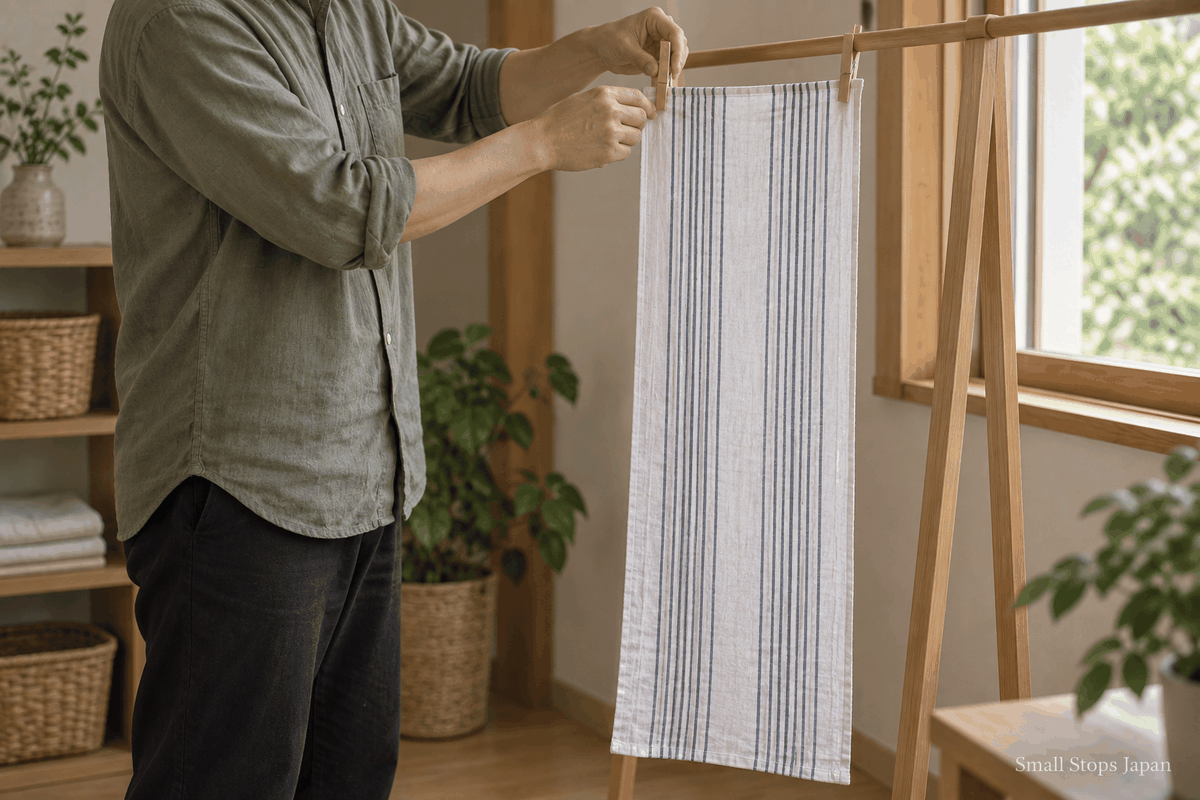
For washing, Kamawanu recommends cool or room-temperature water, keeping the first few washes separate, and avoiding bleach-containing detergent. Its washing guide also advises against soaking or leaving the cloth wet, and recommends drying in the shade to reduce fading.
In practice, open the cloth out after washing and hang it with space around it. Do not leave it crumpled against a white shirt or another cloth while damp. Put it away once it is dry. How long that takes will depend on the fabric, airflow and weather; there is no promised drying time here.
A few threads do not always mean damage
Some tenugui have short ends that are left unhemmed. Kamawanu’s washing guide includes trimming loose, frayed threads after the cloth is dry. That does not mean every loose edge on every product should be treated the same way: look at how yours is finished and follow its care instructions.
There are sewn-edge versions too. “Tenugui” does not promise one identical construction. The label, size and edge finish are more useful than assuming that every cloth should look exactly like the one in a photograph.
A small connection to Sendai
For an example from Tohoku, look at Nagakan Dyeing Factory’s Sendai Moyou collection. The Sendai maker uses local scenes as designs, including the city’s festivals and the lights along Jozenji-dori. The same page introduces a half-length range with sewn ends, intended for convenient use like a handkerchief.
That is one way an everyday cloth can carry a little of a place with it. It is also a useful reminder to check the actual product: a full-length tenugui and a smaller, sewn-edge version will fit differently in your hands. The illustrations here show a generic striped cloth, not that collection.
Start with one ordinary use
I like the idea of beginning with something you already do, rather than memorizing a list of clever uses. A tenugui can simply be the cloth you reach for after washing your hands. Fold it when dry, give it space after washing, and let the rest wait until it becomes useful.
For another everyday object that makes more sense in your hands, explore a first cup with a kyusu teapot.
Image credits: Small Stops Japan. Image-use notes.