A tea bag and a favourite mug look like an easy match. But one bag does not tell you how much water to add. Ippodo gives 150 ml for its one-cup gyokuro and sencha bags, while its kuki sencha bags for a pot call for 300 ml.
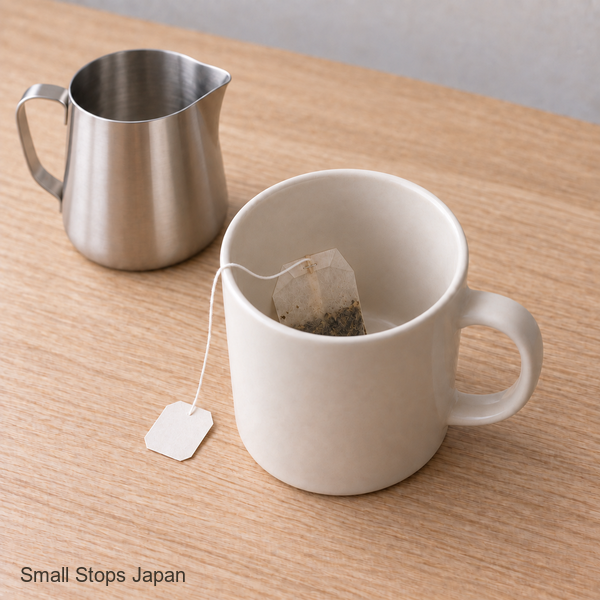
One bag for a cup, or one for a pot?
The two examples below both start with one bag. Their intended use and brewing conditions differ:
One-cup gyokuro and sencha bags
- Bags: 1
- Water to add: 150 ml
- Water temperature: Hot water allowed to cool slightly
- Steeping time: 90 seconds
Kuki sencha bags for a pot
- Bags: 1
- Water to add: 300 ml
- Water temperature: Boiling water
- Steeping time: 2 minutes
Kuki sencha is a stem green tea. Each example describes a different tea-bag option, with its own water amount, temperature and steeping time.
“One-cup” describes the first range’s intended use. It does not mean a measuring cup of water; that recipe specifies 150 ml.
Your mug’s capacity is a different number
Imagine using the one-cup recipe in a roomy mug. You would add its specified 150 ml, even if there were space left above the tea. Filling that space would add more water than the recipe calls for.
The examples give the water to add. Your mug’s rim is not a measuring line for the tea.
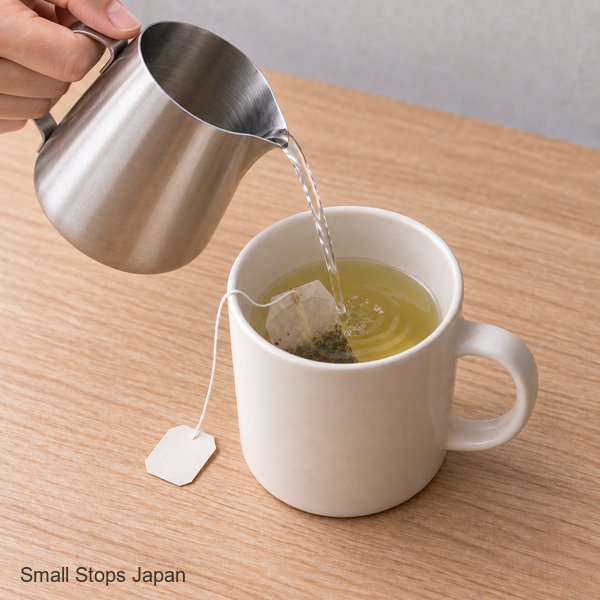
Steeping and lifting the bag out
For a step-by-step brewing example, ITO EN’s Japanese-tea guide starts with one bag in a mug or teacup. Its green-tea guideline uses 150 ml of water at 80°C and a 30-second steep. This is a separate brewing example from the Ippodo recipes above.
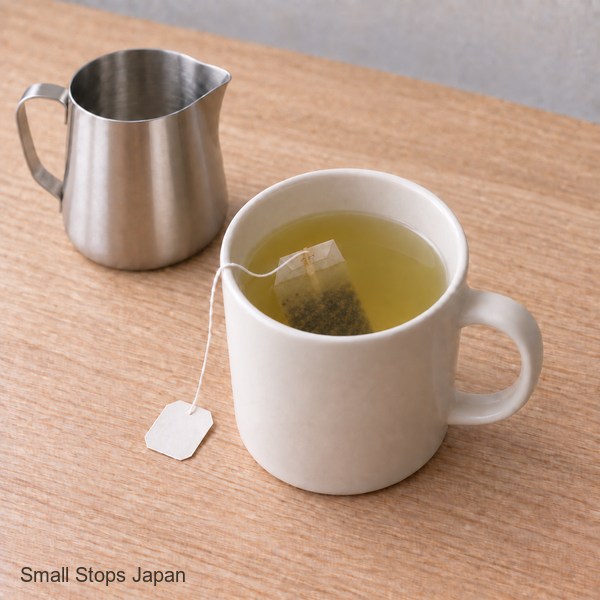
After steeping, the guide says to move the bag up and down five or six times, then lift it out gently. The bag comes out of the liquid while the drink stays in the cup.
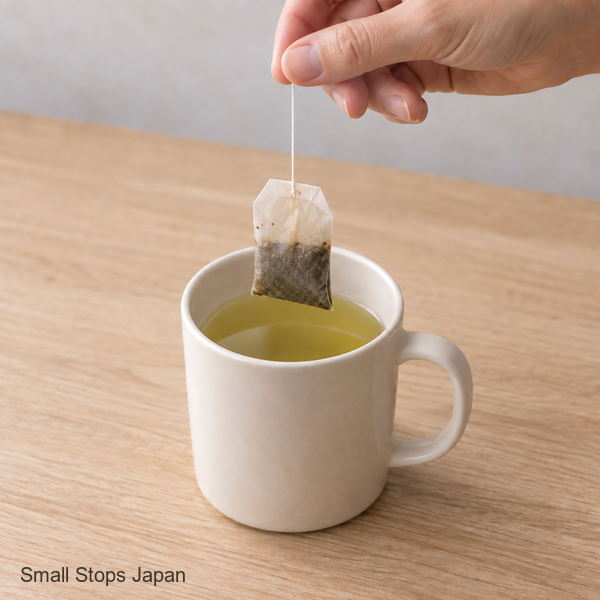
The mug may still have room at the top. That space does not need filling to make the serving complete.