You have opened a packet of Japanese tea. A cylindrical tea canister—a chazutsu (茶筒)—looks like its natural home. But do the leaves need to come out of their bag? And why might another lid appear when you lift the first one?
The useful starting point is the tea you already have: its packaging and storage instructions. A canister can be part of that arrangement, without making the original bag unnecessary.
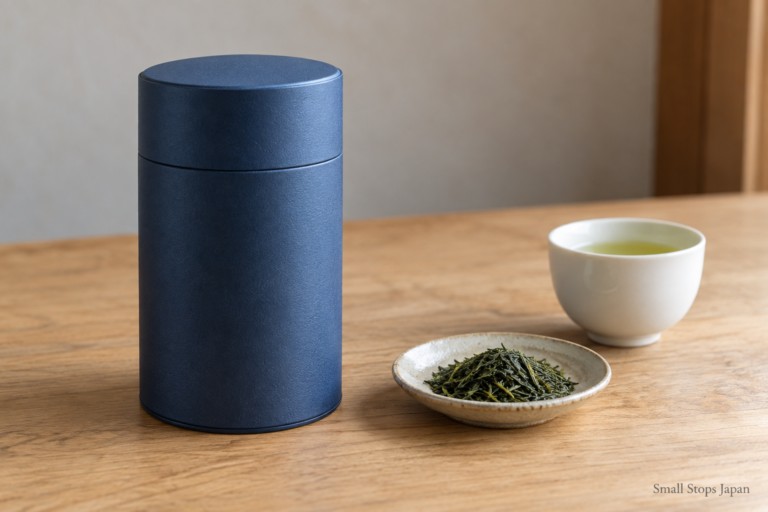
The bag can stay
ITO EN’s FAQ for tea leaves and tea bags advises sealing the bag tightly after opening. You do not automatically need to empty the packet into a canister: first check the storage instructions on your tea. If you keep the bag inside a canister, make sure it closes properly and fits beneath the lid.
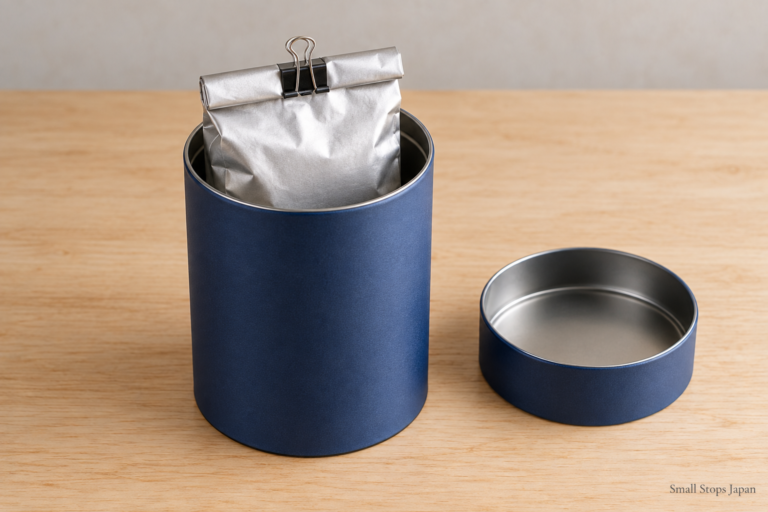
Before choosing a container, think about the closed bag as well as the loose leaves. Does the folded packet fit without being caught under the lid? If you do transfer the leaves, keep the packet’s name, date and instructions. An attractive unlabelled tin cannot tell you which tea you put into it.
What is the second lid doing?
Some tea canisters have a smaller inner lid beneath the outer cover. Lift both away and the arrangement becomes easier to understand: body, inner closure, then outer cover. Designs vary; two lids are not a universal definition of a tea canister.
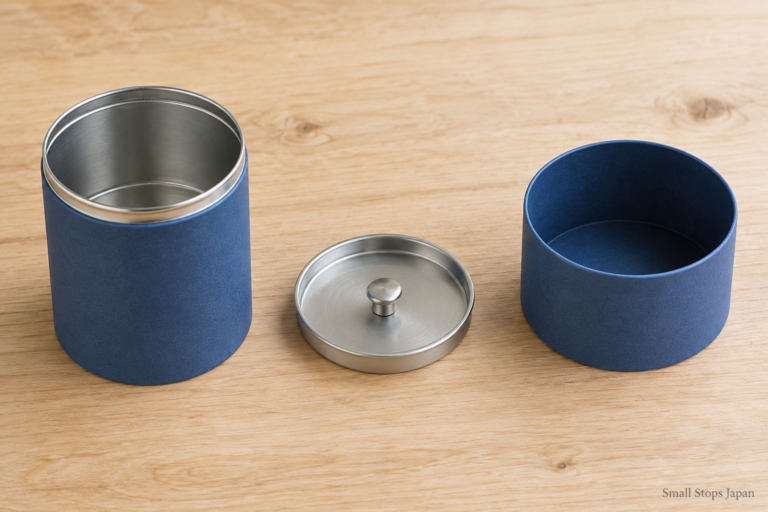
For a real example, KOTODO describes an inner lid and a deep overlap with the outer cover as features of its traditional-style canisters that protect the tea from moisture. That explains why looking underneath the decorative cover matters. It does not let us judge every tin’s performance from its appearance alone.
Give it a place between cups
ITO EN’s FAQ recommends a cool, dark place where the temperature is unlikely to rise, away from direct sunlight and hot, humid conditions. A closed cupboard away from the cooker and steaming kettle is one possible way to apply that advice, provided it stays cool and dry. Follow the storage instructions on your own tea.
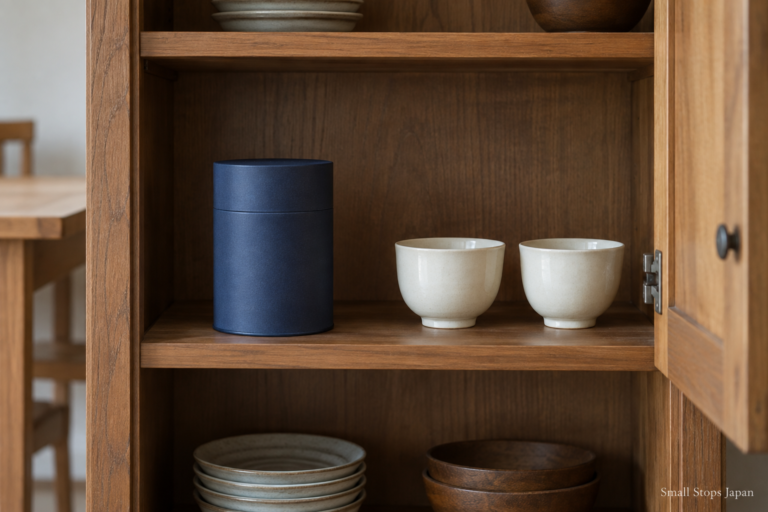
The container and the location do different jobs. Putting a lid on the tea does not make a hot shelf a cool one. Choose the place as deliberately as you choose the tin.
An opening date is useful too
Storage slows the loss of quality; it does not turn an opened packet into an unopened one. ITO EN’s FAQ for tea leaves and tea bags gives one to one and a half months after opening as a guide for maintaining quality. This is the maker’s quality guidance, not a universal safety deadline for all tea. Follow your own packet’s instructions; a note of when you opened it makes them easier to use.
Check the canister’s care instructions as well. KOTODO, for example, says not to wash its tin-plated steel canisters; it describes wiping with a well-wrung cloth followed by thorough drying. A container that looks like other kitchen tins may need different care.
This is about dry tea leaves used day to day, not storing a brewed drink. Matcha and cold storage can have different instructions—ITO EN, for instance, gives separate refrigeration advice for opened matcha. Read the directions for both the tea and its container. The most useful tea canister is one that fits that small routine: close the tea, put it away, and know what you will open next time.
Image credits: Small Stops Japan. Image-use notes.