A bowl of rice, a bowl of soup, and a little bowl of vegetables: the smallest vessel can be easy to overlook. In Japanese, kobachi (小鉢) means a small bowl. It names the tableware, rather than telling you which food is inside.
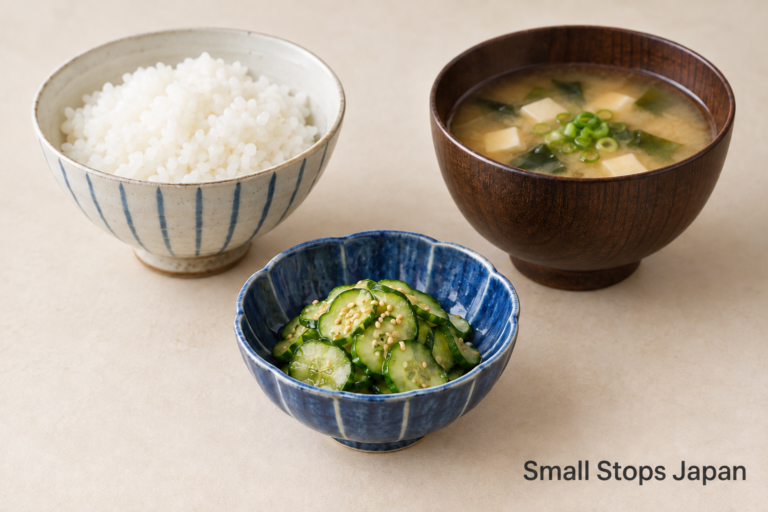
The cucumber has a place of its own instead of sharing a large plate. That is one useful way to recognise the small bowl’s role: it separates a little serving from the other food. But a small vessel might also hold something intended for dipping. Its contents matter as much as its size.
Look inside the empty bowl
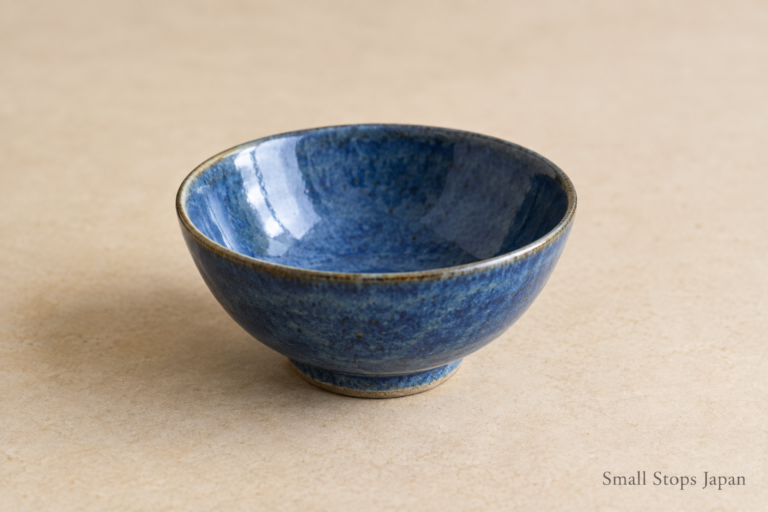
With no food covering it, you can see the hollow inside, the raised sides and the foot underneath. In this example, the bowl has room for a small dressed salad and somewhere for its dressing to collect. These are features you can look for when choosing a bowl, rather than a fixed recipe for what every kobachi must look like.
One real example is Kihon no Utsuwa’s small round bowl. The maker suggests pickles and other side dishes, and notes that its depth also suits soy sauce or other sauces. Those recommendations describe that product; our illustrations do not reproduce it.
A side dish or something to dip into?
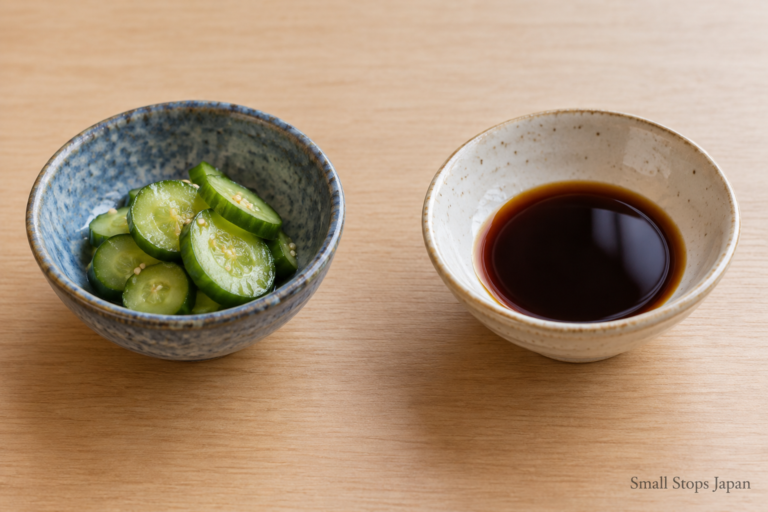
The cucumber is a dish to eat alongside the rest of the meal. The soy sauce has another job: it can accompany food you dip into it. Similar-sized bowls can therefore play different parts. The bowl’s name alone does not tell you whether the contents are a side dish, sauce or something else.
At home, try the distinction with a meal you already make. Serve a little cucumber salad separately if you want its dressing to stay with it. If another food needs a dipping sauce, give that sauce its own vessel. The choice follows the food, rather than a required number of bowls.
An Aizu example to explore
For a different real design, see Aizu Keizanyaki’s small straight-sided bowl. Its product description points to the wide foot and suggests uses including mixing a salad with dressing, serving soup and holding fruit. Follow the link to see the actual product: it is not pictured here.
That makes a useful question for your next small bowl: what would you like to put in it? Looking at both the empty shape and the serving inside tells you more than the label “small” on its own.
Image credits: Small Stops Japan. Image-use notes.