Open the blue notebook in these illustrations and you will find two different kinds of reminder: something to do, and something to take. The homework is reading aloud. The item to bring is a set of coloured pencils. A few words on a page connect the school day with preparations at home.
This is a fictional example of a renrakucho (連絡帳), a school communication notebook. If you know a homework planner, the idea will feel familiar. Here, we will follow one short entry from the notebook to the item going into a bag.
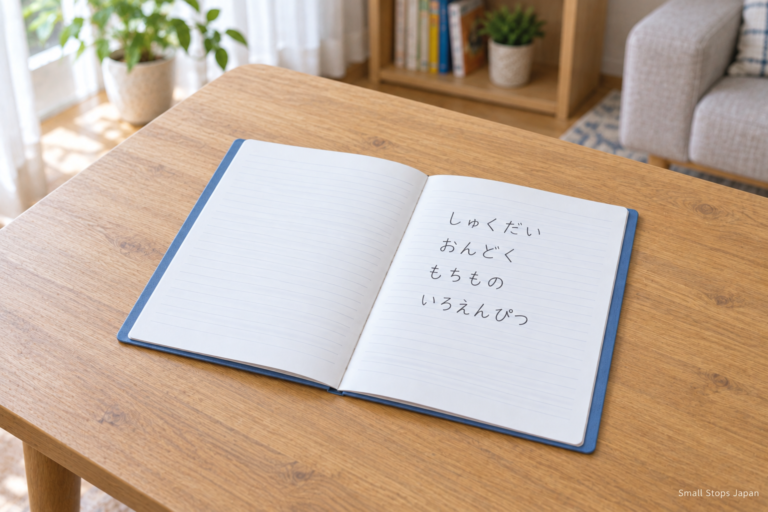
A notebook for information to take home
The blue cover is simply our example. What matters is the use of the page: it records information about schoolwork and things to bring, rather than the work itself. An entry saying “read aloud” tells the child what to do; it does not contain the passage to read.
For a real example of this use, a May 2026 newsletter from Ongata Daiichi Elementary School in Hachioji (Japanese PDF) includes guidance that the next day’s supplies and homework are written in a renrakucho. It asks that the notebook be brought every day and that parents also read it. This is one school’s published guidance, not a rule for every school in Japan.
Read the two parts of this example
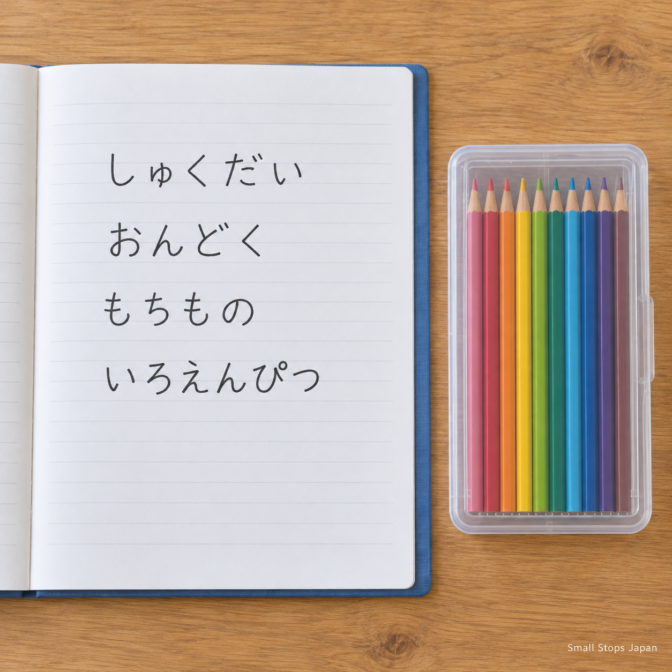
The four lines in our pictures form two pairs. The first line of each pair is a heading; the line beneath it is the entry. They are written in hiragana here to keep the example short and easy to follow.
- しゅくだい — shukudai: homework
- おんどく — ondoku: read aloud.
- もちもの — mochimono: things to bring
- いろえんぴつ — iroenpitsu: coloured pencils.
This is an invented entry, not an assignment issued by the school linked above.
From a written reminder to a packed item
Now look at the parent and child. The notebook remains open on the table while the child starts putting the pencil case into the backpack. The parent is reading the entry; the object being prepared matches the “things to bring” line.
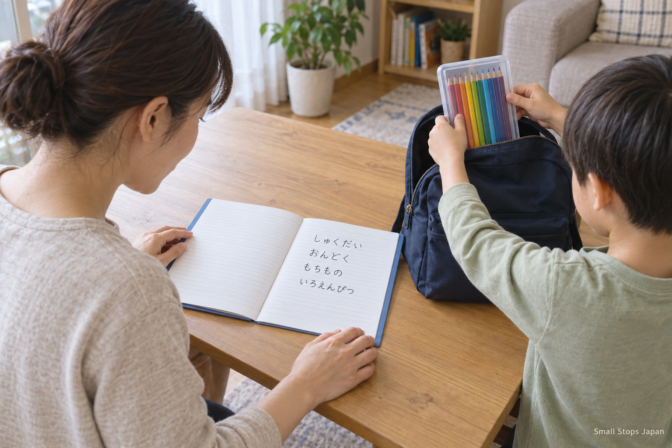
That distinction between the two headings is the useful detail. Reading aloud is an activity to complete; coloured pencils are an object to pack. The note brings both reminders to the same place, but they lead to different actions. The pictures show the packing part, not proof that the homework has been finished.
The cover does not tell you the whole system
Commercial notebooks have their own formats. For example, Showa Note lists a 14-line renrakucho. That is one product, not a universal layout or evidence of what the school above requires. Our simple horizontal lines and two headings are an independent illustration.
If you encounter a renrakucho in use, the interesting question is what its entries help someone remember. If your child is using one, follow the school’s own instructions about the notebook and how to communicate with staff. Our two-item example explains the link between a note and tomorrow’s preparations; it cannot tell you every school’s procedure.
All three images are original AI-generated illustrations by Small Stops Japan. They show a fictional notebook and family, not a real pupil’s record or a documented visit.