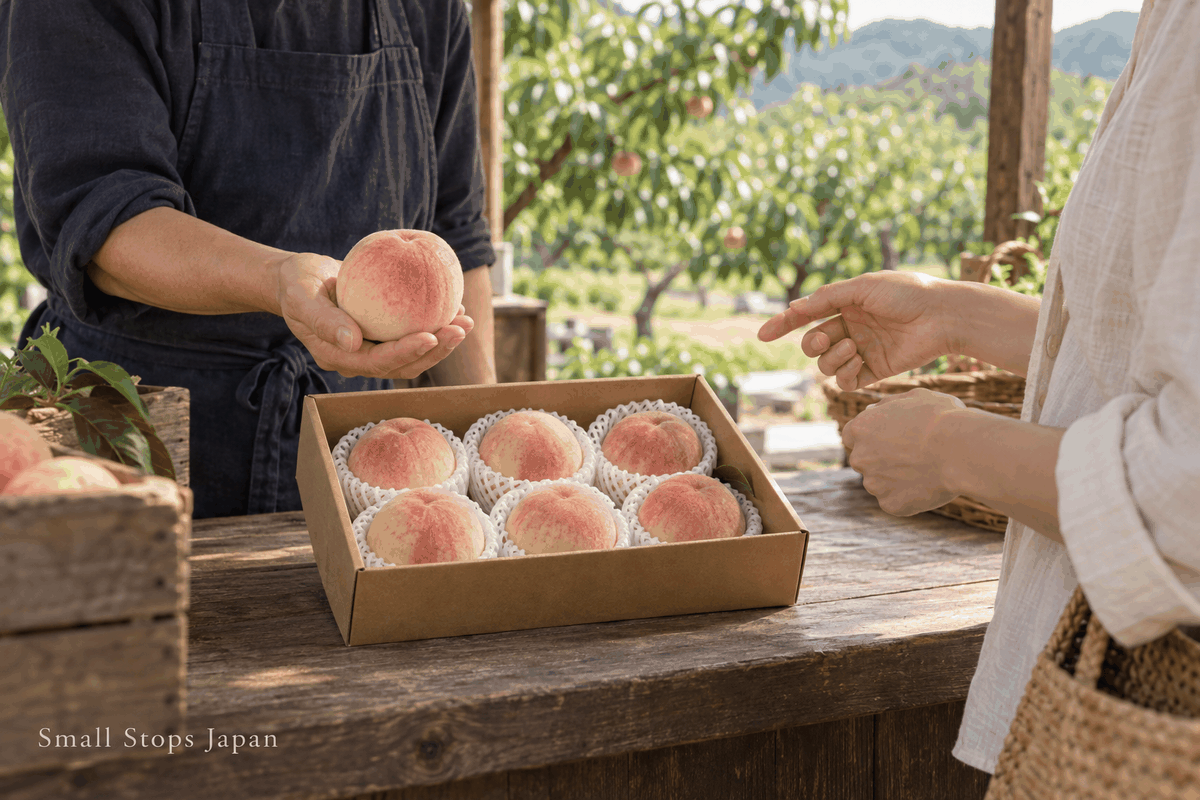
You are looking at a box of peaches at a fruit stand in Fukushima. They look colourful and tempting—but will you eat them tonight, share them tomorrow, or carry them on a longer journey?
Tell the seller when you plan to eat them. It is a small question that helps make sense of the fruit’s firmness, the size of the box and whether it suits your trip.
Start at the counter, not with a squeeze
Fukushima City’s tourism association describes orchard shops along the Fruit Line and Peach Line roads, where the people selling peaches can explain the varieties and how to enjoy them. The same guide reminds shoppers that peaches bruise easily: choose without pressing or squeezing the fruit.
Ask about the particular box in front of you. If Japanese is difficult, these short sentences can help:
- 今日食べたいです。 Kyō tabetai desu. — “I’d like to eat them today.”
- いつ食べ頃ですか? Itsu tabegoro desu ka? — “When will they be ready to eat?”
- どれから食べるといいですか? Dore kara taberu to ii desu ka? — “Which should I eat first?”
Showing the sentence on your phone is fine. I do not think you need to memorise every word to have a useful conversation.
A firm peach is not automatically an unripe peach
JA Fukushima Mirai’s peach guide explains that varieties differ in texture and harvest season. Softness is not the only way people enjoy peaches here.
Nearby Koori Town’s advice from peach growers describes its peaches as harvested at eating ripeness and ready from the day of purchase, while allowing for different preferences in firmness. Ask about your particular peaches before leaving a firm one for several days.
What does the home-use label tell you?
家庭用 (kateiyō) means “for home use”; 贈答用 (zōtōyō) means “for gifts.” The words help you understand the intended use, but do not specify the sweetness, condition or keeping time of every peach.
For example, Satō Orchard in Date City distinguishes a B-grade selection suitable for shipping from a lower B-grade brown-box selection for carrying home. Those are one seller’s categories. Ask what the grade means for the fruit in your box and how well it will travel.
Buy for the next few meals, then bring it home gently
A large box is only useful if it fits your plans. Ask which peaches need eating first and whether the selection can cope with your journey. Support the box underneath and keep heavier shopping off the fruit. Do not assume a carry-home box can be posted onward.
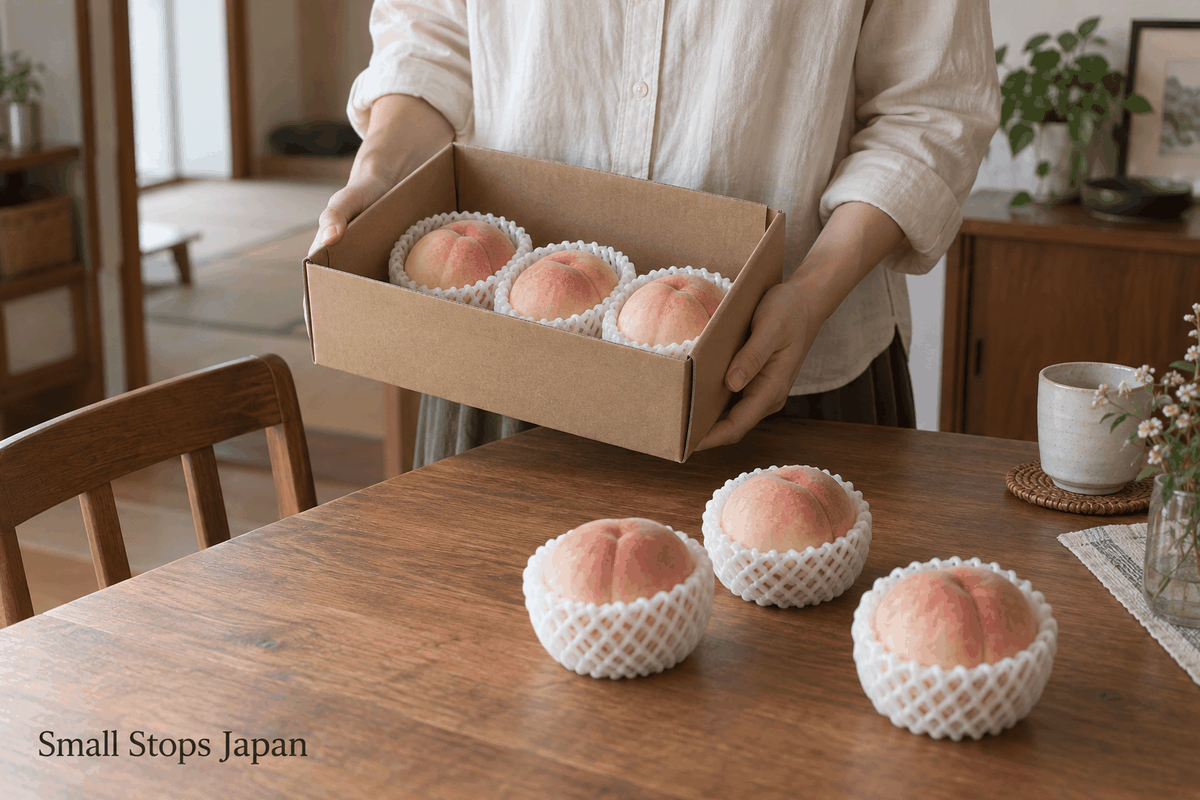
JA Fukushima Mirai gives about 2–3 days as a general keeping-time guide for fully ripe peaches. The fruit’s condition, ripeness and the temperature at home affect how long it will keep.
The JA advises unpacking the peaches, leaving protective fruit caps on if supplied, and keeping them somewhere cool away from direct sunlight and direct airflow. When room temperatures are high, it recommends the refrigerator’s vegetable compartment. Follow any more specific advice for the fruit you bought.
Make time for the peach you chose
Koori Town suggests chilling peaches for 1–2 hours before eating. A little cooling can be part of getting the table ready.
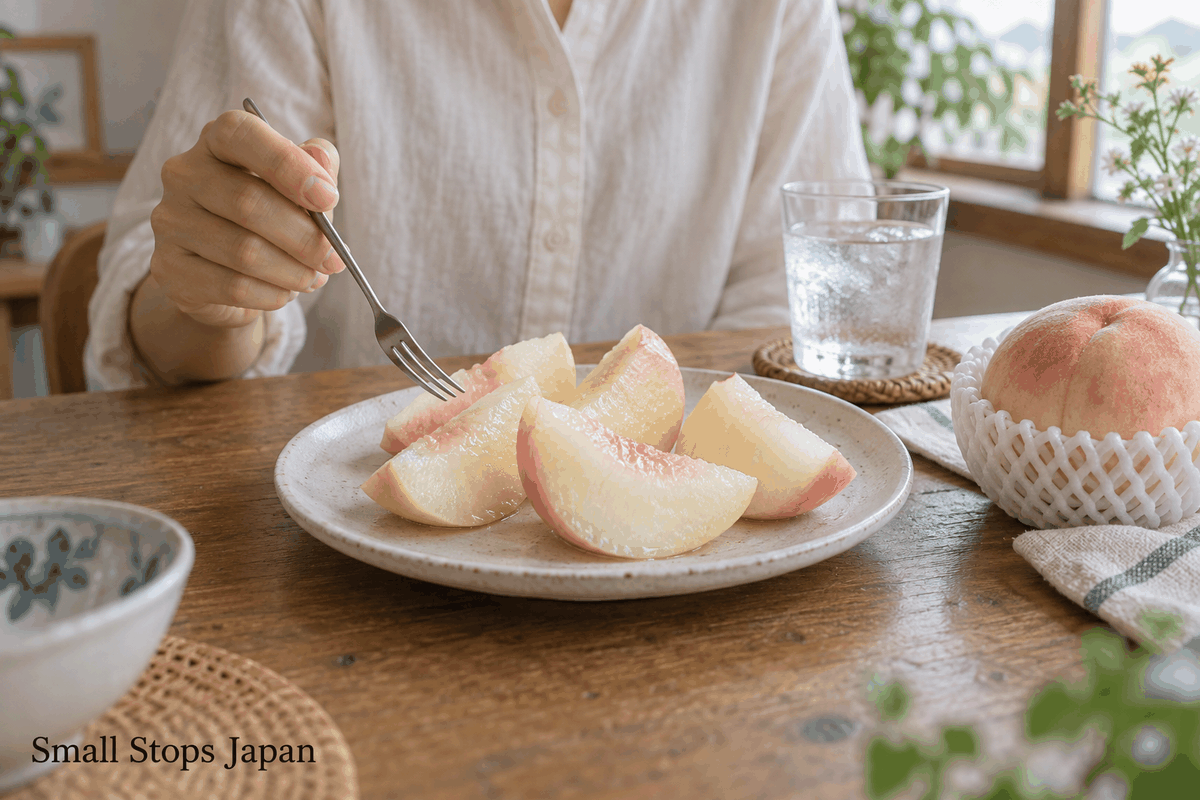
You might prefer a firm bite or a softer slice. Knowing the variety and asking the seller gives that preference somewhere to start. The nicest-looking gift box is not automatically the most useful choice for tonight’s table.
Start with your next meal and your journey home. The label and the price will make more sense once you know when—and how—you want to enjoy the fruit.
Sources checked on 14 September 2026. Illustrations: Small Stops Japan. Image-use notes.