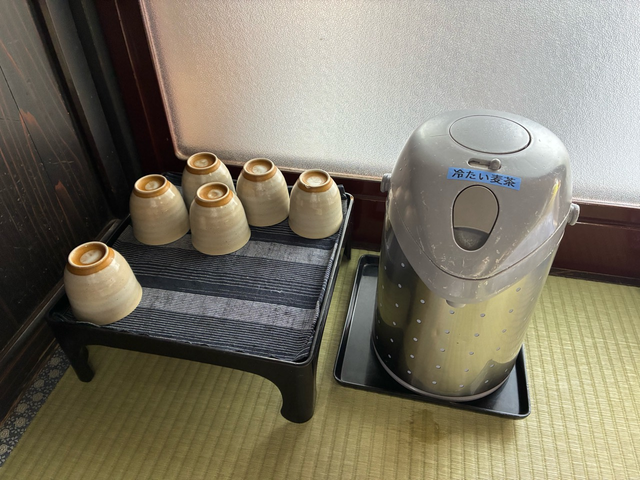
Six cups sit upside down beside a drinks dispenser. There is no matching teapot, no carefully arranged tea ceremony, and no handle on any of the cups. The blue label on the dispenser says 冷たい麦茶 — cold barley tea.
I photographed this little drinks corner. It makes a useful starting point for meeting a yunomi (湯のみ): a Japanese teacup that belongs in an ordinary day, as well as on a shelf of beautiful pottery. In this particular scene, the cups are ready beside a cold drink. A handleless cup does not tell you that its contents must be hot green tea.
Read the shape before you pick it up
The cups in the photograph are inverted, so the brown rings facing upwards are their feet, not their drinking rims. Follow one cup from that small ring down to its wider opening against the stand. Turned upright, it has a base to stand on, a body to hold and an open rim to drink from. Seeing the underside first is a surprisingly useful way to understand the object.
You will also meet taller cups with fairly straight sides and lower cups that open out more like small bowls. The pottery industry’s Japanese tableware guide distinguishes a yunomi from a bowl-shaped kumidashi, and also shows lidded versions. It notes that names can vary between pottery-producing areas. Treat the names as a way into looking, rather than a test you must pass before drinking.
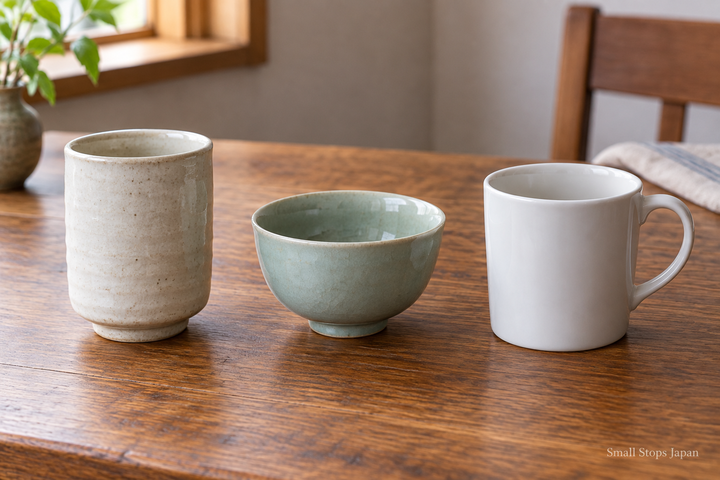
The useful difference to notice is where your hand goes. A mug offers a separate handle. With the handleless examples, you meet the cup itself. Before choosing one, look at the width of its body as well as its pattern: a shape that looks lovely on a shelf may feel quite different when you lift it.
The outside is only half the cup
Look into the cup, too. Tea seller Hibiki-an recommends a white interior for appreciating the colour of the tea. A pale inner surface gives the liquid a clear background, even when the outside has a darker glaze or decoration.
The same guide recommends 90–160 ml cups for the Japanese teas it discusses. That is the seller’s advice, not a definition of every yunomi. If you are used to a large mug, check a cup’s stated capacity before buying; height alone is a poor way to judge how much your next drink will be.
A small cup can be part of the brewing
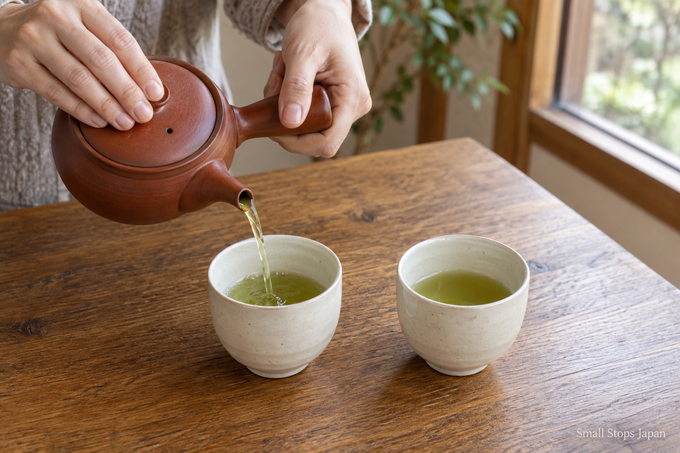
The cup is not necessarily the last stop for water. In ITO EN’s loose-leaf Japanese tea method, hot water goes into the cups first, warming them while the water cools. The water then goes into the teapot containing the leaves. After brewing, tea returns to the cups in small, even portions.
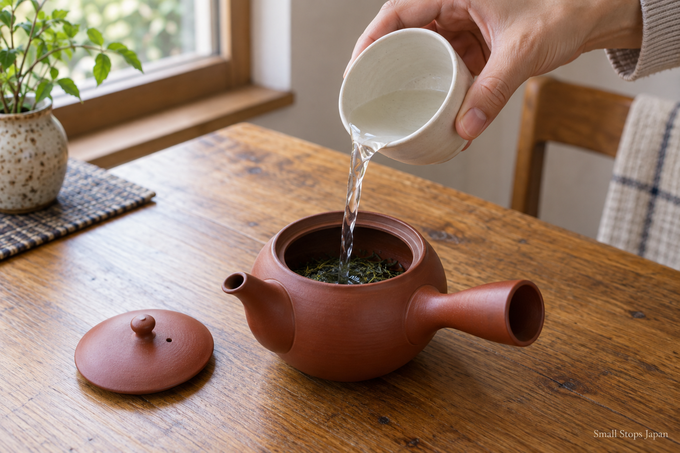
That explains a sequence that can look odd the first time you see it: water in the cups, water back out, then tea in. The cups help prepare the drink before they serve it. Follow your tea’s temperature and timing instructions; this sequence is not a single recipe for every tea. Handle only cups cool enough to grip comfortably.
For a tea bag, there is no need to recreate the teapot routine. ITO EN also gives a method using a yunomi or a mug. Choose the brewing method for the tea you actually have.
Holding it: a starting point, not a performance
Etiquette instructor Emi Sunai describes a two-handed hold: the dominant hand holds the cup’s body, while the other rests lightly beneath the foot. In the image below, notice the division of work. One hand surrounds the side; the other supports the base rather than gripping the drinking rim.
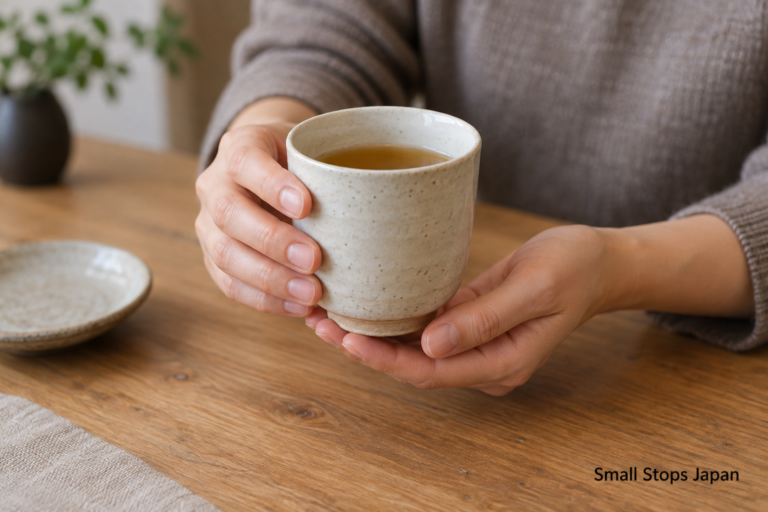
If the cup is too hot, leave it down. The suggested hold is not a reason to tolerate an uncomfortable temperature. It is also useful to recognise the little plate that sometimes accompanies the cup: a chataku, or tea saucer. Hibiki-an describes it as part of serving tea to guests, rather than something required for every everyday drink.
Next time you see a yunomi, try looking in three directions: around the body, into the opening and underneath the foot when it is empty and cool. Those views reveal more than the absence of a handle. They help you picture how the cup will feel in your hand, how much tea it will hold and what you will see when it is filled.
Photo and illustrations: Small Stops Japan. Image-use notes.