An anime journey can begin with a place you have never thought of visiting. In Zatsu Tabi -That’s Journey-, aspiring manga artist Chika Suzugamori turns to a social-media poll to decide where to go. Her first trip brings her to Aizu-Wakamatsu in western Fukushima Prefecture. For a first look at the series, follow that one destination: a station, an unusual wooden hall and a hot-spring neighbourhood.
This introduction mentions places and the basic premise of episode 1.

Start with the traveller’s question
The series follows Chika travelling after setbacks with her manga work. Its starting point is easy to understand even if you know little about Japan: where might going somewhere unfamiliar lead you? The official anime website introduces the premise and characters.
For this article, the interest is how a named destination becomes something you can picture. You do not need a list of every location across the series. Start with the places from this first trip, then decide which one makes you curious enough to learn more.
Find Aizu-Wakamatsu on the real map
Aizu-Wakamatsu is a different city from Fukushima City, where Small Stops Japan is based. Both are in Fukushima Prefecture. The anime’s official travel map identifies Aizu-Wakamatsu Station, Iimoriyama, Higashiyama Onsen and Haguroyama Yugami Shrine among the first trip’s locations. This connection is documented by the production, rather than inferred from a similar-looking background. Open the official map and find “第1旅”, the first journey.
The city tourism association also has a guide to the anime’s Aizu-Wakamatsu connections. It separates places Chika visits from other related stops and products. A place appearing on that wider list does not mean every view of it appears in the episode.
Look at Sazaedo, then imagine moving through it
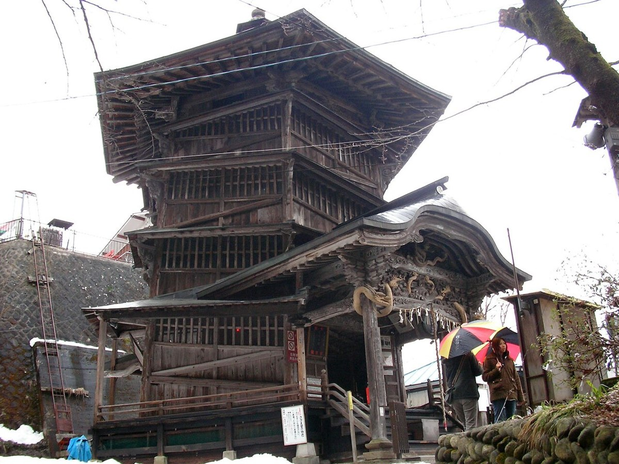

At Iimoriyama, Sazaedo is a wooden Buddhist hall with a shape that invites a second look. The tourism association dates it to 1796 and gives its height as 16.5 metres. The feature to understand is the route inside: separate ascending and descending spiral passages allow visitors to move through without passing people coming the other way. See the official Sazaedo description.
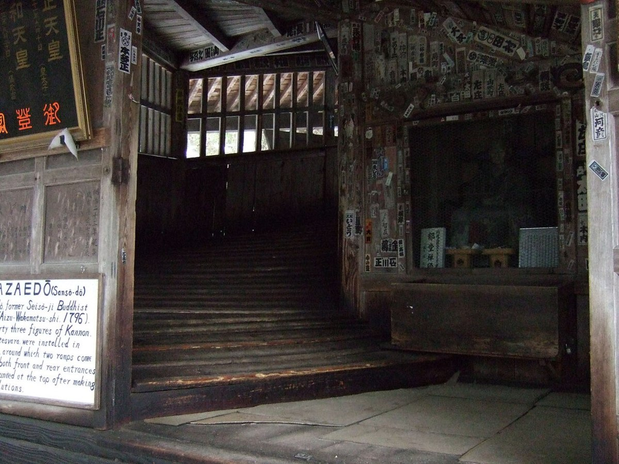

Look through the doorway in the entrance photograph: a wooden passage begins to slope upwards. The unusual exterior now has a practical connection with the way visitors move through the building. The photographs were taken in 2007; check current visiting information before making a trip.
Then the scenery changes to a hot-spring town
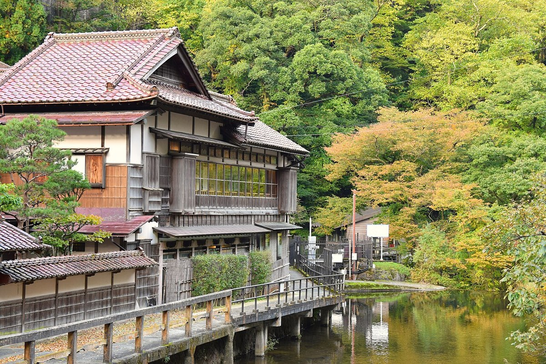
The first trip also reaches Higashiyama Onsen. An onsen is a hot spring; the word can also appear in the name of a hot-spring area. Here, inns and buildings stand beside a river, with wooded slopes close around them. The opening photograph shows that setting, not Chika’s accommodation or a frame recreated from the anime. Fukushima Travel introduces the area.
The official anime map also links the trip with the climb to Haguroyama Yugami Shrine. That is a specific shrine near Higashiyama Onsen; do not confuse it with similarly named shrines elsewhere. If you plan a visit, use current local access information rather than treating the episode as walking directions.
Enjoy the connection at your own pace
Watching a story and visiting a place are different experiences. The connection can simply make a wooden hall or a riverside neighbourhood memorable. If you do travel, check opening times, transport and photography rules, and treat shrines, inns and local streets as places with their own everyday life.
For a spoiler-light start, use the official trailer and series introduction, then return to the first-journey map. You can let one place catch your attention without making the entire episode into a checklist.