Rice, a few side dishes, and a small bowl of miso soup arrive at your table. There are chopsticks, but no spoon. Has something been left out?
For this kind of Japanese meal, usually not. You can lift the small soup bowl and drink from its rim, then use your chopsticks for the ingredients. The bowl is part of how you eat, rather than something that must stay on the table.
It is called a shiru-wan (汁椀), a soup bowl. Here, we are looking at the small, individual bowl beside your rice—not a large ramen bowl or a shared serving dish.
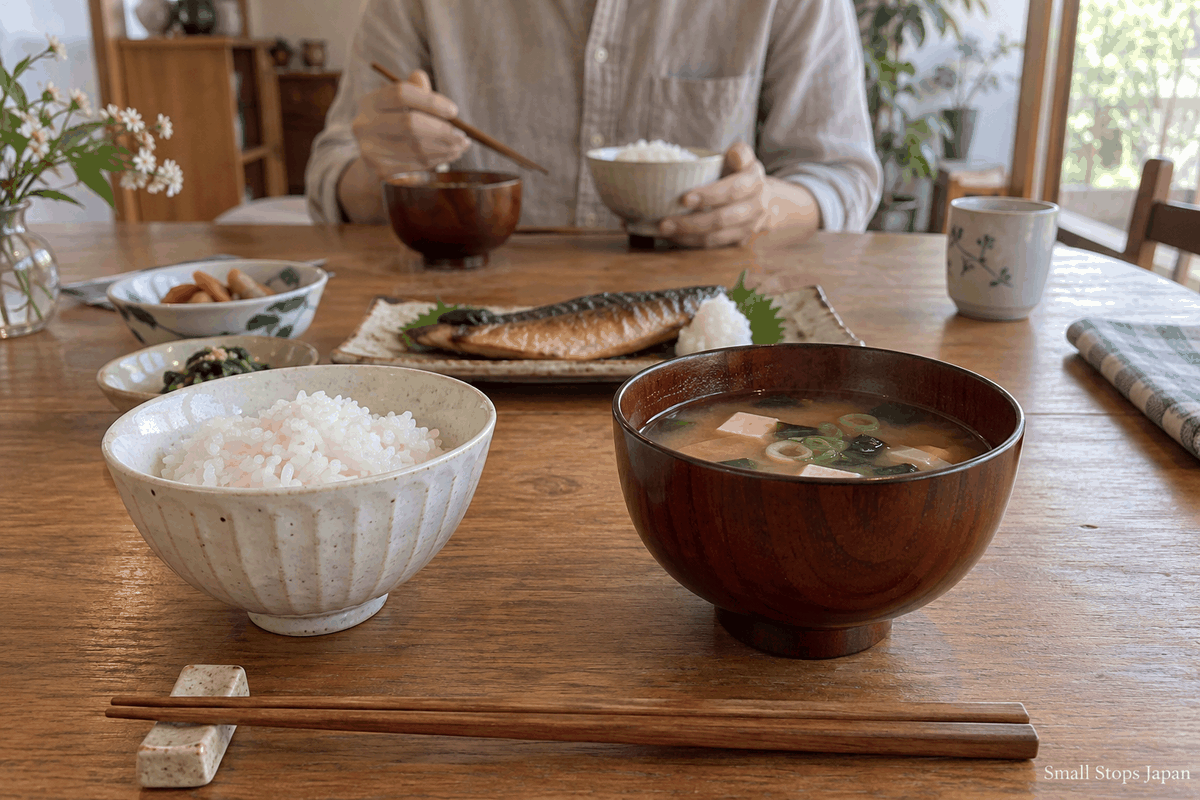
Lift the bowl, then take a small sip
If you are used to leaving soup on the table and bringing a spoon to your mouth, the movement feels different. Bring the bowl toward you instead. Start slowly; there is no need to make the first sip look polished.
- Put your chopsticks on their rest and pick up the bowl with both hands. Check that you can hold it comfortably. If it is too hot or heavy, leave it down.
- Support the base from underneath and steady the outside near the rim. Bring the rim to your lips and tilt the bowl gently for a small sip. Keep your fingers out of the soup.
- Lower the bowl before taking your chopsticks again. Use them for the tofu, vegetables, or other pieces. You can alternate between broth and ingredients rather than finishing one first.
Japan’s agriculture ministry explains that chopsticks may rest on their holder when you drink just the broth. When using them while sipping, they can gently hold ingredients back inside the bowl; the tips should not point toward people around you. See its illustrated bowl-and-chopstick guidance for the more formal hand movements.
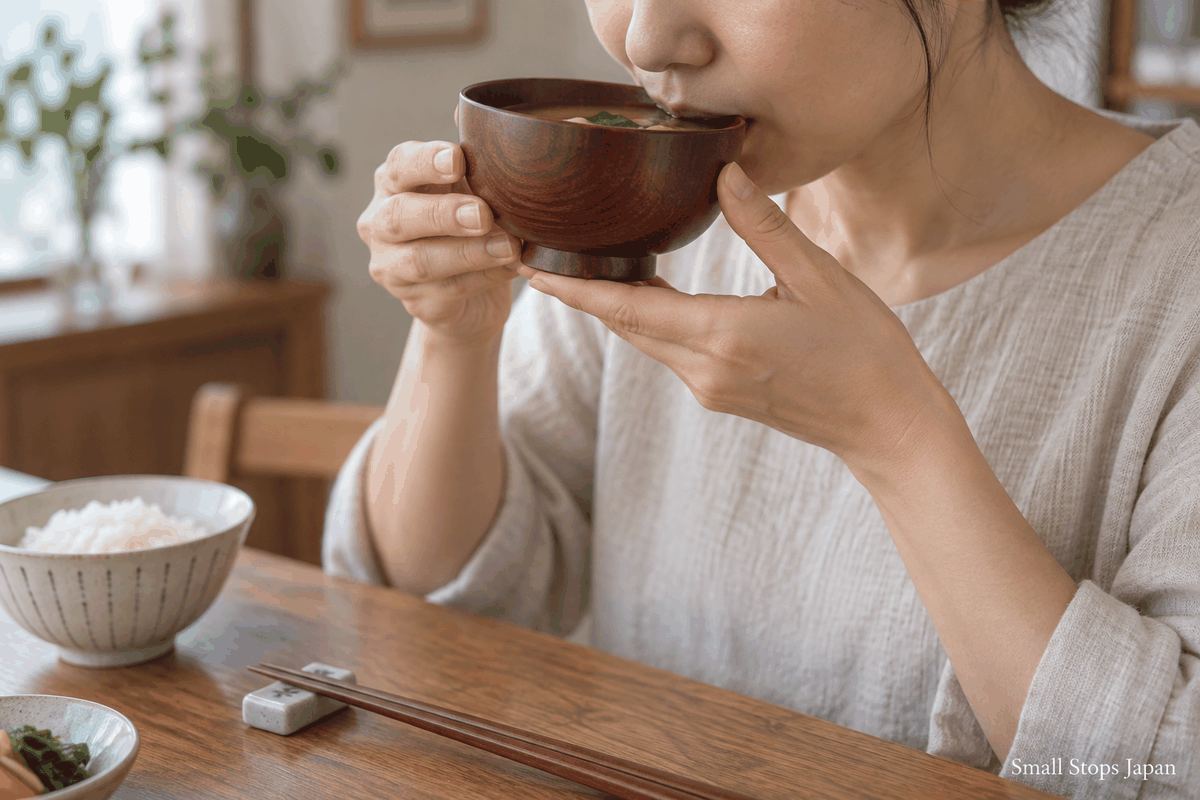
What if it is hot—or awkward to hold?
A bowl that feels comfortable in your hands can still contain soup that is too hot to drink. Pause before sipping. If your grip feels insecure, set it down rather than trying to copy the picture at all costs.
Wood helps explain why this way of eating developed. The ministry’s account of chopsticks and wooden bowls describes how wood transmits heat poorly, allowing bowls to be held and brought to the mouth. That is a material property, not a promise that every bowl or every serving is safe to touch immediately.
And a spoon is an option worth asking for if it makes eating easier. Knowing the usual movement should make a meal less intimidating, not turn it into a test. I would rather you feel comfortable at the table than worry about reproducing every formal gesture.
A connection to Aizu, in Fukushima
I am originally from Aizuwakamatsu, so Aizu-made bowls are a natural place for me to take this story a little further. That does not mean the bowl in every restaurant—or in these illustrations—is Aizu lacquerware.
One specific example is urushiol, a brand from Aizuwakamatsu company Sekibikodo. The maker explains that its wooden rice bowls can also be used for soup. Its official introduction describes the wood, lacquer finish, and approach to the shape, with photographs of the actual pieces.
There is a useful detail in the same introduction: the urushiol Rim design varies the thickness of its rim from 1 to 3 millimeters around the edge. This is a specification for that particular design, not a standard for Japanese soup bowls. It draws attention to something you can notice without knowing much about craft: the part of a bowl that touches your lips matters, too.
The linked maker’s photographs show the real objects. The images on this page explain everyday actions and do not reproduce or identify those products.
Back in the kitchen: check the bowl’s instructions
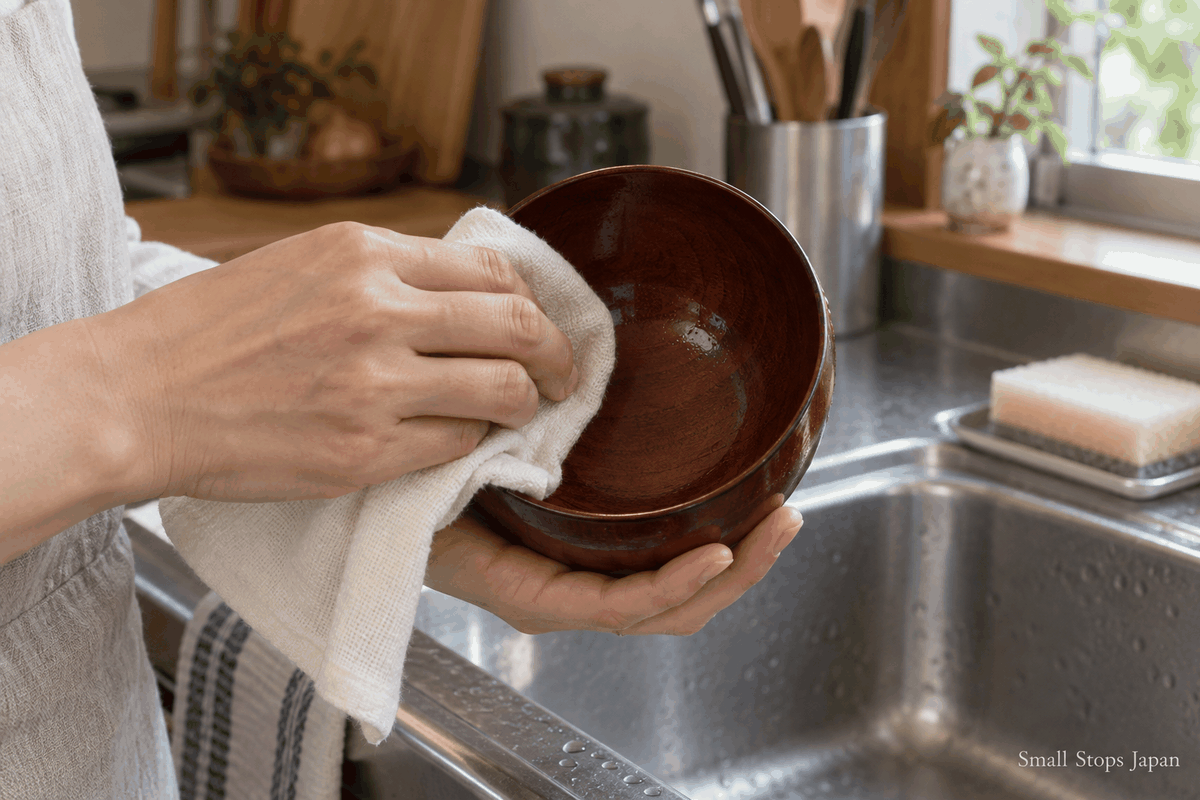
If you buy a soup bowl to take home, check its material and care label. A wooden lacquered bowl and a bowl made for a dishwasher may look similar at a glance. Appearance alone does not tell you whether a microwave or dishwasher is suitable.
For an example of traditional lacquerware care, maker Asada Shikki’s guide recommends water or lukewarm water, a soft sponge, and mild detergent, followed by wiping with a soft cloth. It advises against prolonged soaking, dishwashers, and microwaves for its lacquerware. Follow the instructions for the piece you actually own rather than applying one maker’s directions to every soup bowl.
The next bowl beside your rice
You do not need to memorize every detail before lunch. Recognize the small soup bowl, hold it securely if it is comfortable to do so, and start with one careful sip. The missing spoon may simply mean the bowl has a job to do.
For the other bowl on the table, continue with how to hold a Japanese rice bowl.
Image credits: Small Stops Japan. Image-use notes.