You open a packet of Japanese tea and find small golden-brown grains mixed through the green leaves. A few pieces may even look puffed. Are they supposed to be there?
Yes. This is genmaicha (玄米茶): green tea blended with roasted rice. The grains are part of the drink, not something to pick out before brewing. That combination gives you a useful first clue about the tea before you even put the kettle on.
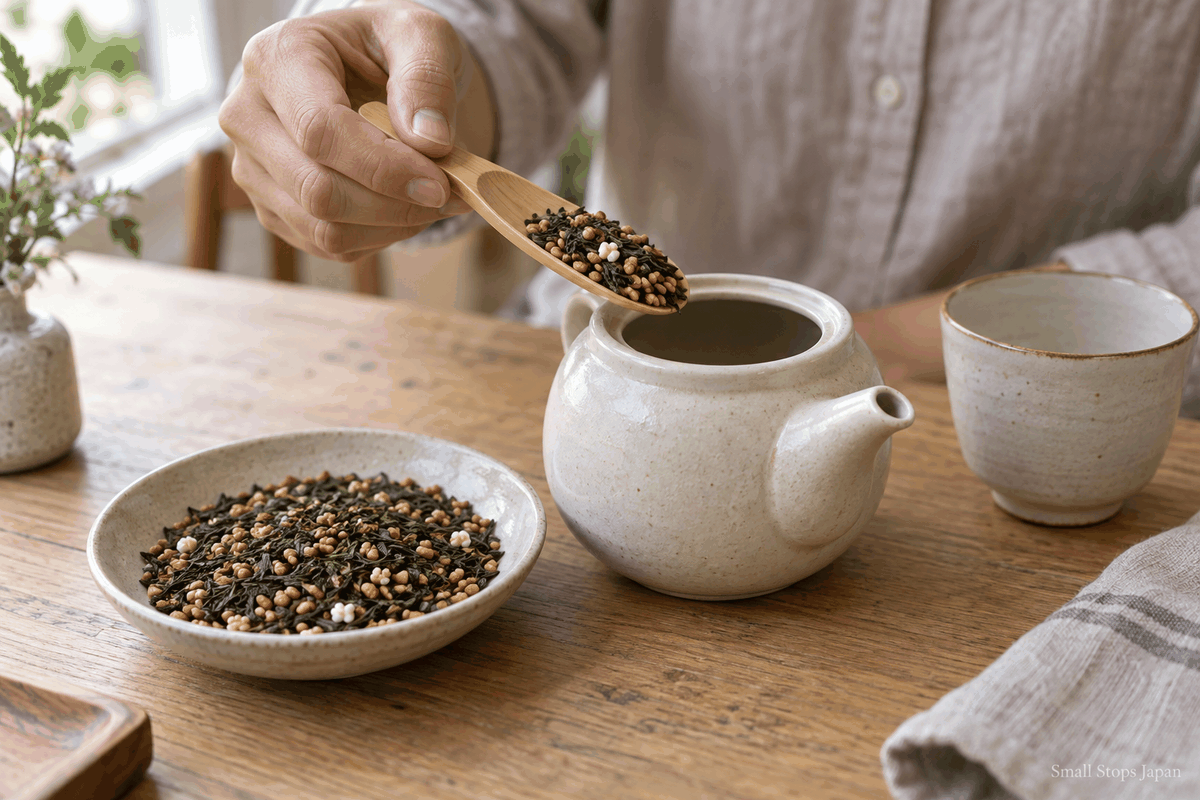
The little brown pieces are rice
The rice is prepared for tea. ITO EN’s guide to genmaicha and hojicha describes rice being soaked, steamed, and roasted, then combined with green tea such as bancha or sencha. So this is not a spoonful of cooked dinner rice added to a finished cup.
Look at the dry mixture and you can usually distinguish the narrow green leaf fragments from the more rounded, toasted grains. Some blends also contain pale puffed pieces. For example, Ippodo describes its genmaicha as including rice roasted to two different levels, with some grains puffing during the deeper roast. Those pieces are rice, too—not corn.
The exact leaf shape, amount of rice, and number of puffed pieces vary with the blend. Use the illustration to recognize the idea, not as a checklist that every packet must match.
Genmaicha, sencha, and hojicha: one useful distinction
If the names are new to you, start with what has been added or roasted. Genmaicha has roasted rice blended with green tea. Hojicha gets its character from roasting the tea leaves or stems themselves. ITO EN explains both processes in the guide above.
Sencha can be one of the green teas used in a genmaicha blend; the words do not describe two unrelated plants. You do not need to memorize a whole tea chart to notice the difference between green leaves with toasted grains and brown roasted leaves.
There are variations to watch for on the shelf. ITO EN’s matcha-blended genmaicha, for example, combines sencha, roasted rice, and matcha. A packet marked 抹茶入り (matcha-iri) means matcha has been added. Its brighter green appearance does not mean the rice has disappeared.
For the other roasted tea in this series, see why hojicha is brown.
From the packet to the teapot
Start with the instructions on your own packet. A loose-leaf blend and a tea bag need not use the same amount or brewing time. There is no prize for remembering someone else’s recipe if yours is printed on the bag.
For a concrete example, Ippodo’s Japanese product page gives this method for its Gokujo Genmaicha: 10 grams of tea, 240 milliliters of water, 100°C, and 30 seconds from the start of pouring. That is about 8 US fluid ounces of water, at 212°F. These numbers belong to that product’s instructions; they are not a rule for every genmaicha.
- Measure the dry blend into a teapot with a strainer. Put in the leaves and rice together.
- Add the water carefully, following the temperature and quantity on the packet. In the Ippodo example, start timing as you begin pouring.
- Pour the brewed tea into your cup when the stated time is up. The strainer holds back the leaves and grains. Let the drink cool enough to sip comfortably.
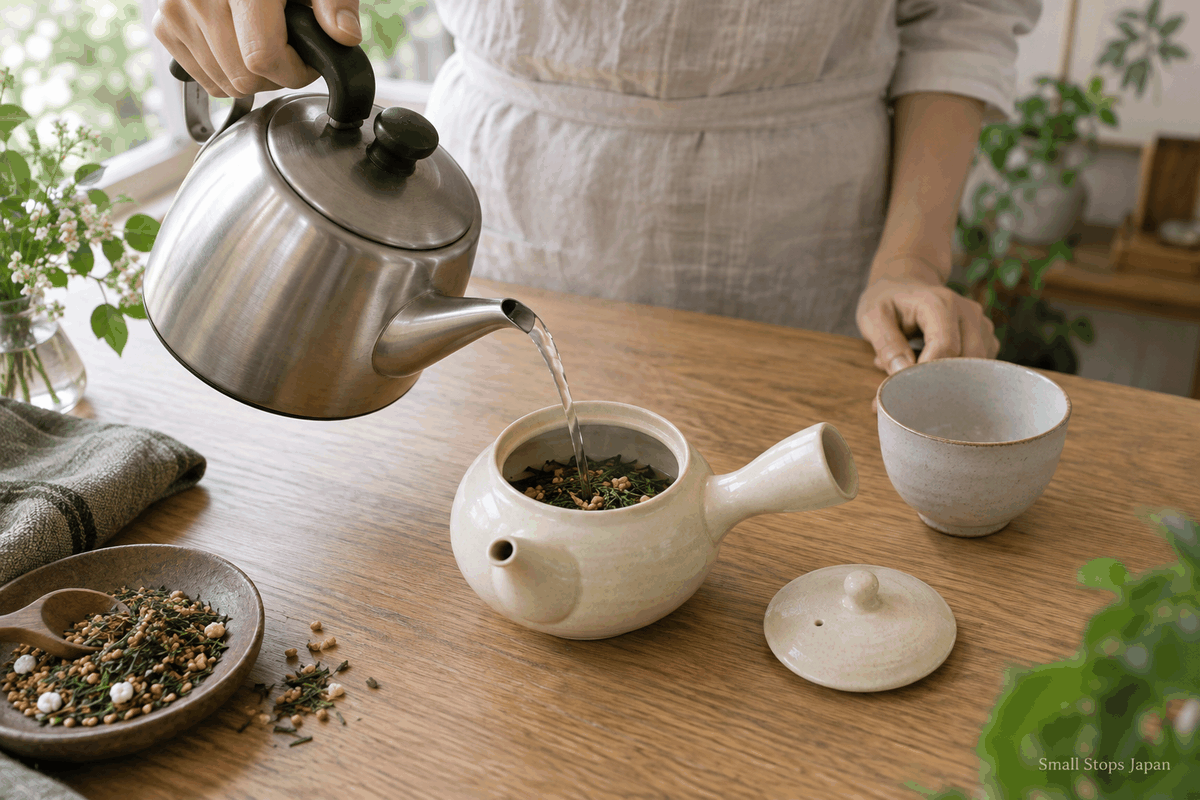
If the side handle is unfamiliar, our guide to using a kyusu shows how the pot, lid, and strainer work together. The rice is a new ingredient to recognize; you do not need a completely new way of holding the pot.
A cup beside the ordinary things
The interesting part of genmaicha is small enough to fit on a teaspoon. An ingredient you know from a meal turns up in a different form, mixed into tea. That is the kind of everyday detail I want to make easier to notice here.
I would start with the packet and one cup, rather than worry about finding the perfect tea set. Notice the roasted aroma, look at what remains in the strainer, and see whether this is a tea you enjoy. You can be curious without turning a break into homework.
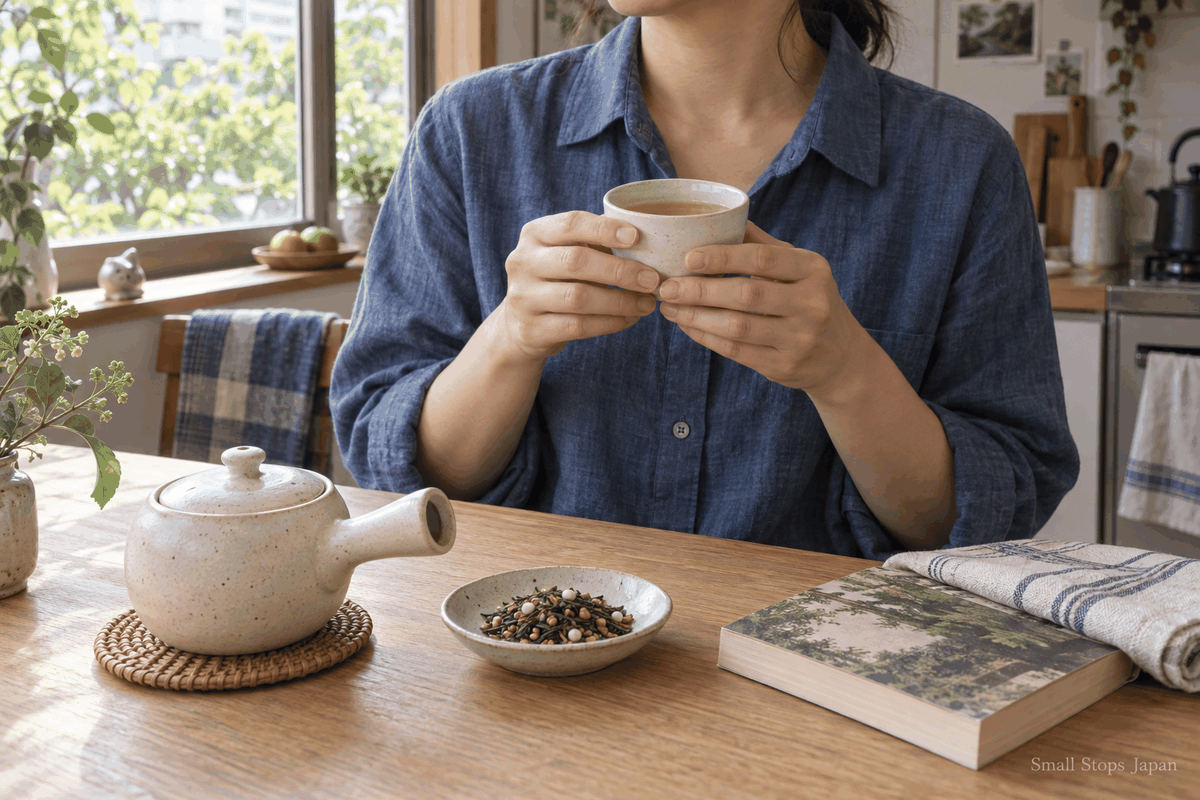
Next time you see genmaicha on a tea packet—or the characters 玄米茶 on a label—the grains will give you something familiar to look for. They are there on purpose.
Image credits: Small Stops Japan. Image-use notes.