Two shelves, two clues
A red cow with a head poking out of its body. A small, rounded doll with a painted face. In Ryo’s photographs from Ouchi-juku, both look like ornaments waiting quietly on a shelf. Their movements give you a different way to remember them: an akabeko nods its separate head, while an okiagari koboshi tips and returns as a whole figure.
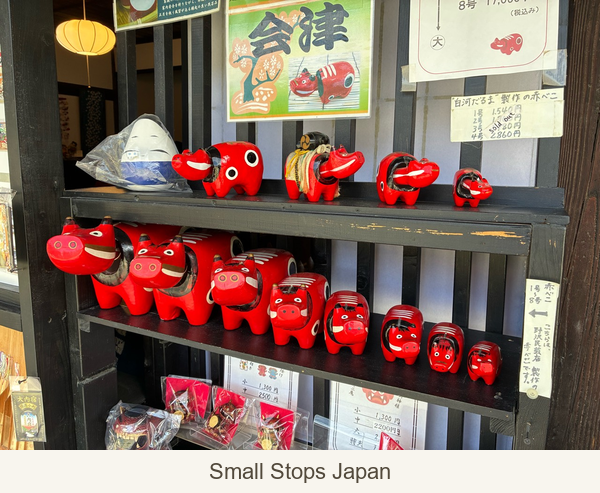
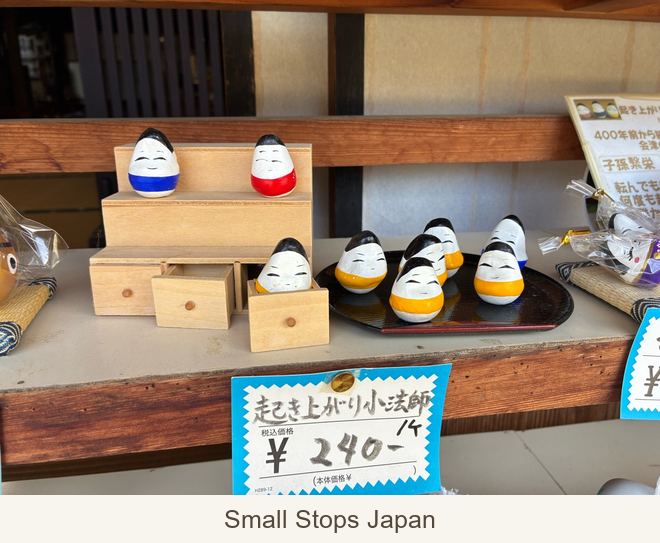
First, compare their outlines. The cows stand on legs, with a dark opening around the neck. The dolls have a rounded lower body and no separate, projecting head. Colour is a less useful shortcut here: the shop’s dolls include red, blue and yellow examples. Look at how the face connects to the body.
Akabeko: follow the nose, then check the feet
In the two illustrations below, compare the nose with the dark rim around the neck. The head is shown higher in one and lower in the other. The body and feet remain in broadly the same positions. That contrast directs your attention to a moving part within the figure, rather than the whole cow leaning over.
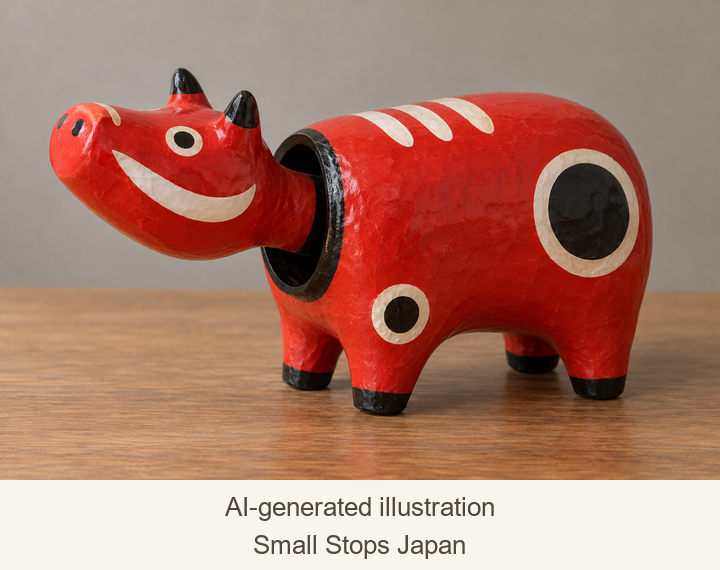
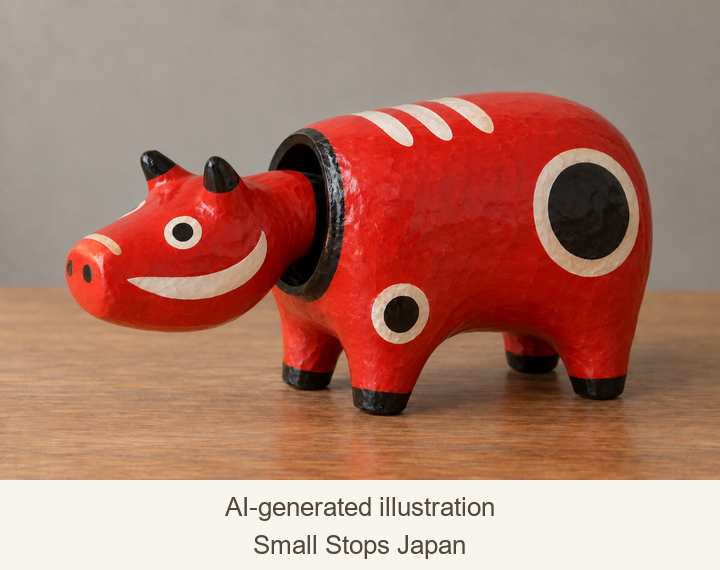
Japan’s tourism interpretation database (PDF) describes the head and neck as suspended by a cord inside a hollow body. This source explains the general arrangement; the cord is not visible in these pictures. The illustrations show two explanatory positions, not frames from a recorded test or a measurement of how far a particular toy moves.
Okiagari koboshi: follow the whole outline
Now follow the little doll from its black-painted top to its red lower half. In the tilted state below, the face and body lean together. There is no separate nodding head in this comparison. The final upright state represents the return that gives this toy its familiar character.
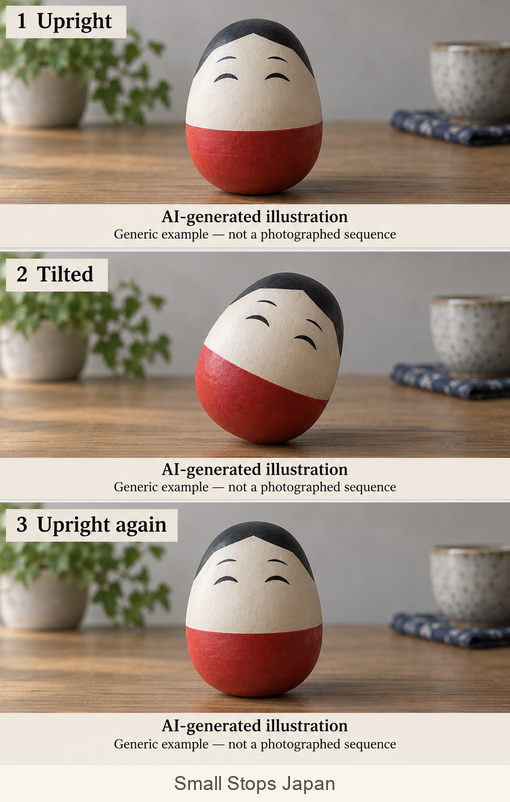
Aizu-Wakamatsu’s official tourism guide describes okiagari koboshi as getting back up after falling over. The three-state illustration makes that idea easier to picture. It does not show the inside of a doll, the speed of its return, or the performance of any item in the shop photograph.
A quick comparison
Ask the same question of both: what changes position relative to what? With the akabeko, compare the head with the body. With the koboshi, compare the whole outline with the tabletop. Choosing that reference makes the two movements easier to distinguish.
| Look for | Akabeko | Okiagari koboshi |
|---|---|---|
| Moving part | Head relative to body | Whole figure relative to the surface |
| Visual reference | Body and feet | Tabletop beneath the rounded body |
| Clue at rest | Separate head within an opening | Face and body in one rounded outline |
| Not established by these pictures | Movement range or condition of a shop item | Return speed or reliability of a shop item |
What a shelf photograph can tell you
Go back to the two shop photographs. You can identify shapes, colours and the gap around an akabeko’s head. You cannot tell from one still photograph whether an individual toy moves freely or returns reliably. If you want to see a shop item move, ask the shopkeeper for a demonstration rather than treating the display as a test bench.
For the painted details and stories behind each toy, continue with a closer look at akabeko or the okiagari koboshi and its customs. On the next shelf you encounter, start with one small observation: does the head sit separately within the body, or does the face belong to one rounded form?