A bowl of rice, a bowl of soup and a small side dish each have their own place in the illustration below. Underneath them sits another object: a shallow tray that brings the separate dishes together.
In Japanese, a serving tray is called an obon (お盆). Trays will already be familiar to many readers. What is worth noticing here is the relationship between the dishes and the tray: the food sits in individual vessels, while the tray gives the group a shared surface.
The three images in this article are AI-generated illustrations of one fictional, unbranded tray. They explain its possible uses; they are not photographs of a product for sale.
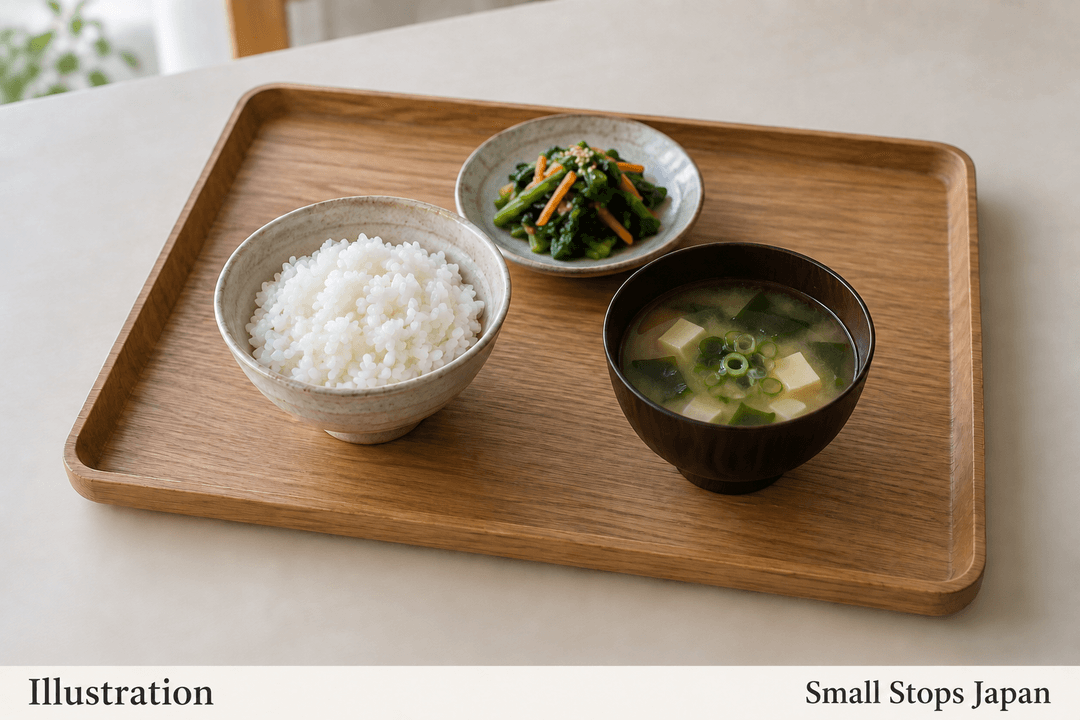
Why leave a tray beneath the dishes?
A tray can serve a purpose after it reaches the table. In this example, it gives one person’s dishes a visible boundary. The rice and soup remain in separate bowls, but they read as a single set.
That is also a use suggested by a Japanese maker. In its 2025 introduction to a wooden tray range, Hakuichi describes the larger tray both for carrying several drinks and for arranging one person’s dishes as a meal set. This is a manufacturer’s suggested use, rather than a rule that every Japanese meal needs a tray. Hakuichi’s tray introduction
The tray’s role is different from that of the bowls themselves. For a closer look at holding bowls and using chopsticks, see our guide to a Japanese table.
Take the dishes away and look at the shape
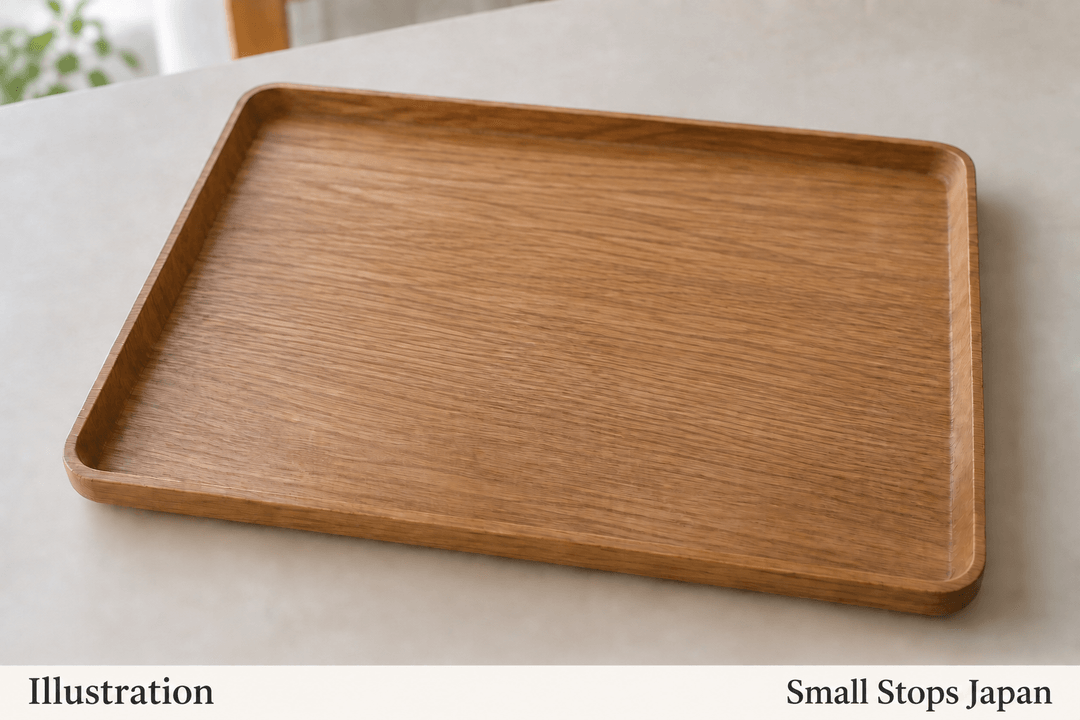
Without the bowls, the broad, continuous surface is easier to see. A low rim runs around it, and the front edge has visible thickness where the tray meets the table. Those details distinguish the illustrated tray from a flat placemat.
The rim also helps your eye follow the boundary around the dishes in the first image. Its presence does not tell you how much weight a real tray can carry, or whether its surface resists slipping. Those are product details to check separately.
The same surface, a different occasion
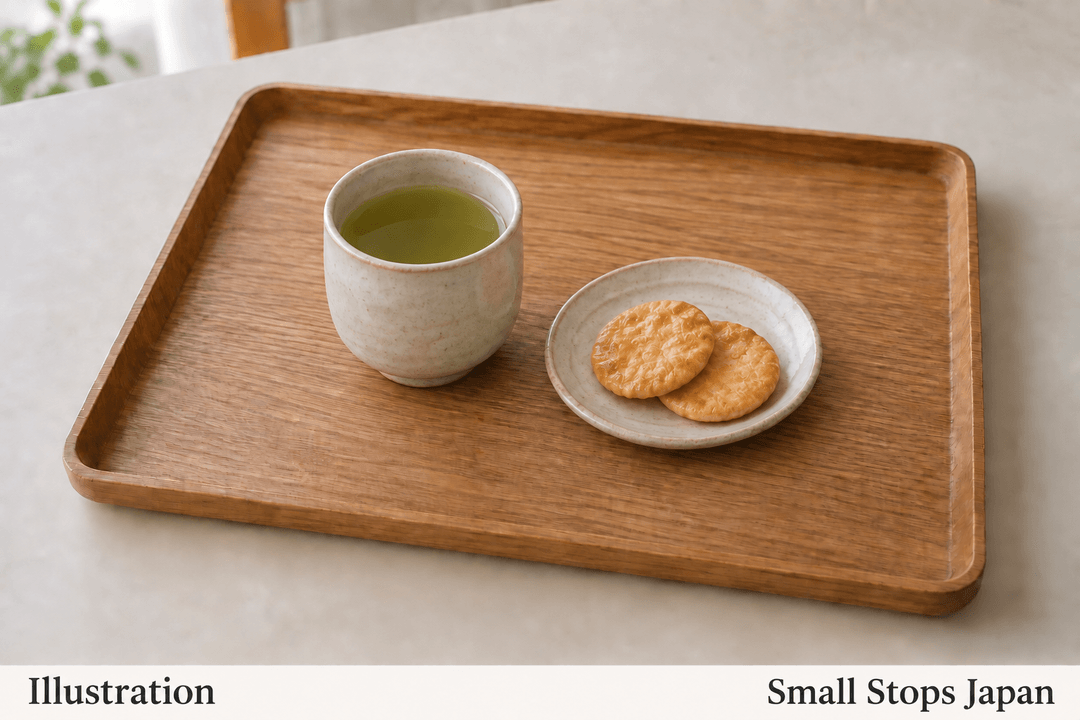
Now the meal bowls have been replaced by a tea cup and a small plate. The tray has not changed; the grouping has. There is more open space around the two vessels, and the scene reads as a pause for tea rather than a meal.
Hakuichi’s introduction suggests a cup and a small plate as a tea set for its smaller tray. The illustrations here use one fictional tray to make the comparison easy to follow; they do not reproduce Hakuichi’s designs or dimensions. Hakuichi’s smaller-tray example
Wood grain does not tell you how to wash it
The warm colour and grain in these illustrations are visual details, not a material specification. Real trays with a wood-grain appearance can have different constructions and finishes. For example, a 2018 trade catalogue describes wood-grain designs made with ABS resin. It is a historical product example, not advice about every tray sold today. Catalogue, tray features on page 1
KINTO’s 220 × 120 mm teak tray provides a different, specific example: its product page lists laminated natural wood with a urethane coating, says not to use a dishwasher or soak it, and advises cleaning with a tightly wrung cloth. These instructions apply to that product. They should not be transferred to another tray simply because it looks similar. KINTO’s material and care information
When a tray catches your attention, look first at what it brings together: a meal, drinks or a small tea set. If you want to use one yourself, the material and care label will tell you more than the wood grain alone.