A bowl of rice, a bowl of soup, a plate of fish and a small serving of vegetables arrive together. You can recognise the food, yet still wonder what to do with the bowls and chopsticks.
Look at the job in front of you. Serving rice calls for a different tool from eating it. Drinking the liquid in a soup bowl leaves your chopsticks free to rest. A small bowl might hold a side dish to eat, or a sauce for another food. These connections make the table easier to understand without memorising every vessel’s name.
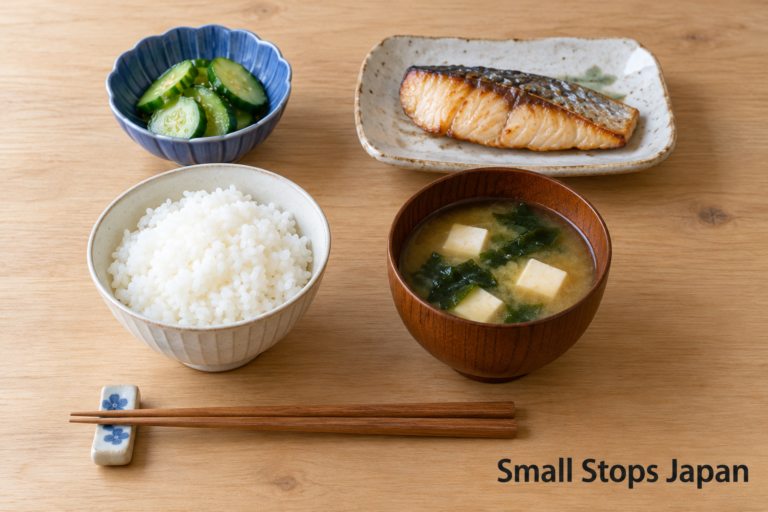
The following scenes follow those jobs, rather than prescribing an order for eating your meal. The illustrations are separate examples, not photographs of one continuous meal.
Serving rice: the paddle stays on the serving side
At a rice cooker, the broad paddle is a shamoji. It carries cooked rice into a bowl.
Look at the movement: rice rests on the paddle’s wide face as it travels from the cooking pot to the smaller bowl. The paddle does the transferring; the filled bowl goes to the person eating. That distinction explains why a shamoji can be beside the cooker without being part of each person’s place setting.
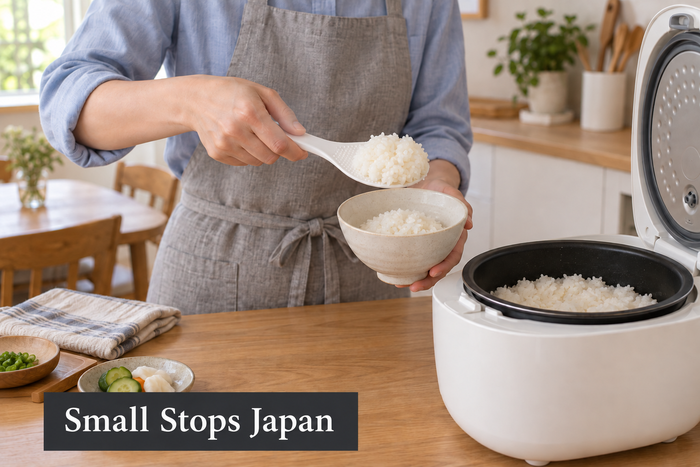
If you are serving your own rice, our shamoji guide takes a closer look at the scoop and transfer. At the table, the question changes to how you support the bowl while eating.
Eating rice: look beneath the bowl
A small individual rice bowl, or chawan, has a different job from the paddle. It holds your portion near your hand. In the illustrated right-handed example, the left hand supports the bowl while the right uses chopsticks.
Notice the ring underneath the bowl. Fingers support that foot from below, while the thumb meets the rim without reaching into the food. This follows the hand positions shown in Kobayashi Foods’ bowl-holding explanation.
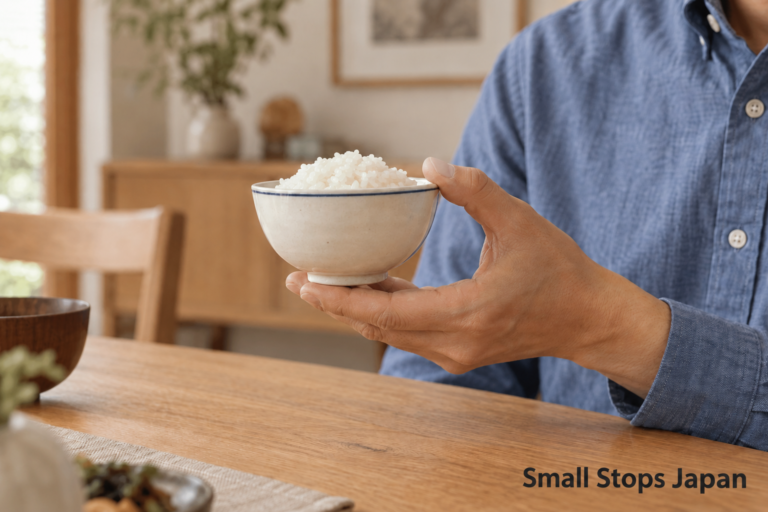
You can put the bowl down between mouthfuls. If it feels too hot, heavy or awkward to hold, leave it on the table. This small-bowl example is not an instruction to lift every plate or large serving dish. Our rice-bowl guide shows the support points more closely.
Drinking soup: give the chopsticks somewhere to wait
With a small personal soup bowl, or shiruwan, you can drink the liquid from the rim. Japan’s agriculture ministry describes this connection between bowls and drinking soup. The bowl itself brings the liquid to your mouth; chopsticks have a role when you eat the solid ingredients.
If you want both hands available for the bowl, first put the chopsticks down on the hashioki, the chopstick rest.
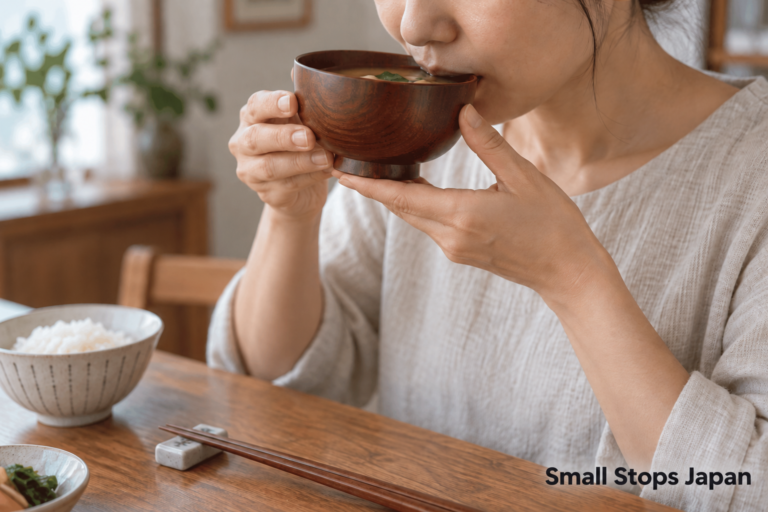
The ministry’s chopstick guidance explicitly allows chopsticks to remain on the rest when drinking just the liquid. Set the bowl down when you need to change your grip or pick the chopsticks up again. Let hot soup cool before sipping; the picture cannot tell you its temperature.
For the hand-and-rim relationship, see our soup-bowl guide. For the resting place, including what to do when none is obvious, follow where chopsticks go during a pause.
A small bowl: decide what the contents are for
A little bowl of cucumber and a little bowl of soy sauce can look similar in size. They ask you to do different things: eat the cucumber as a side dish, or dip another food into the sauce.
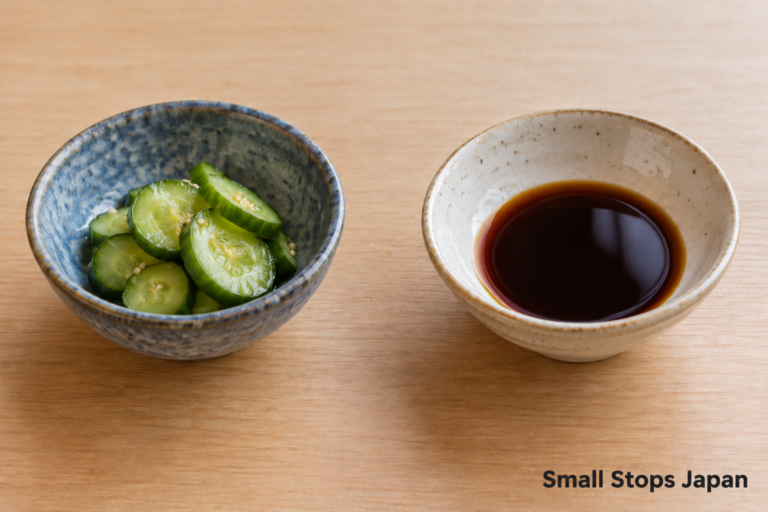
Kobachi means a small bowl, so the name alone does not settle that question. For a real product example, Kihon no Utsuwa suggests both side dishes and sauces for its small round bowl. Those are suggestions for that product, not a rule for everything served in a small vessel. If the contents are unclear, ask what accompanies what.
Our kobachi guide explores that distinction and introduces a different bowl from Aizu Keizanyaki. The illustrated bowls here are generic examples, not either maker’s product.
If the rice is an onigiri, the scene changes
Rice can also arrive already shaped as onigiri. In the example below, the hand supports the rice and its nori seaweed covering together, with a plate underneath. The nori is part of the food. A ministry recipe shows rice shaped in the hands and wrapped in nori.
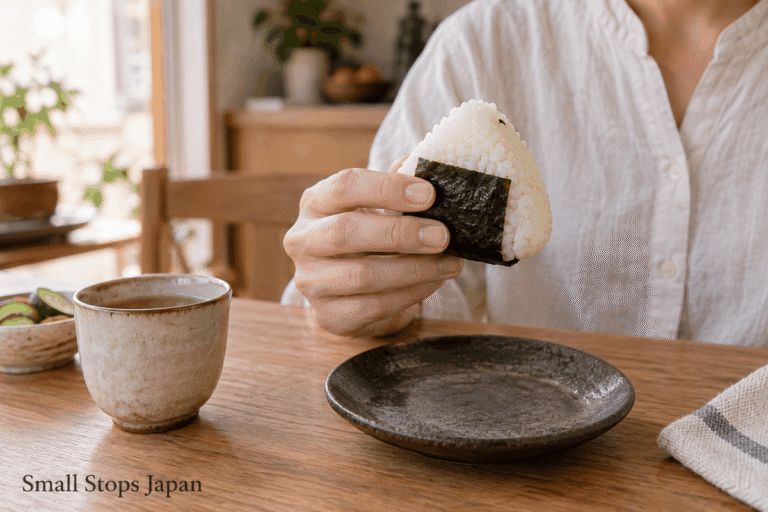
Here, there is no rice bowl to support in the same way as before. Follow our first-onigiri guide for the covering, filling and first bite. This is another way to encounter rice, rather than an extra item every meal needs.
At your next meal, start with the food and the action: transferring rice, supporting a small bowl, sipping soup or freeing your hands. You can explore the detail that helps with that moment, and leave the rest for another meal.