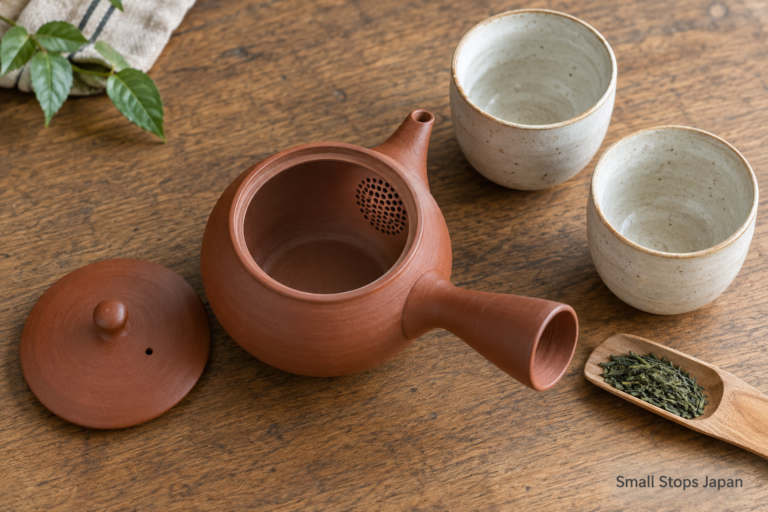
A mug with a tea bag and a small pot beside two cups can both be starting points for Japanese tea. The choice becomes easier when you separate three things: which tea you want to try, where it will brew, and what you will drink from.
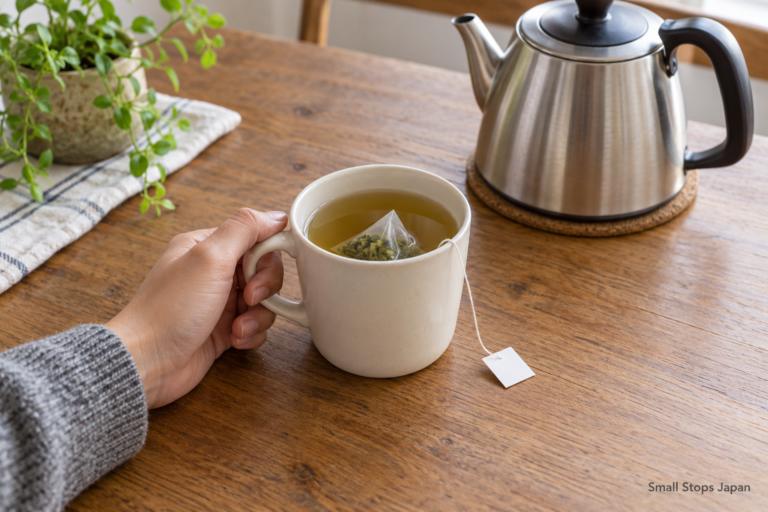
Hojicha and genmaicha are names for teas. A kyusu is a teapot; a yunomi is a drinking cup. They answer different questions. You can begin with a suitable mug and a cup-size tea bag, then explore the other objects as they become interesting or useful to you.
First, look at what is inside the packet
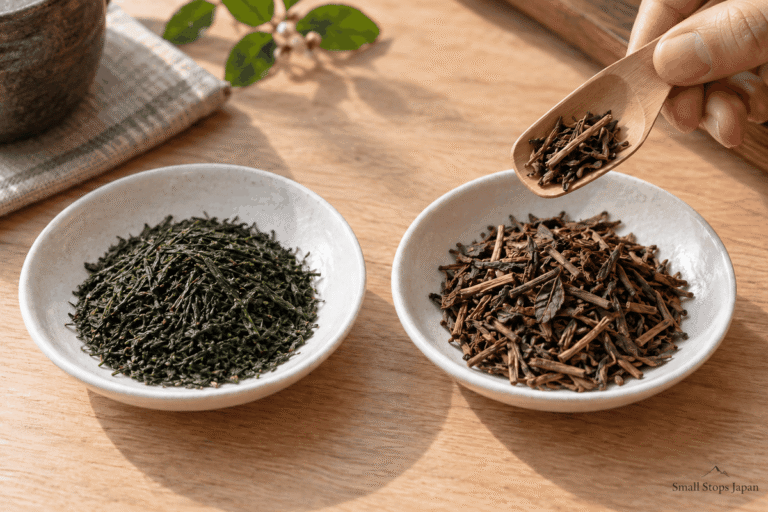
Open loose-leaf hojicha and you may see brown leaves and stems. In genmaicha, pieces of toasted rice sit among the tea leaves. ITO EN’s tea guide explains the distinction: hojicha is roasted tea, while genmaicha combines tea with roasted rice. Both have a connection to roasting, but the rice is a separate ingredient you can see in genmaicha.
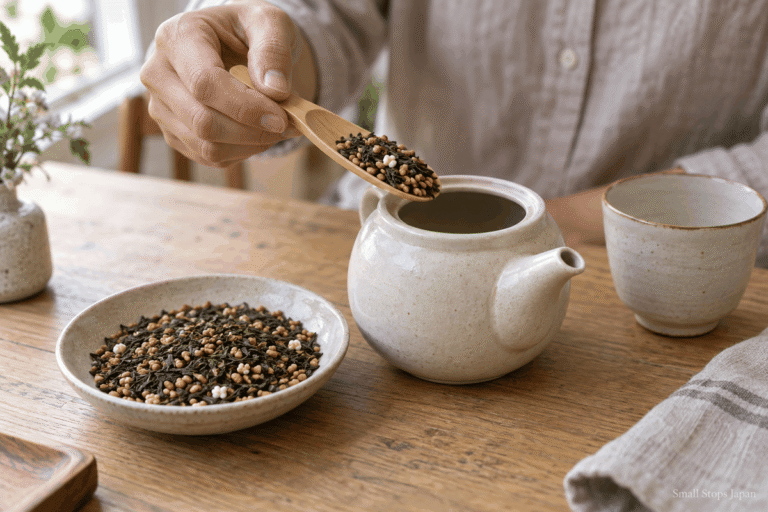
Those names do not tell you where the tea will brew. Read the packet for its intended use and recommended amount of water before choosing a mug or pot. The tea’s name and its brewing instructions answer different questions.
If the dry ingredients catch your eye, our closer looks at hojicha’s brown leaves and the rice in genmaicha follow that part of the story.
Then, decide where the tea will brew
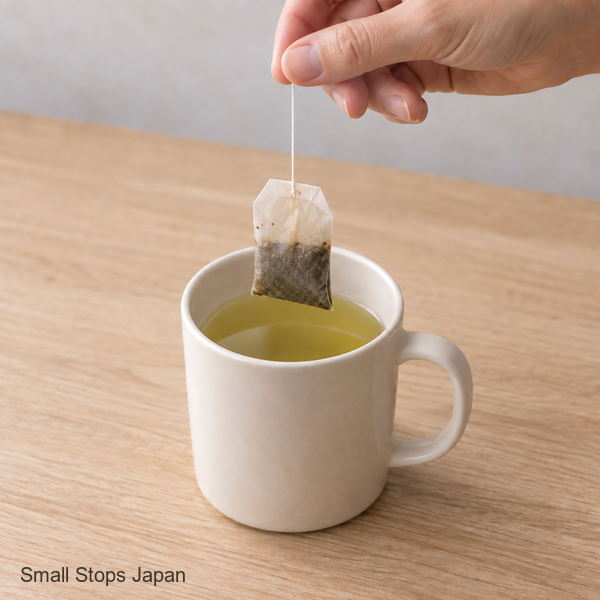
For a cup-size tea bag, the drinking cup can also be the brewing vessel. ITO EN’s instructions show a bag going into a mug or yunomi, followed by water and a wait before the bag is lifted out.
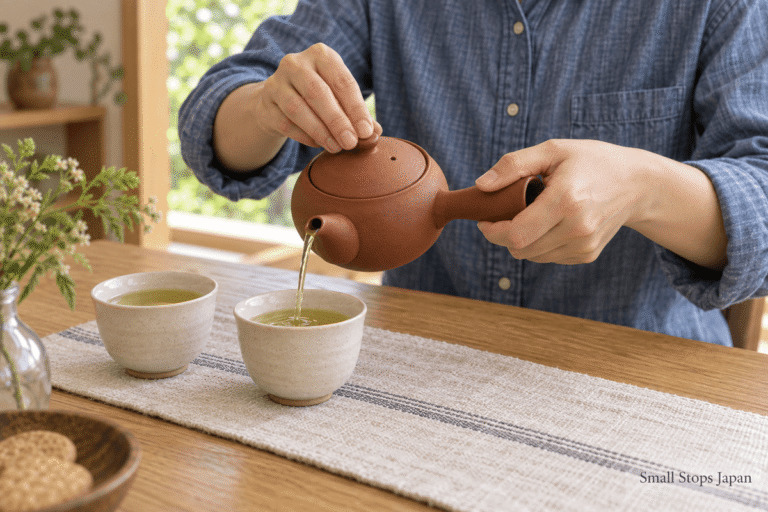
With loose leaves in a kyusu, brewing takes place in the pot. You then pour the tea into a drinking cup. The strainer is part of this arrangement: Tokoname’s official guide shows several types, including holes made in the clay and a stainless-steel option. Look inside the pot as well as at its handle.
| What you have | Where brewing happens | What to check next |
|---|---|---|
| A cup-size tea bag | In the mug or cup | The bag’s recommended amount of water and brewing instructions |
| A pot-size tea bag | In a suitable pot | The specified amount of water and the pot’s capacity |
| Loose tea and a kyusu | In the teapot | The quantities of tea and water, temperature and time |
This is a way to read your own packet and equipment, rather than a single recipe for every Japanese tea. The bag count alone does not tell you how much water to use, and a mug’s rim is not a measuring line. Our tea-bag guide looks at that difference; the kyusu guide follows loose leaves through pouring and clearing away.
The drinking cup is another choice
Imagine pouring the tea from your kyusu into a mug. Now imagine pouring it into a yunomi. The brewing vessel can stay the same while the drinking vessel changes.
A yunomi has no handle. Its whole shape matters when you pick it up: the sides, rim and raised base are all visible around your hands. A mug gives you a handle to hold instead. Our yunomi article shows the shape and hand position more closely.
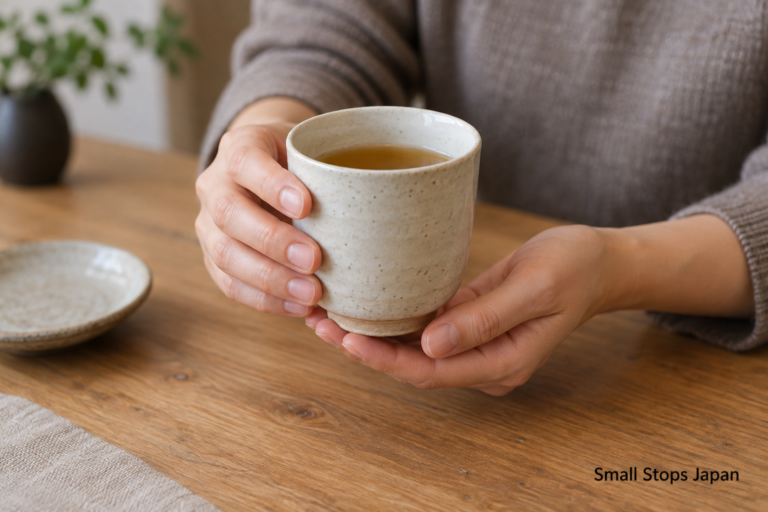
You do not need to match each tea name to a special new cup. For the cup-size bag method above, a mug is already one of ITO EN’s options. A yunomi can be an object to explore in its own right, without becoming a requirement for your first drink.
Leave things ready for the next cup
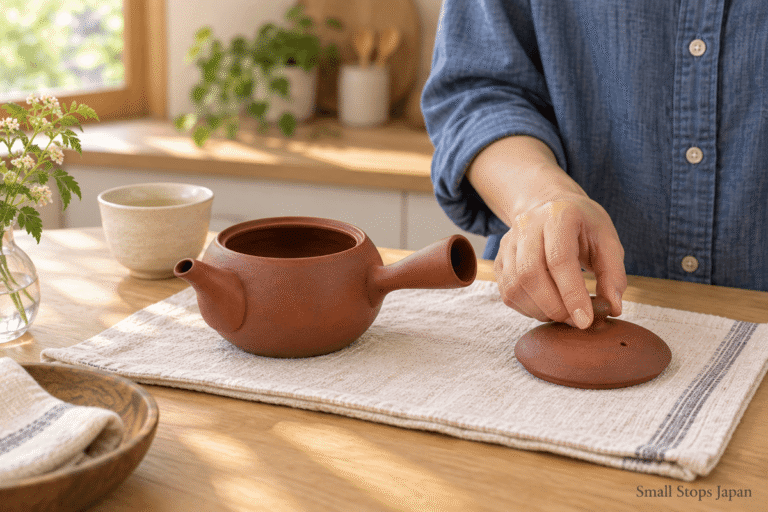
After drinking, the empty teapot and the remaining dry tea have different needs. Tokoname’s official guide describes rinsing out the used leaves with water and drying the pot with its lid removed. Check the care instructions for your own pot.
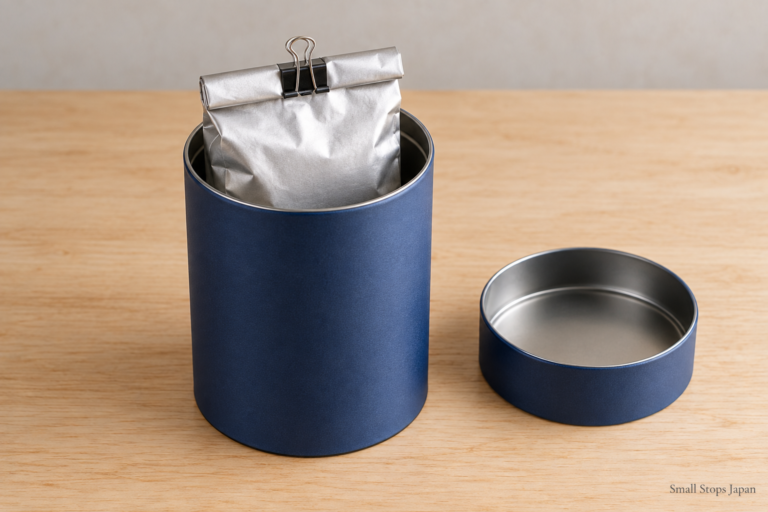
Keep the original instructions with any unused dry tea. ITO EN’s storage FAQ advises sealing the opened bag tightly and keeping it in a cool, dark place away from direct sunlight, heat and humidity. If you choose to put the packet in a canister, check that it fits beneath the lid. Buying a canister is not the first step in making a cup.
Look again at the table: the tea you chose, the place where it brewed, and the cup in your hand. Once those roles are clear, you can change one part at a time—try a different tea, use a pot, or pick a cup whose shape you enjoy.