A closer look at everyday Japan, with Fukushima as our starting point. Browse the latest stories or choose a category.
-
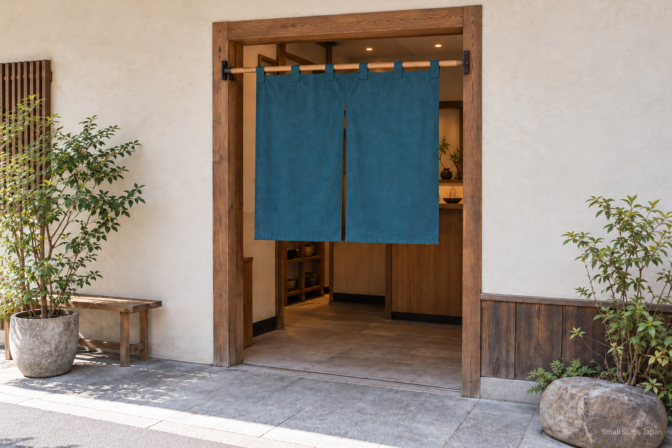
Illustration — A fictional entrance with a short, two-panel noren. The floor remains visible beneath the cloth. Noren: How Japan’s Split Doorway Curtains Work
Look closely at a noren: its joined top, fabric loops and split lower panels explain how this short doorway curtain lets a person pass through.
-
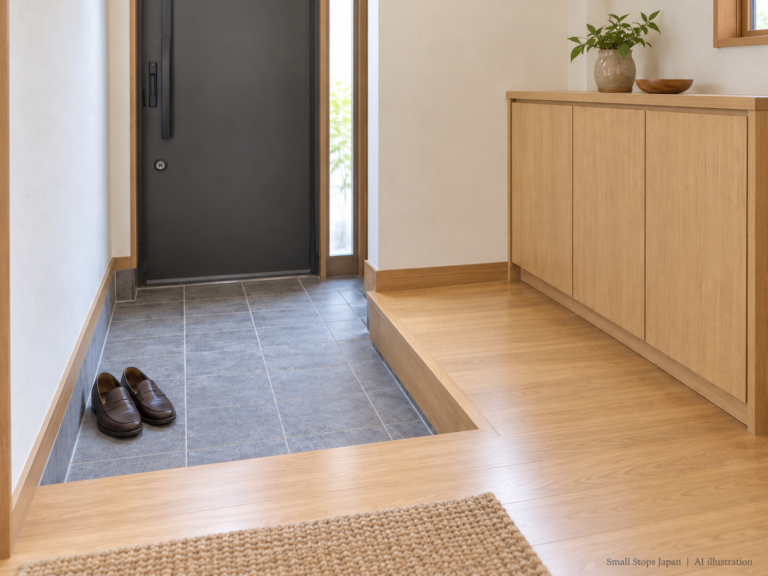
Illustration: two outdoor shoes sit at the side of the lower tiled entrance. The raised wooden floor is beyond them. This is a fictional home. Shoes Off at the Genkan: Where Each Pair Stays
Five illustrations follow outdoor shoes, indoor slippers and toilet slippers across the boundaries of a Japanese home, including a tatami room.
-
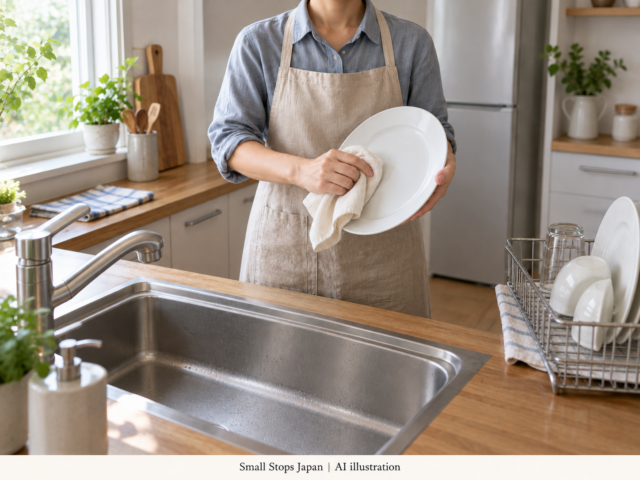
AI illustration: an adult wipes a plate between the sink and drying rack. The off-white cloth is the dish cloth in this example. Fukin: A Cloth for Dishes or the Table
A kitchen cloth becomes easier to understand in use. Four illustrations show a fukin against a plate and a worktop, and why context matters more than colour.
-
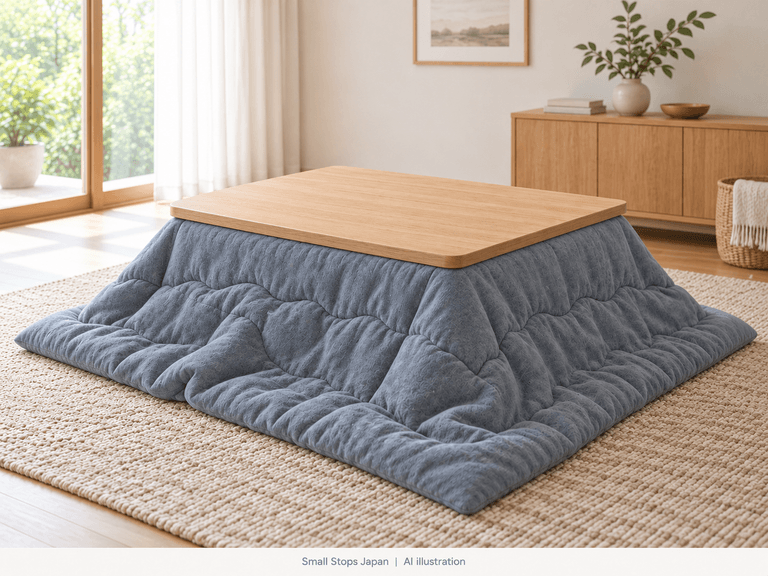
AI illustration: a low kotatsu with its wooden tabletop exposed and a quilt hanging below the edges. A Kotatsu: A Table Above, Warm Space Below
Why does a kotatsu have a quilt below its tabletop? Four illustrations explain where you sit, where the quilt goes and where the heater is.
-
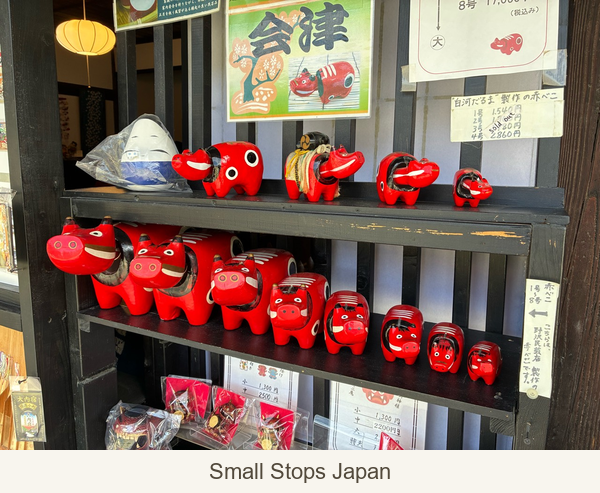
Akabeko displayed in an Ouchi-juku shop. Photo: Ryo. Akabeko or Okiagari Koboshi? Watch What Moves
A nodding head or a whole doll tipping back upright? Compare two Aizu folk toys by their outlines and the parts that move.
-
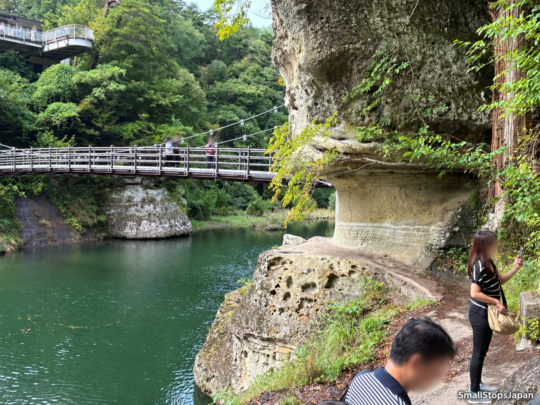
Photo by Ryo, AI-assisted editing for face privacy and site credit. A side view shows the bridge beside the cliff; it does not establish current access conditions. To-no-Hetsuri: From the Bridge to Beneath the Cliffs
Four views from a family visit to To-no-Hetsuri in Fukushima: the suspension bridge, rock overhang, riverside passage and a wooden entrance beneath the cliff.
-
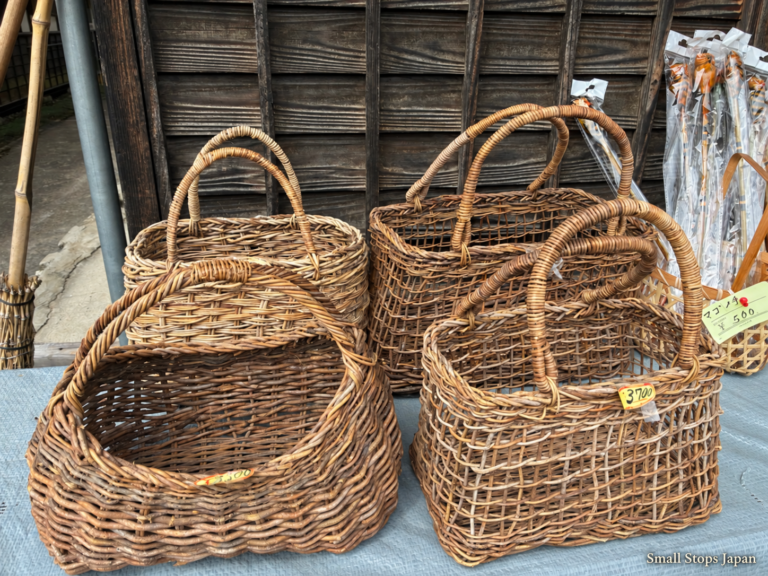
Owner photo by Ryo; AI-assisted edit to add the site credit. Ouchi-juku shopfront; photographed price labels are not current offers. Baskets at a Japanese Shopfront: Shallow or Deep?
A shopfront in Ouchi-juku offers a way to compare basket shapes: openings, handles, reaching for cloths and gathering small belongings in an inner bag.
-
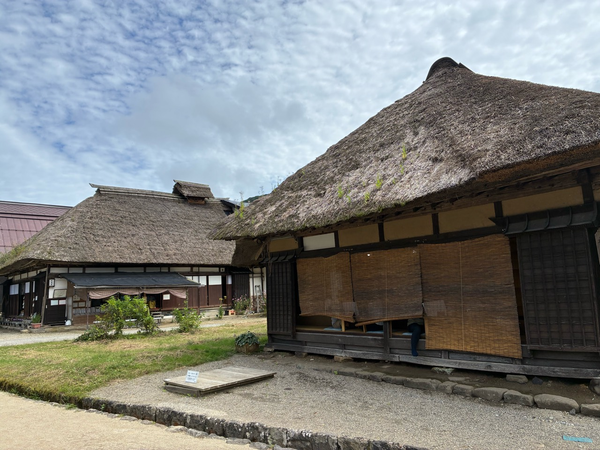
Two neighbouring buildings in Ouchi-juku, with the roof edges visible above their walls and windows. Photo: Ryo. Ouchi-juku’s Thatched Roofs: What the Eaves Reveal
Look closely at Ouchi-juku’s eaves to see plant stems, timber and the continuing work that keeps a historic streetscape alive.
-
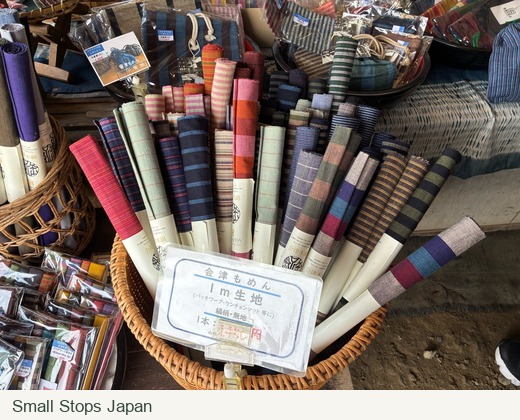
Aizu momen sold as fabric pieces in Ouchi-juku. Photograph provided by Ryo. The photographed display does not establish today’s prices or stock. Aizu Momen: A Regional Cotton Textile for Bags, Clothes and Everyday Life
Explore Aizu momen, a regional cotton textile from Fukushima, through fabric, bags, pouches, clothing and useful household accessories.