A closer look at everyday Japan, with Fukushima as our starting point. Browse the latest stories or choose a category.
-
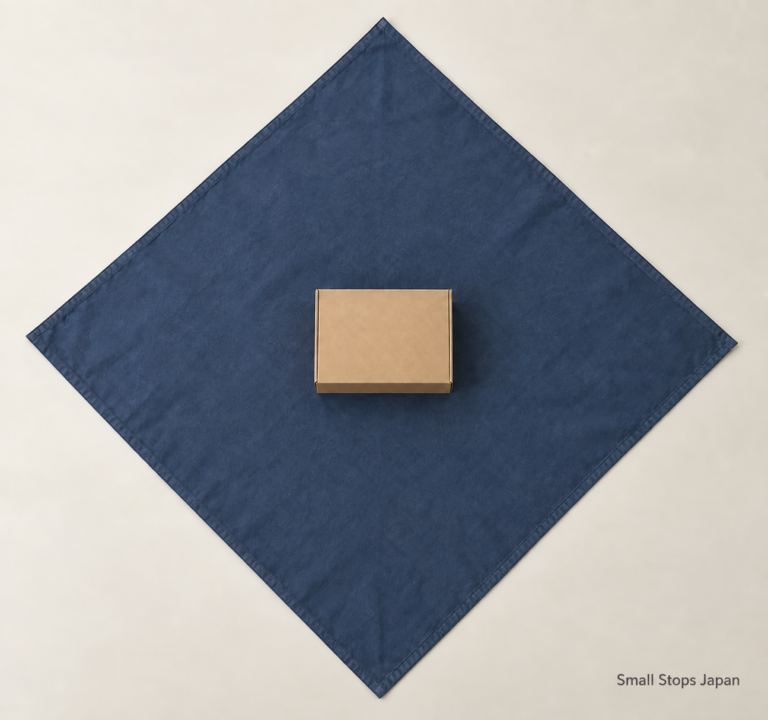
AI-generated illustration — A fictional cloth and box, arranged with four corners free. Not a measured or tested wrapping demonstration. Furoshiki: Before You Tie the Knot
Before wrapping a box, check the cloth’s size, its four corners and the two ends you will need for tying. Then follow the maker’s knot and release…
-
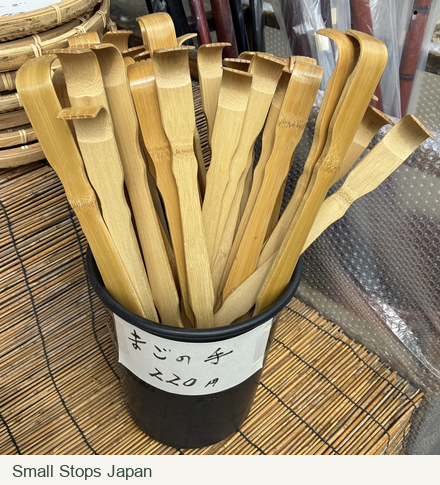
Bamboo back scratchers in a shop display in Ouchi-juku. Photograph provided by Ryo. Magonote: A Bamboo Back Scratcher Seen in Ouchi-juku
A bamboo back scratcher in an Ouchi-juku shop: look at its long handle, curved tip and shallow cuts to see how the shape connects to its purpose.
-
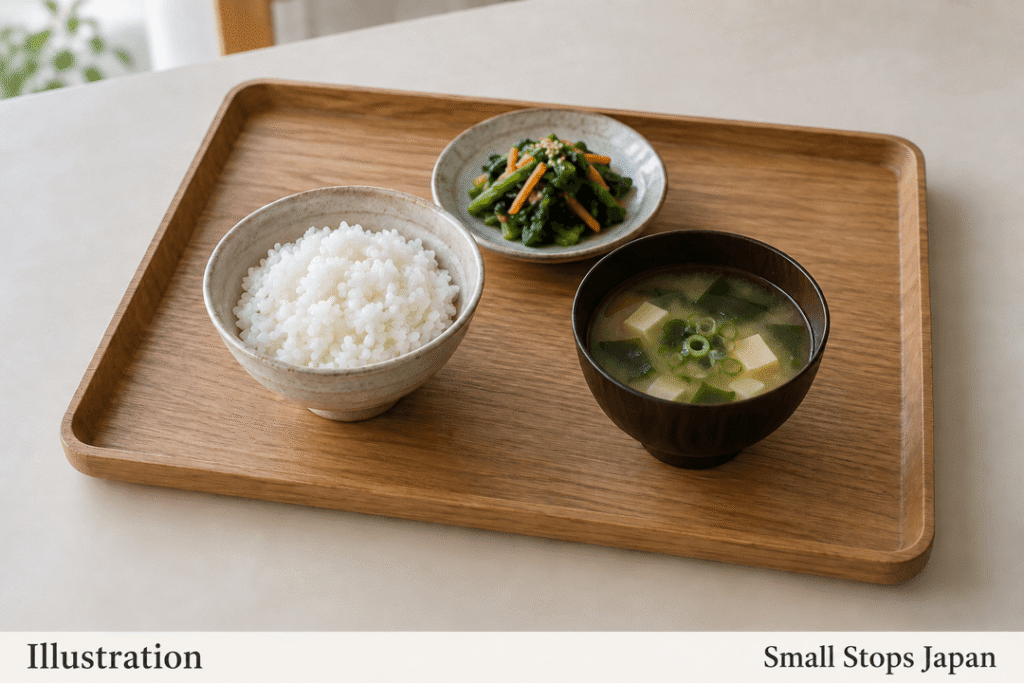
AI-generated illustration — Separate dishes grouped on a fictional tray. The arrangement is an example, not a rule for setting a Japanese table. Obon: The Tray Beneath the Dishes
Look beneath the bowls: how an obon groups a meal or tea set, what its empty shape reveals, and why wood grain alone cannot tell you how…
-
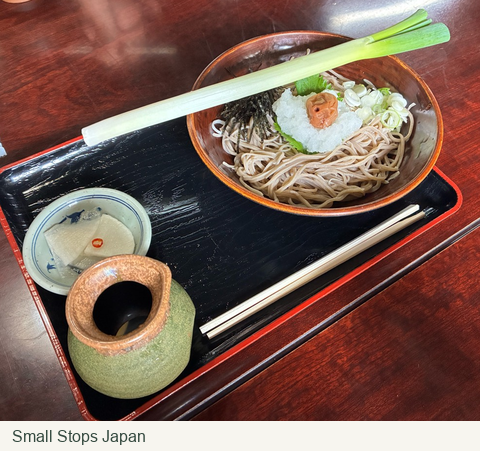
A long negi across the soba bowl, with chopsticks alongside the meal. Photograph provided by Ryo. A Long Negi Beside Soba: Looking Closer at Komeya
Look closely at two photographs from Komeya in Ouchi-juku: a long negi beside a soba bowl, chopsticks on the tray, and the onion lifting noodles.
-
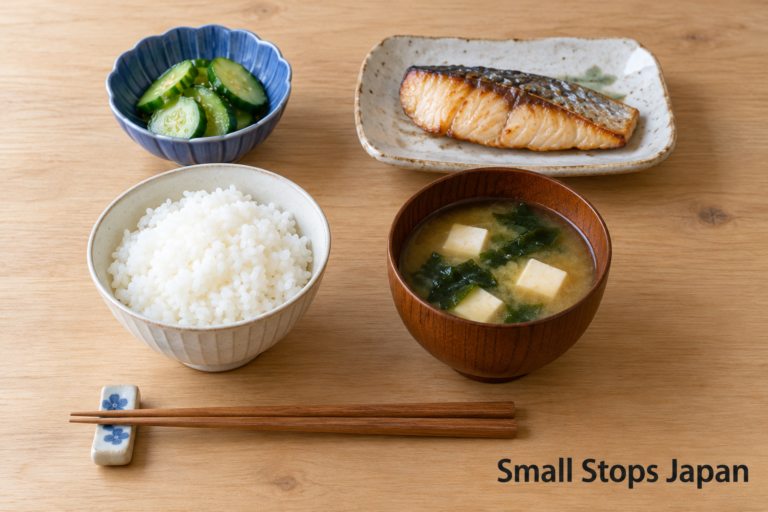
AI-generated illustration of one meal, not a prescribed table layout. The following images show separate examples. At a Japanese Table: What to Hold, Use and Set Down
From serving rice to drinking soup, see what to hold, use and set down at a Japanese table, with separate illustrated examples and links to closer guides.
-
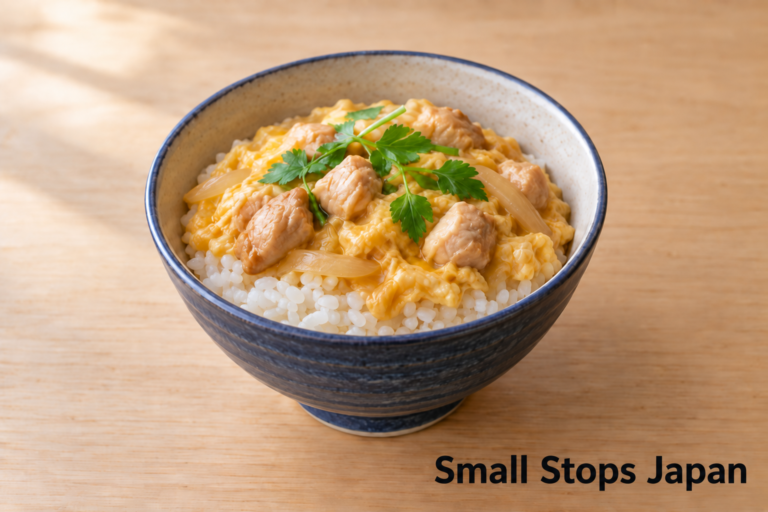
AI-generated illustration: an oyakodon-style serving, with chicken and egg over visible rice. This is a generic example, not a restaurant photograph. Donburi: The Bowl and the Meal Inside
Does donburi mean a bowl or a meal? Follow chicken and egg over rice, look inside an empty bowl, and compare foods served in separate dishes.
-
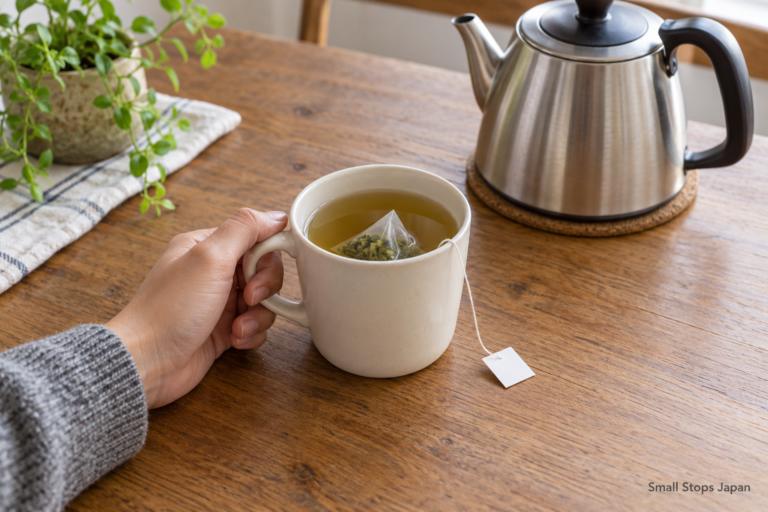
Illustration: one setting for brewing a cup-size tea bag. Your First Cup of Japanese Tea: Choosing Tea and Teaware
Choose Japanese tea by separating the tea itself, the place where it brews, and the cup you drink from. A visual guide to bags, kyusu and yunomi.
-
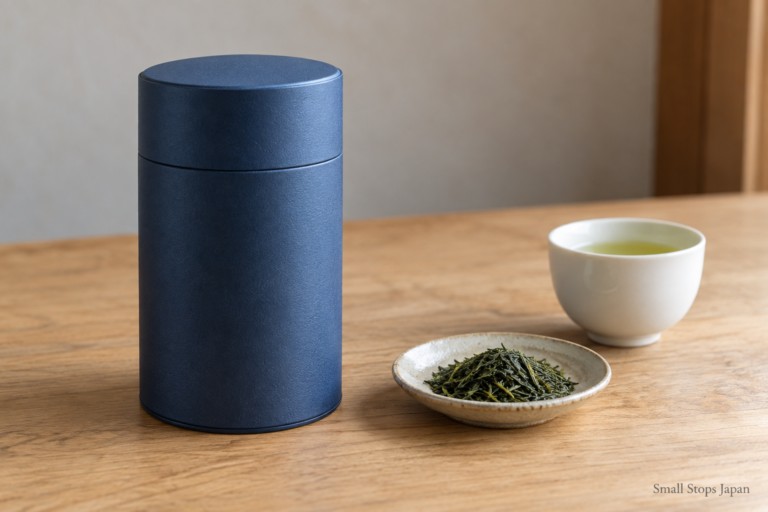
AI-generated photographic-style illustration of a generic tea canister. None of the illustrations reproduces a product from the makers linked below. A Japanese Tea Canister: What Goes Inside the Lid?
Does tea stay in its bag inside a Japanese tea canister? Understand the inner lid, choose a storage place, and keep the packet’s instructions close by.
-
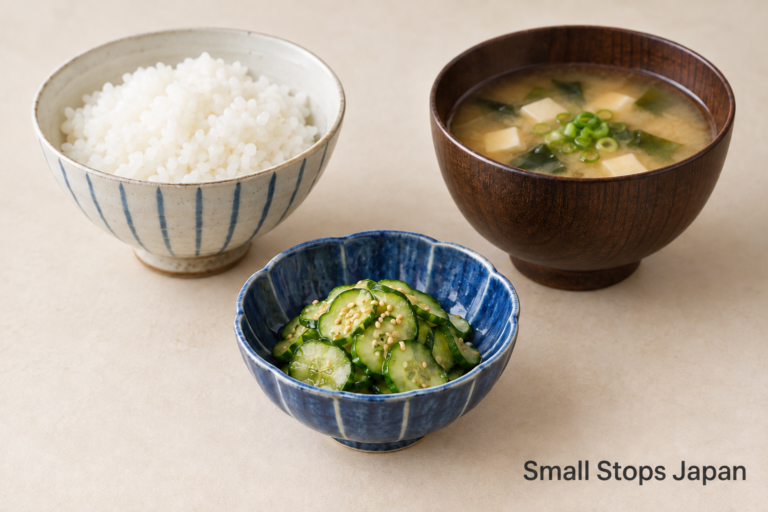
AI-generated photographic-style illustration of a serving idea, not a prescribed meal layout. The vessels shown throughout this article are generic examples, not the products linked below. Kobachi: The Small Bowl Beside Your Rice
See how a kobachi separates a small serving from the rest of a meal, and how a side dish differs from a dipping sauce.