Life & Culture
Everyday objects, food and customs in Japan, starting with Fukushima and the ways people use them.
-
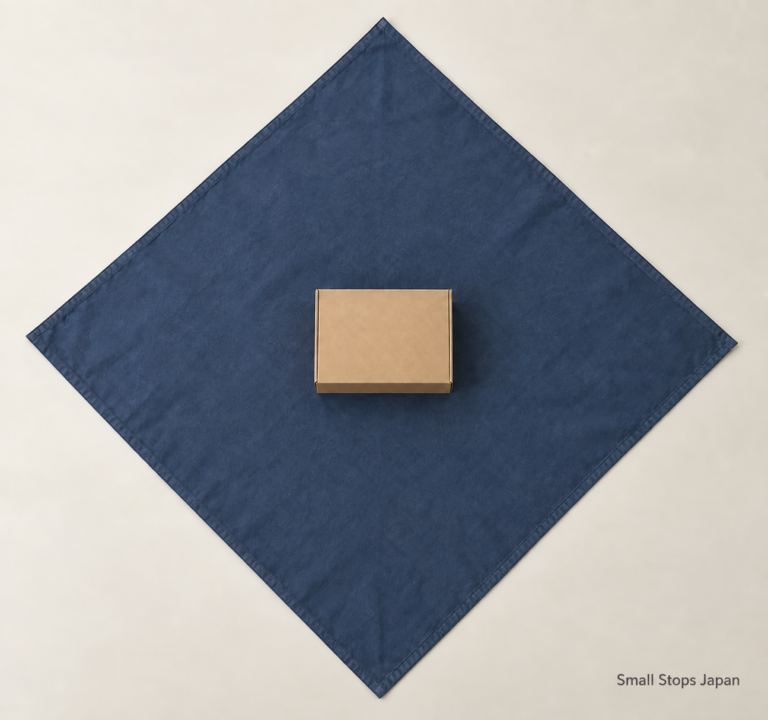
AI-generated illustration — A fictional cloth and box, arranged with four corners free. Not a measured or tested wrapping demonstration. Furoshiki: Before You Tie the Knot
Before wrapping a box, check the cloth’s size, its four corners and the two ends you will need for tying. Then follow the maker’s knot and release…
-
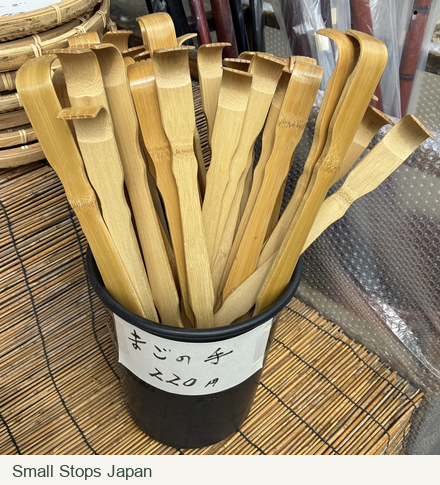
Bamboo back scratchers in a shop display in Ouchi-juku. Photograph provided by Ryo. Magonote: A Bamboo Back Scratcher Seen in Ouchi-juku
A bamboo back scratcher in an Ouchi-juku shop: look at its long handle, curved tip and shallow cuts to see how the shape connects to its purpose.
-
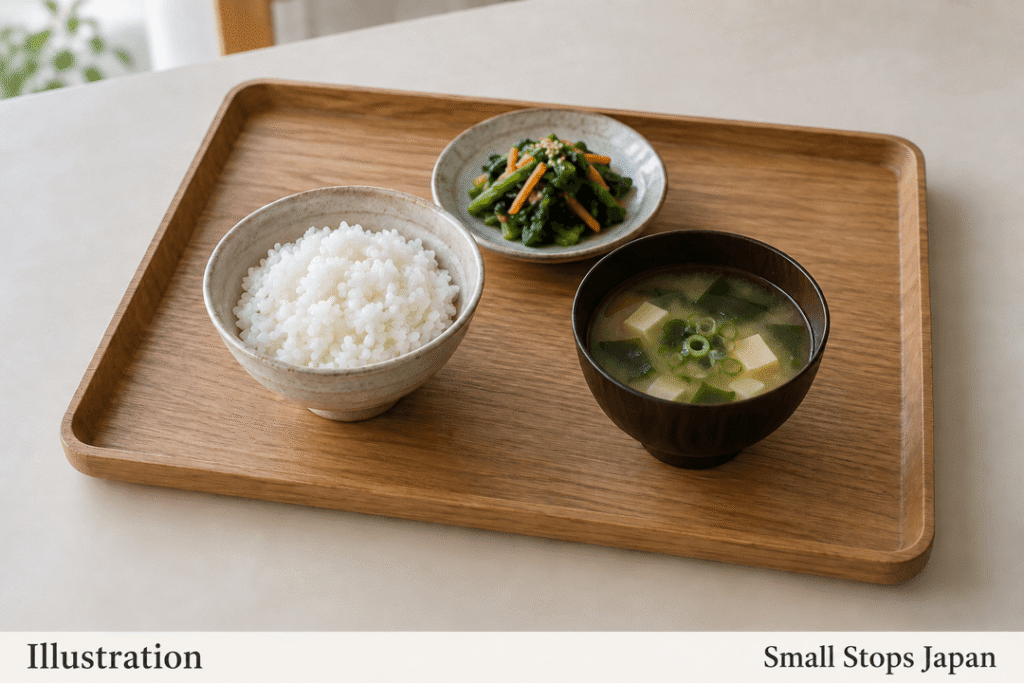
AI-generated illustration — Separate dishes grouped on a fictional tray. The arrangement is an example, not a rule for setting a Japanese table. Obon: The Tray Beneath the Dishes
Look beneath the bowls: how an obon groups a meal or tea set, what its empty shape reveals, and why wood grain alone cannot tell you how…
-
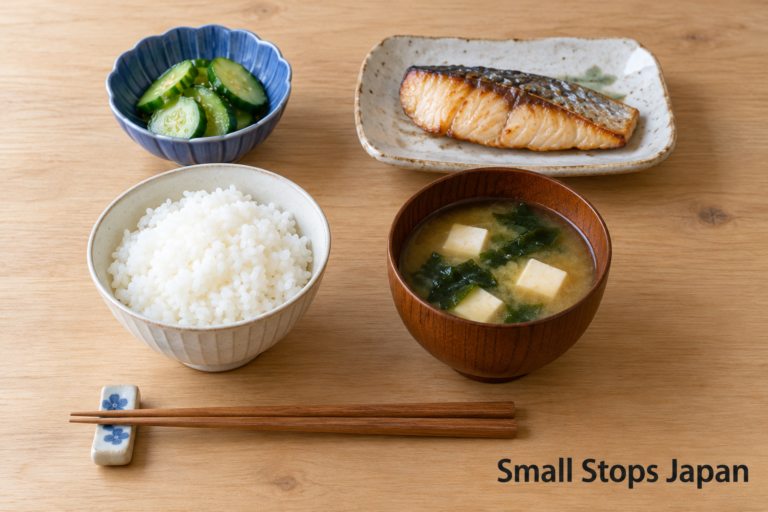
AI-generated illustration of one meal, not a prescribed table layout. The following images show separate examples. At a Japanese Table: What to Hold, Use and Set Down
From serving rice to drinking soup, see what to hold, use and set down at a Japanese table, with separate illustrated examples and links to closer guides.
-
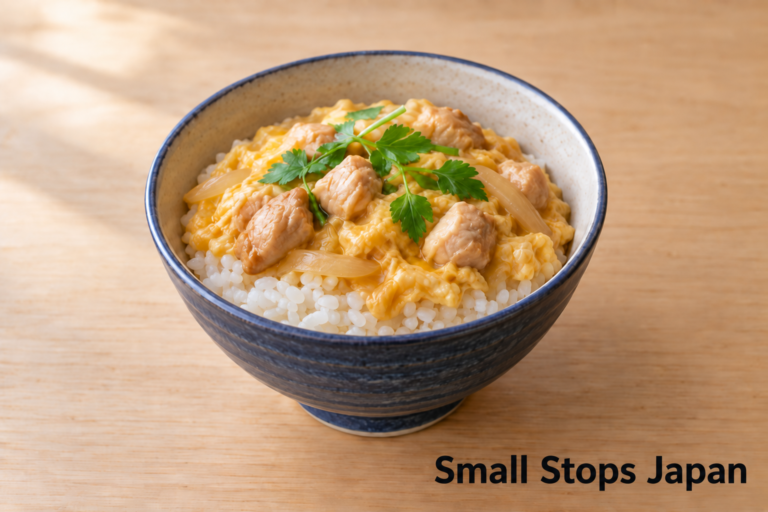
AI-generated illustration: an oyakodon-style serving, with chicken and egg over visible rice. This is a generic example, not a restaurant photograph. Donburi: The Bowl and the Meal Inside
Does donburi mean a bowl or a meal? Follow chicken and egg over rice, look inside an empty bowl, and compare foods served in separate dishes.
-
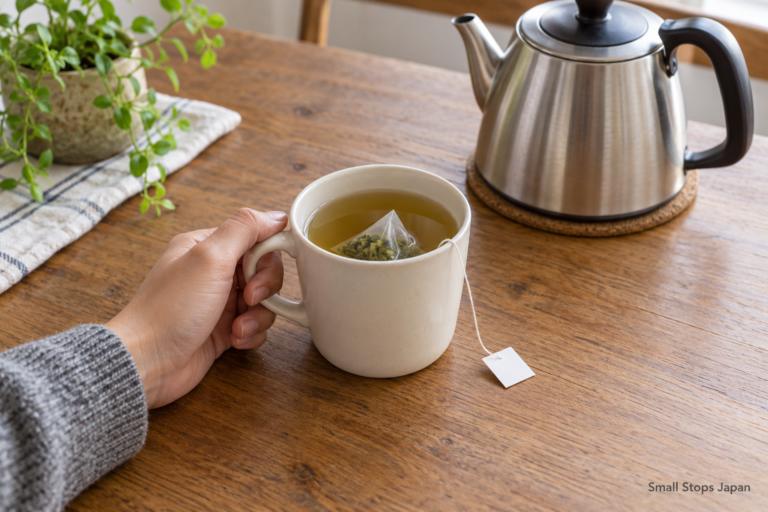
Illustration: one setting for brewing a cup-size tea bag. Your First Cup of Japanese Tea: Choosing Tea and Teaware
Choose Japanese tea by separating the tea itself, the place where it brews, and the cup you drink from. A visual guide to bags, kyusu and yunomi.
-
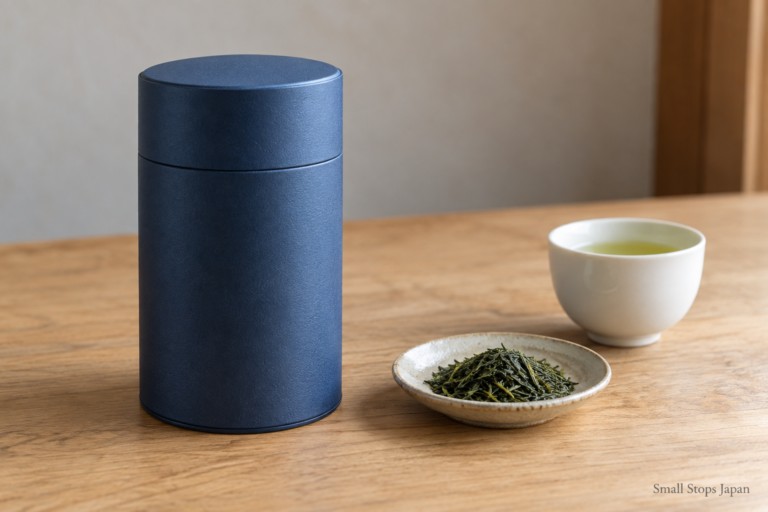
AI-generated photographic-style illustration of a generic tea canister. None of the illustrations reproduces a product from the makers linked below. A Japanese Tea Canister: What Goes Inside the Lid?
Does tea stay in its bag inside a Japanese tea canister? Understand the inner lid, choose a storage place, and keep the packet’s instructions close by.
-
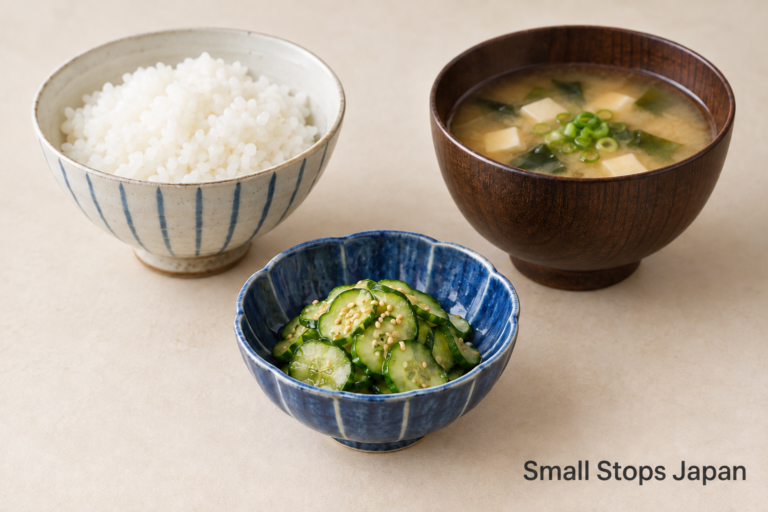
AI-generated photographic-style illustration of a serving idea, not a prescribed meal layout. The vessels shown throughout this article are generic examples, not the products linked below. Kobachi: The Small Bowl Beside Your Rice
See how a kobachi separates a small serving from the rest of a meal, and how a side dish differs from a dipping sauce.
-
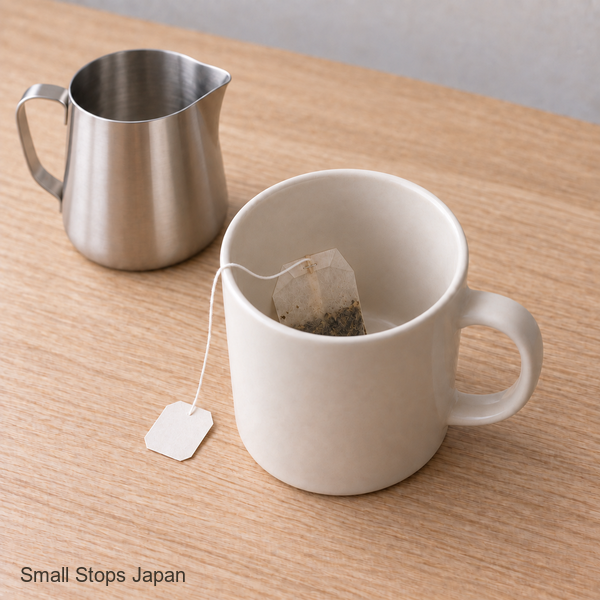
Illustration: A tea bag placed inside a mug, ready for water. This is a general example. How Much Water for One Japanese Tea Bag?
One Japanese tea bag may call for 150 ml or 300 ml. Compare two Ippodo examples, distinguish water amount from mug capacity, and follow a general brewing…